3D simulations
Explain how anything works, with a 3D simulation that really runs
Ask a question. ContentRoof writes the script, records a natural voice and plays a real simulation in time with every word: a heart pumping, a jet engine firing, the Moon's shadow crossing the Earth. In 11 languages.
Why a simulation, not an AI-generated video
Body organs
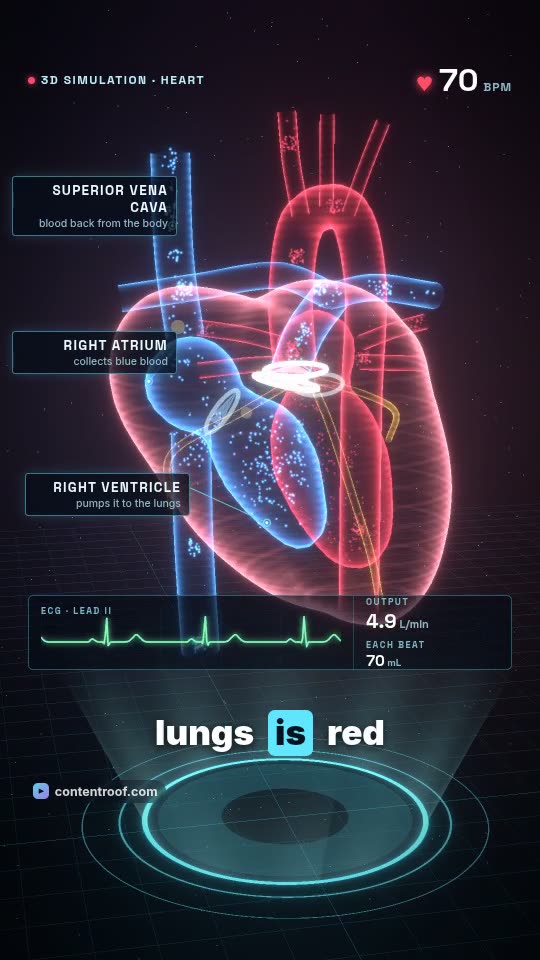 How the heart pumps bloodBody organs
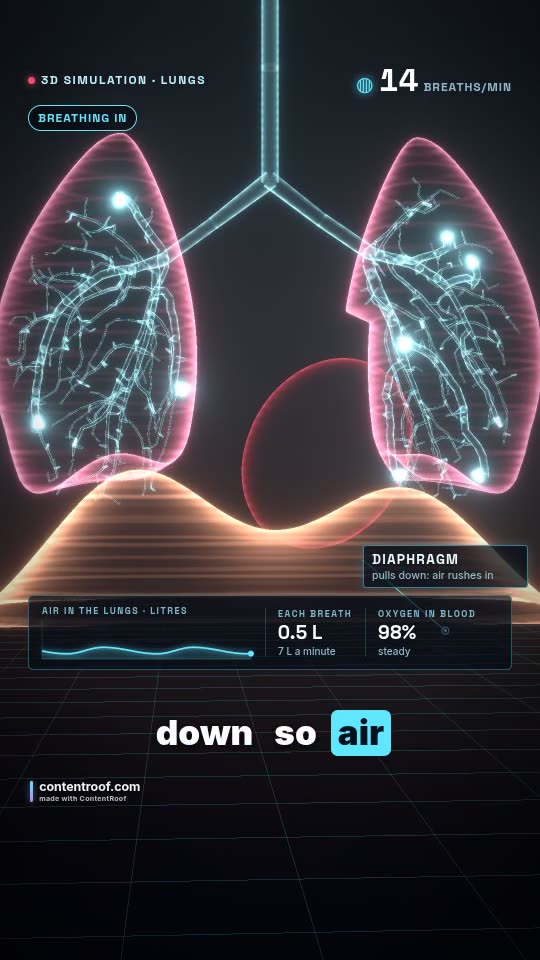 How the lungs workBody organs
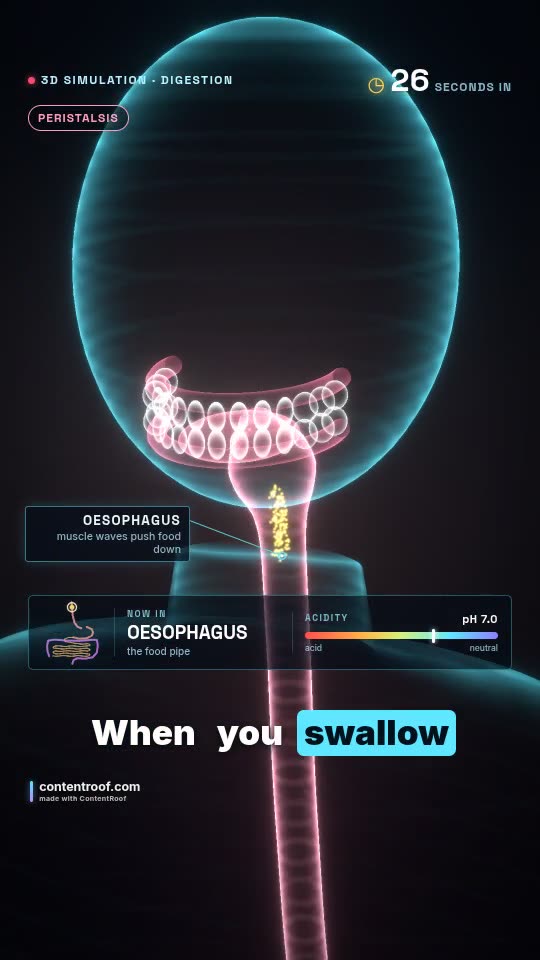 The digestive systemBody organs
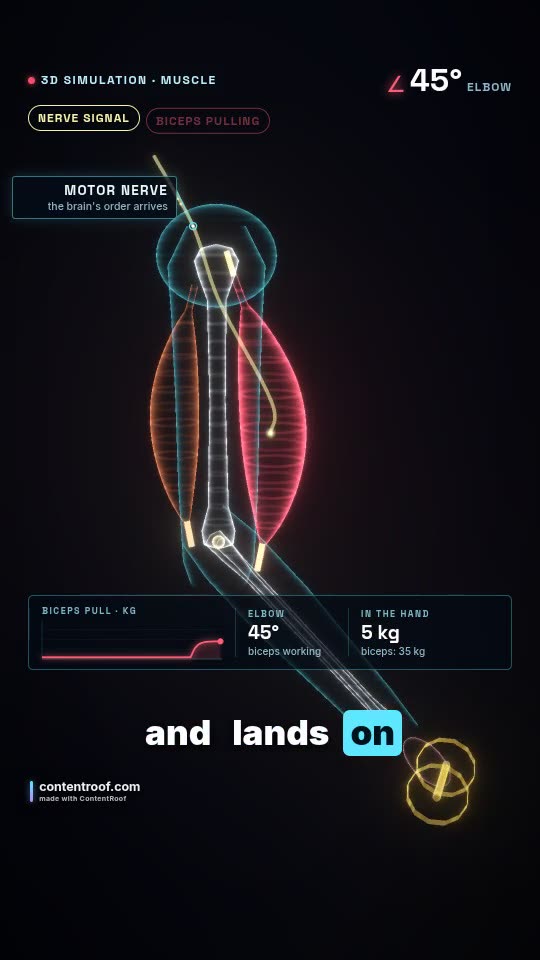 How a muscle moves a boneBody organs
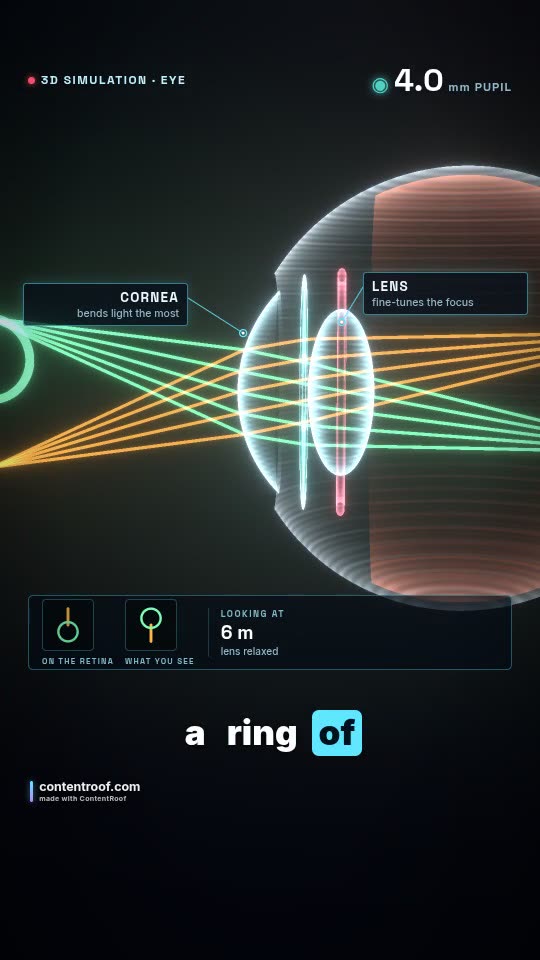 How the eye worksBody organs
Cells and microbes
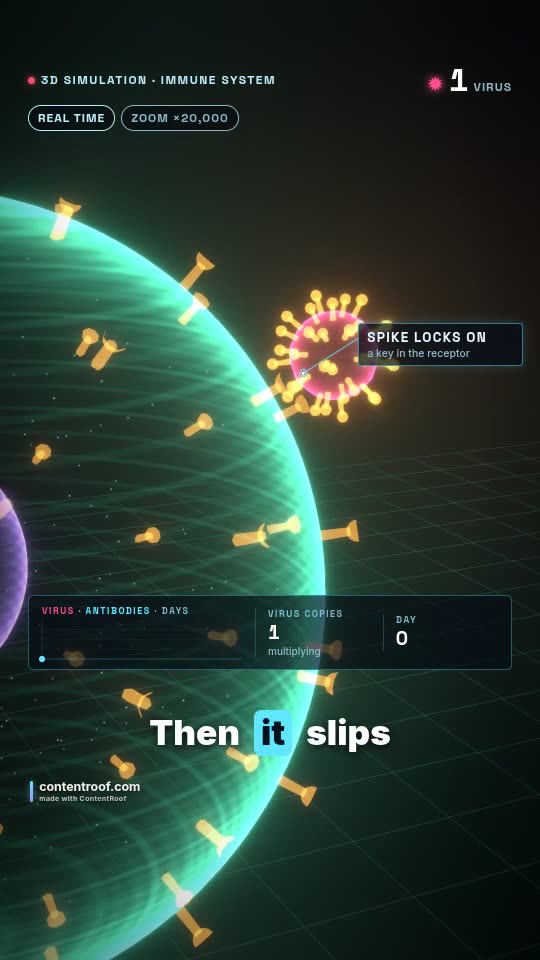 How a vaccine trains your immune systemCells and microbes
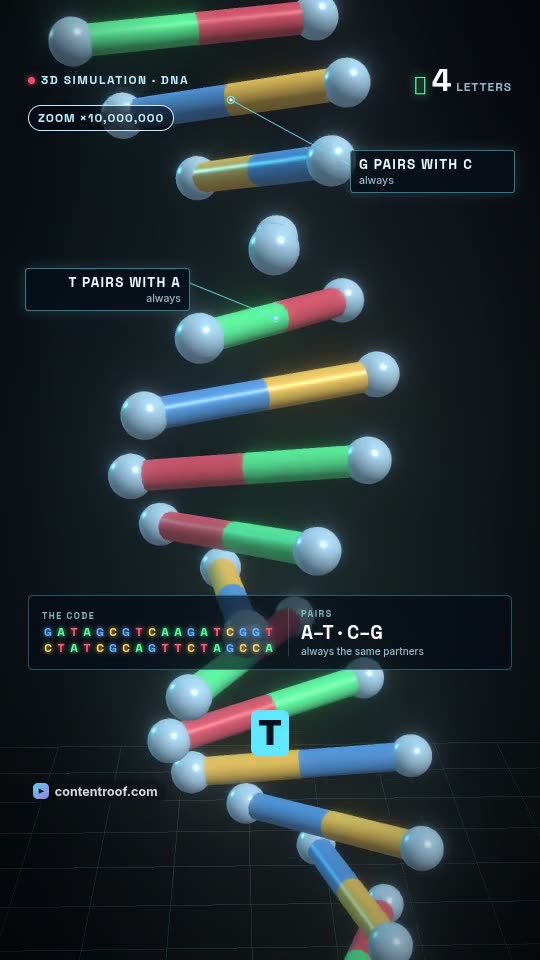 DNACells and microbes
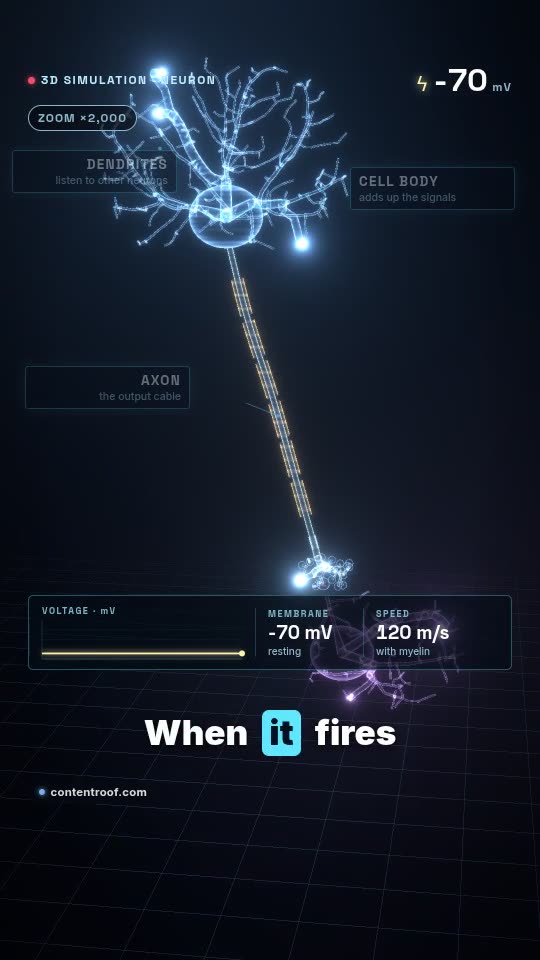 How a neuron sends a signalCells and microbes
Space and gravity
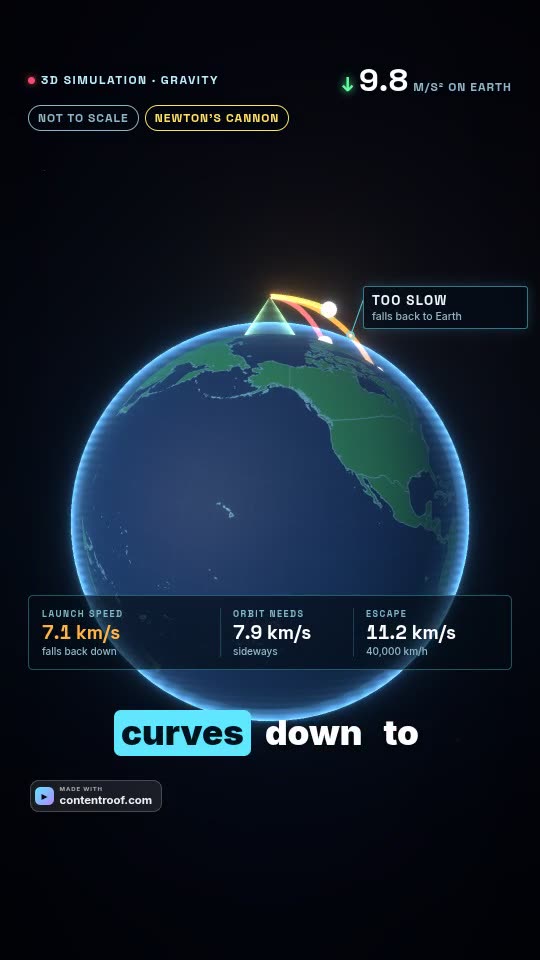 Gravity and orbits
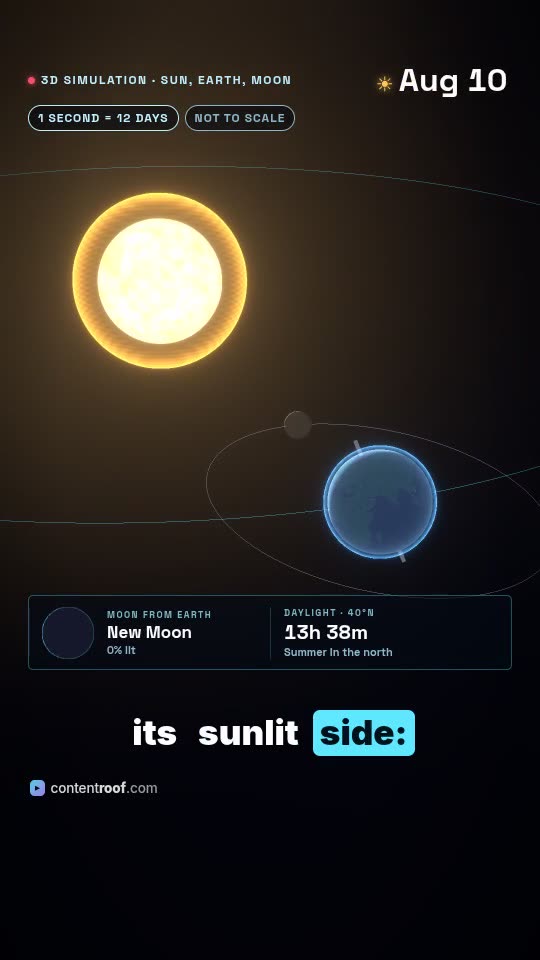 Solar and lunar eclipses
Growth and spread
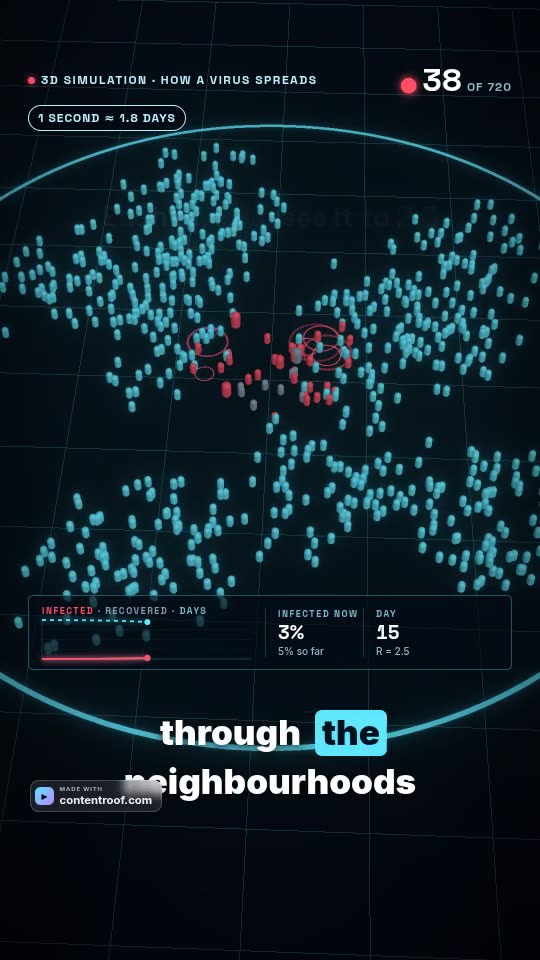 How things spread
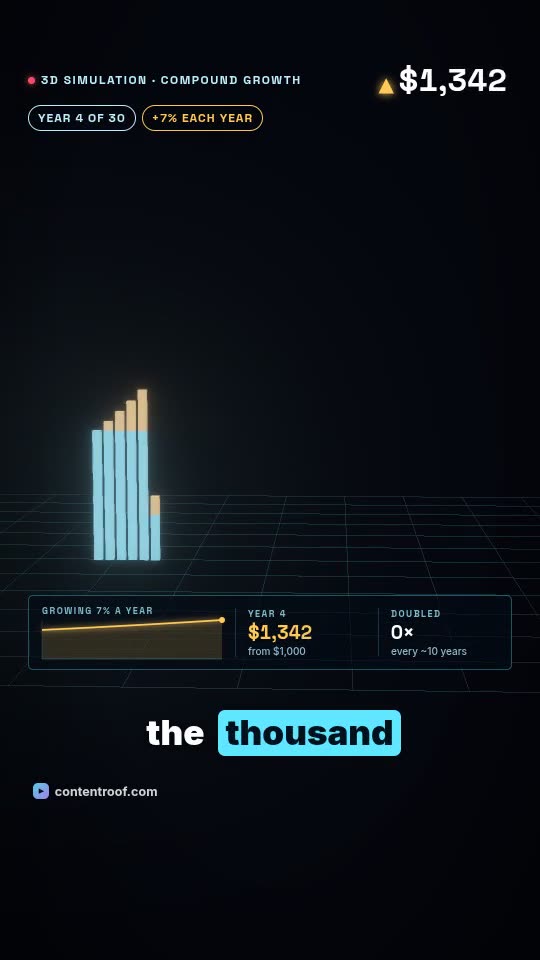 Compound growth
Particles and heat
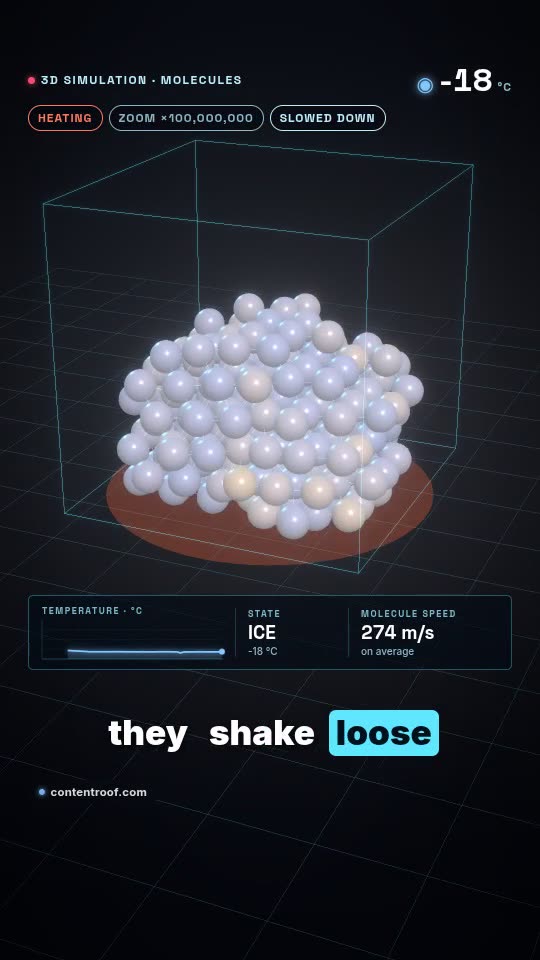 Solids, liquids and gases
Electricity and magnets
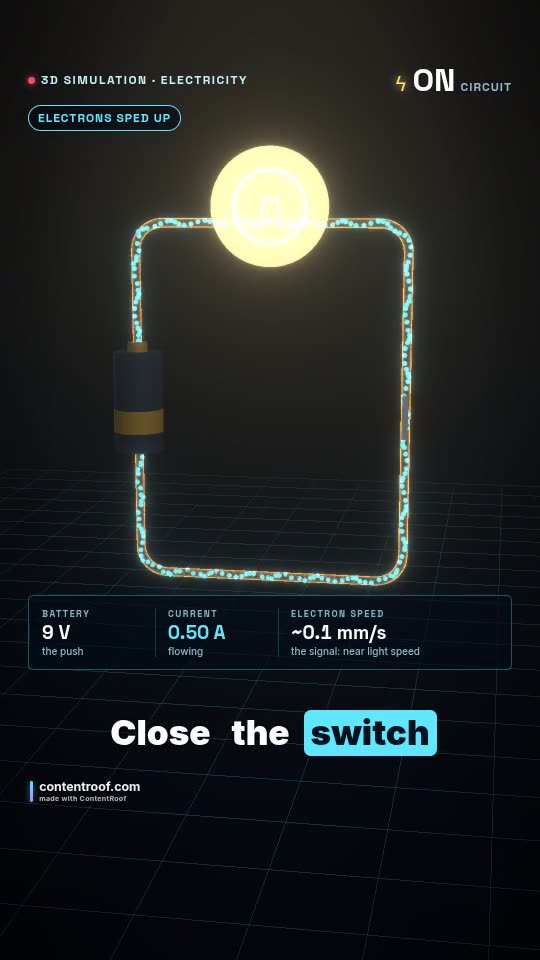 How electricity works
Molecules and reactions
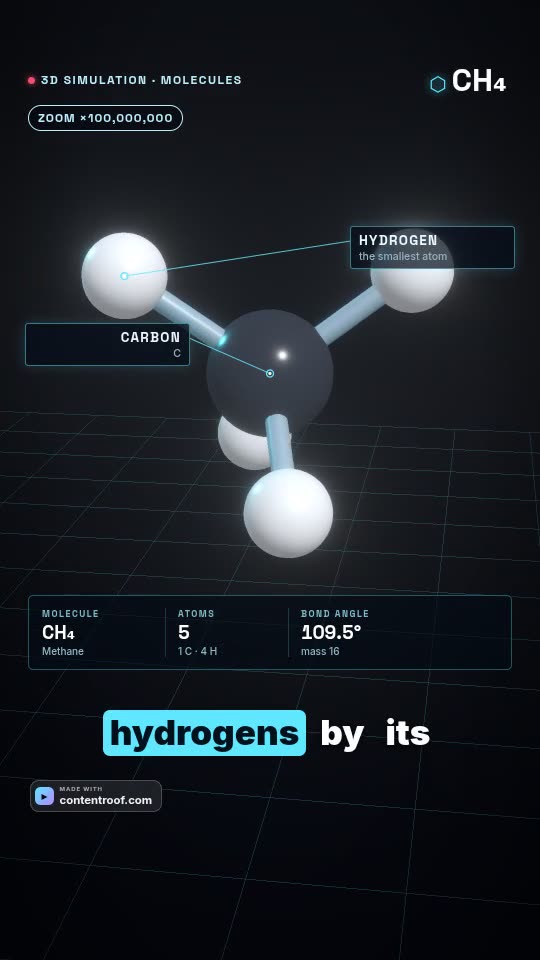 Chemical reactions
Light
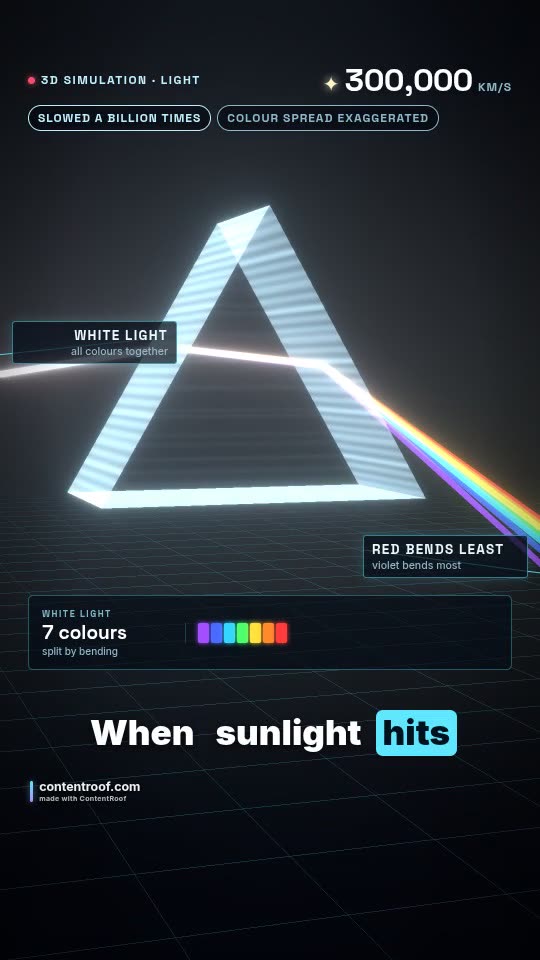 Light and colour
Waves and sound
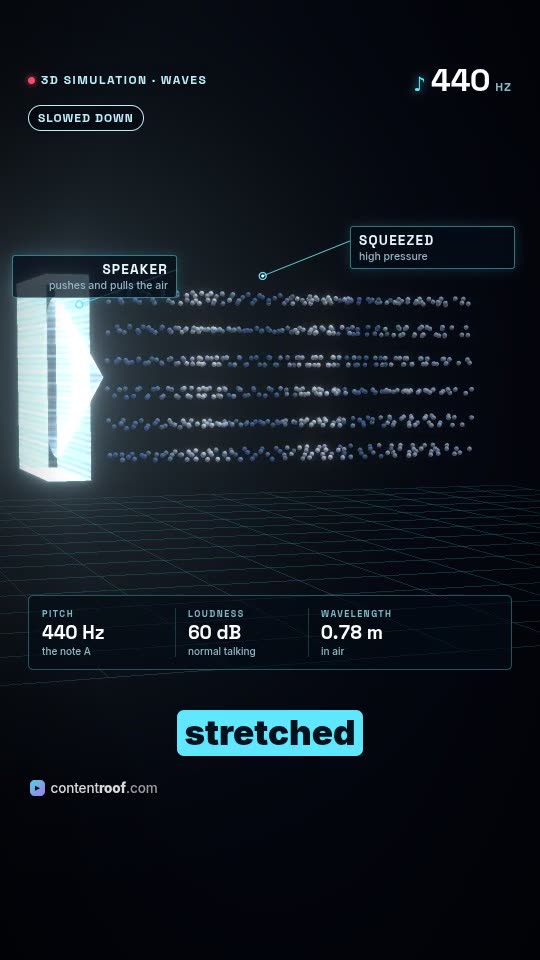 Sound waves and the Doppler effect
Forces and motion
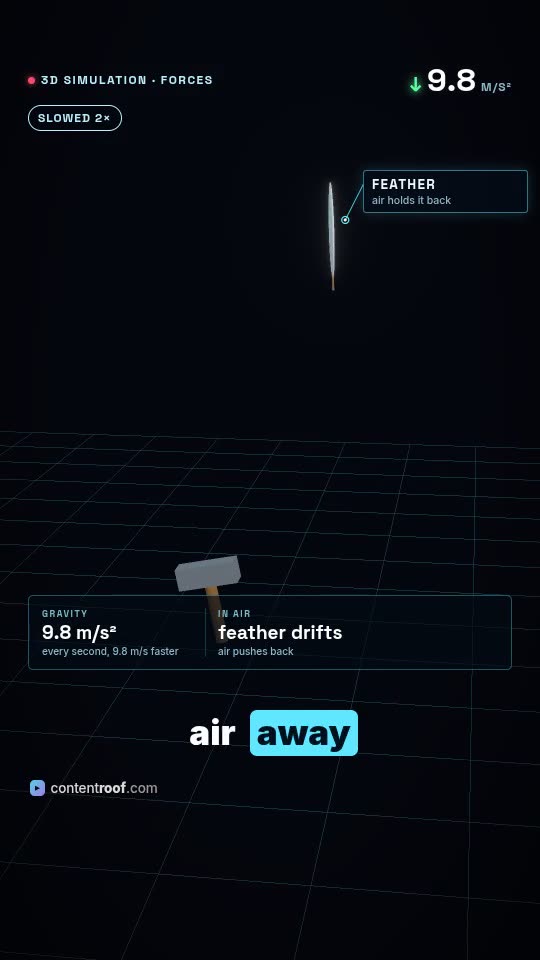 Newton's laws of motion
Machines and engines
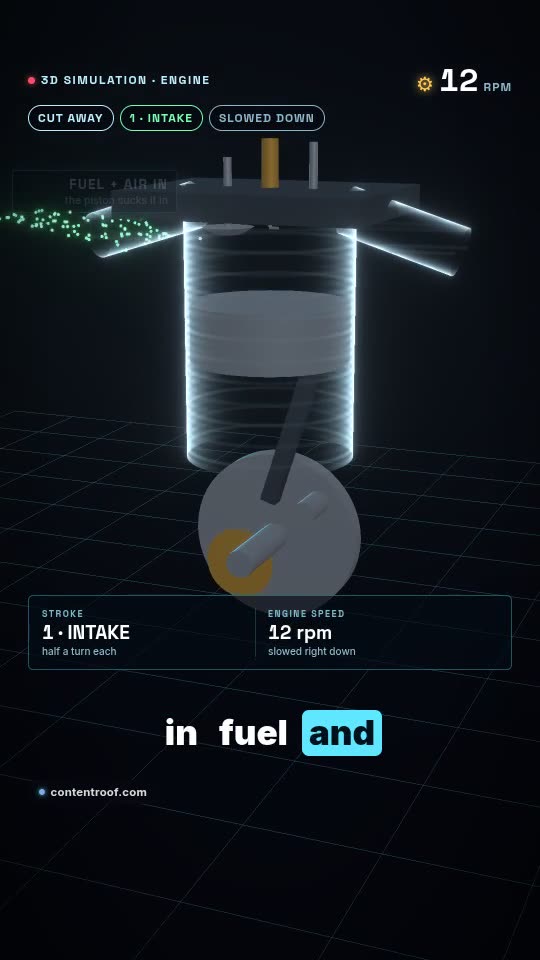 How a car engine works
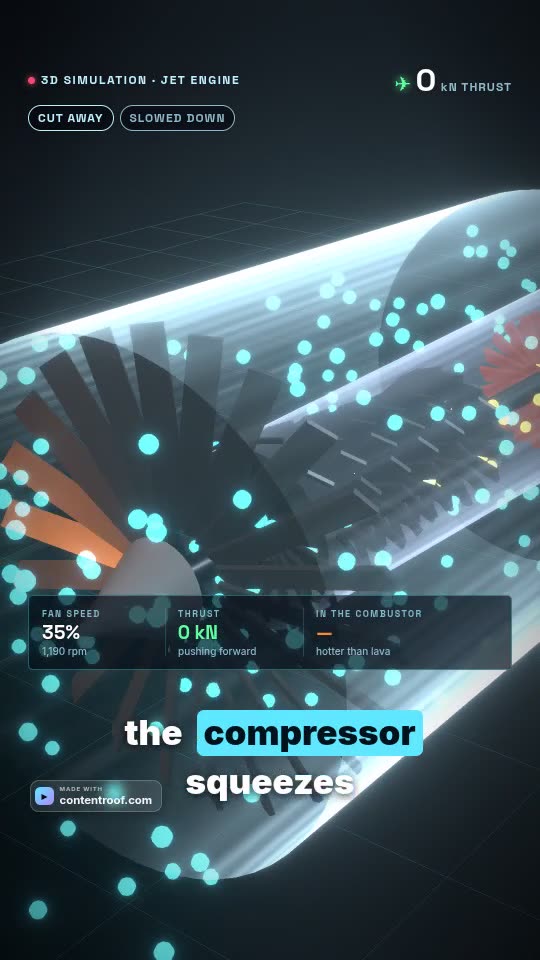 How a jet engine works
Air and water flow
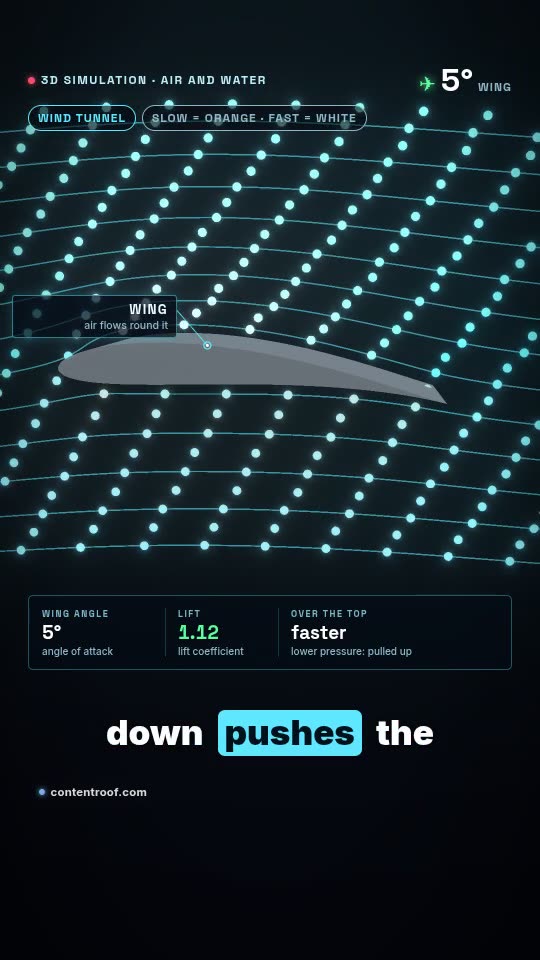 How planes fly and ships float
Inside the Earth
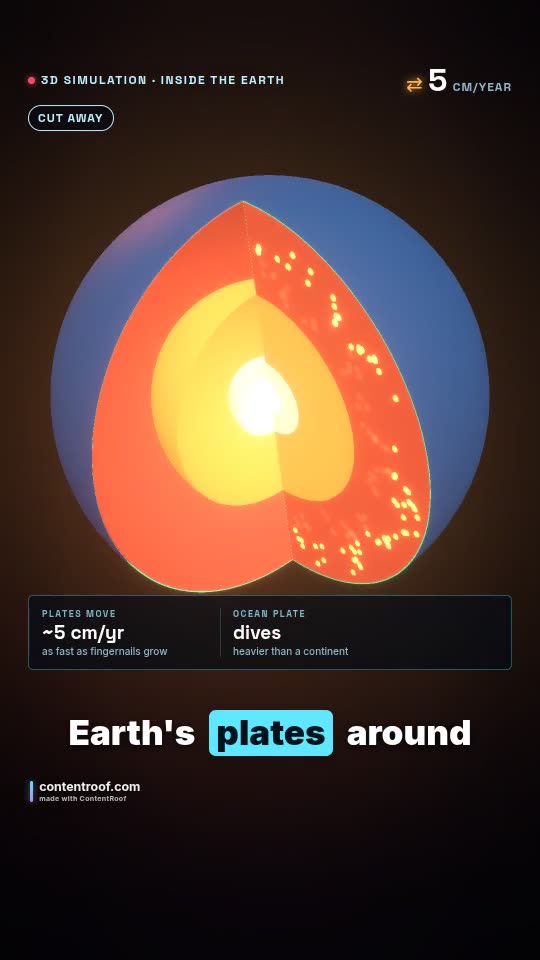 Inside the Earth: earthquakes and volcanoes
Earth's cycles
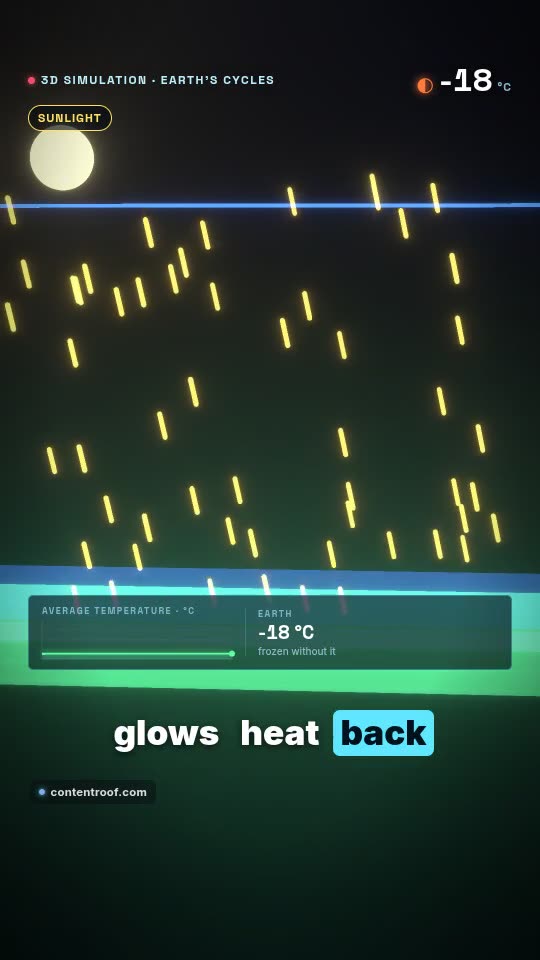 The water cycle and the greenhouse effect
Life and evolution
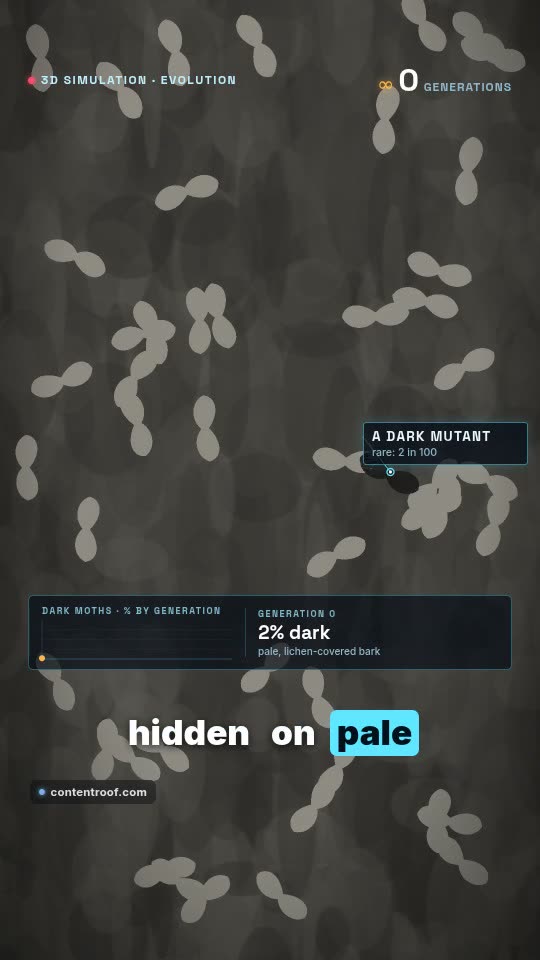 Evolution and natural selection
Atoms and nuclear
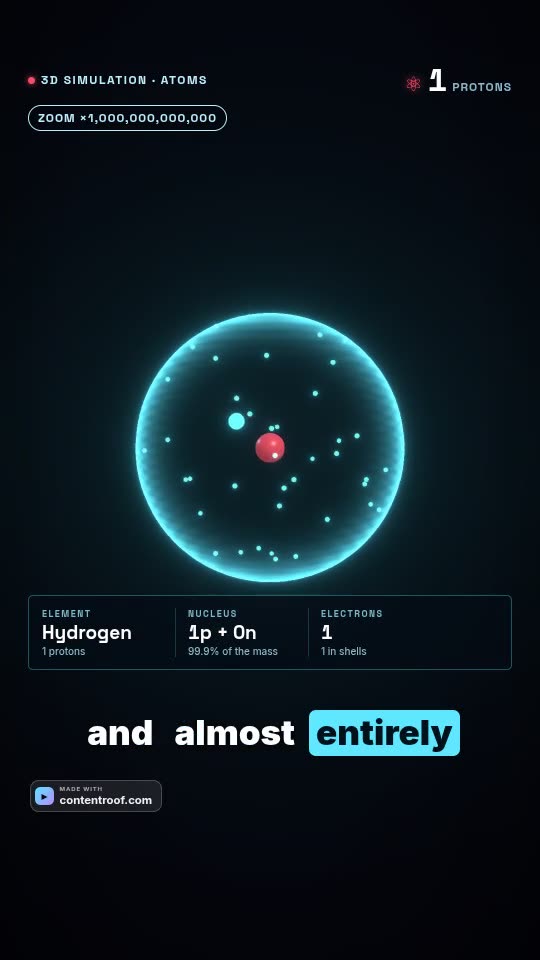 Atoms, fission and fusion
Technology
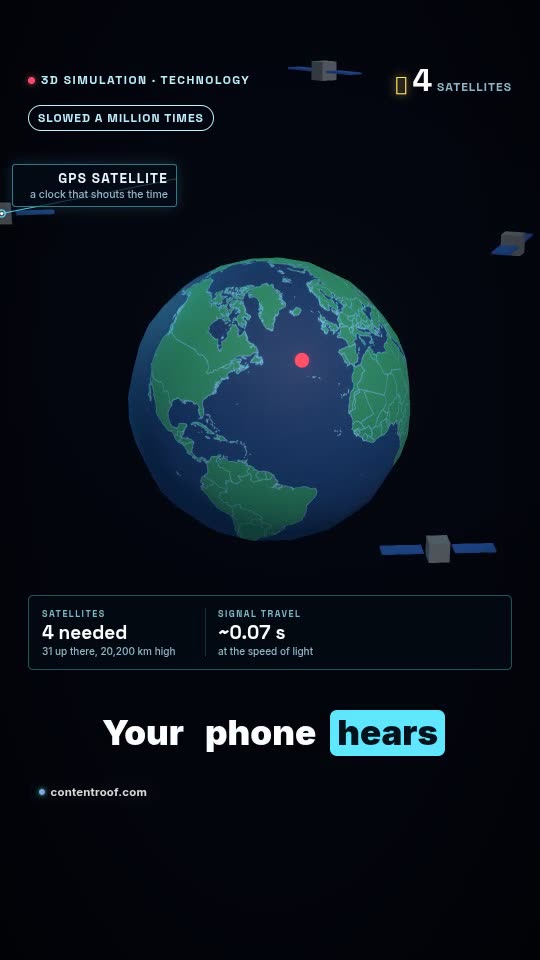 How technology works: GPS, the internet, AI
Math and patterns
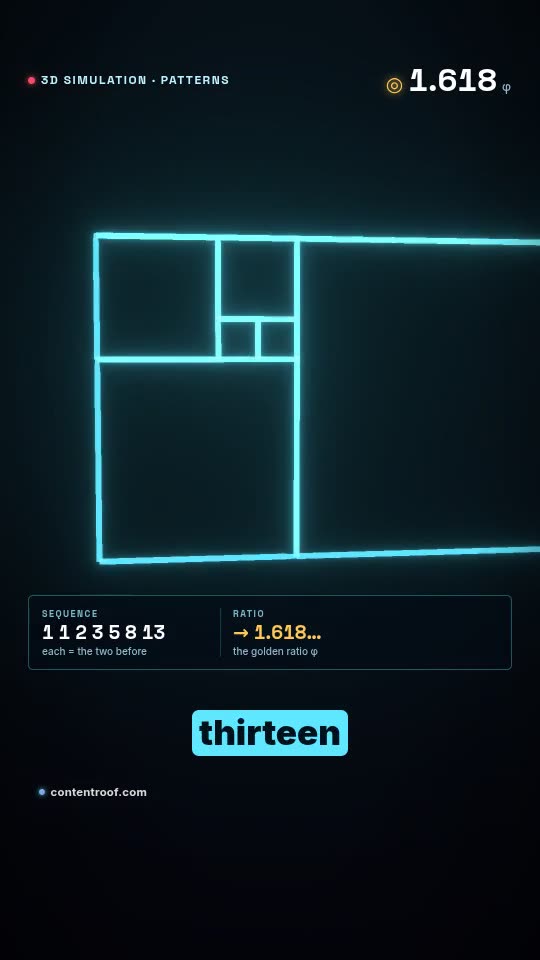 Fibonacci, the golden ratio and fractals
Scale
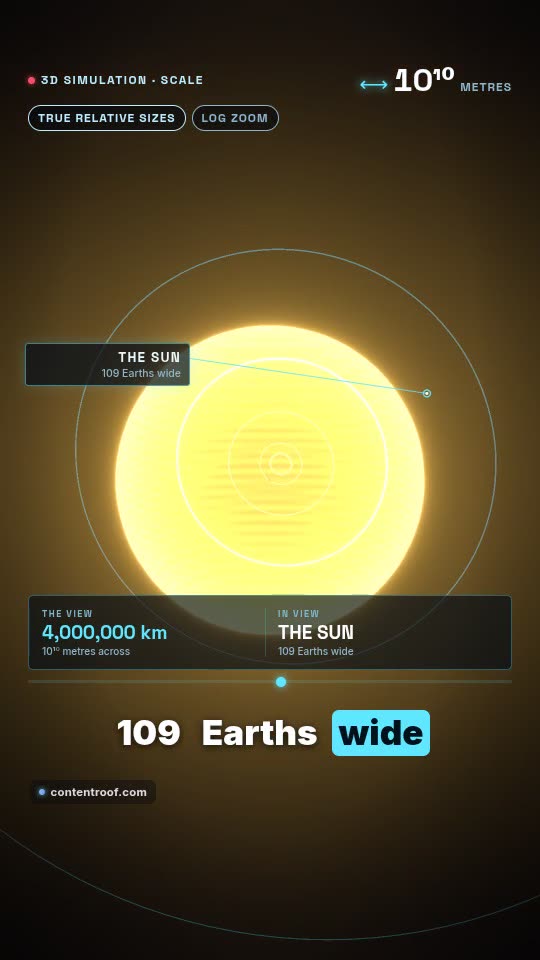 The scale of the universe
History in motion
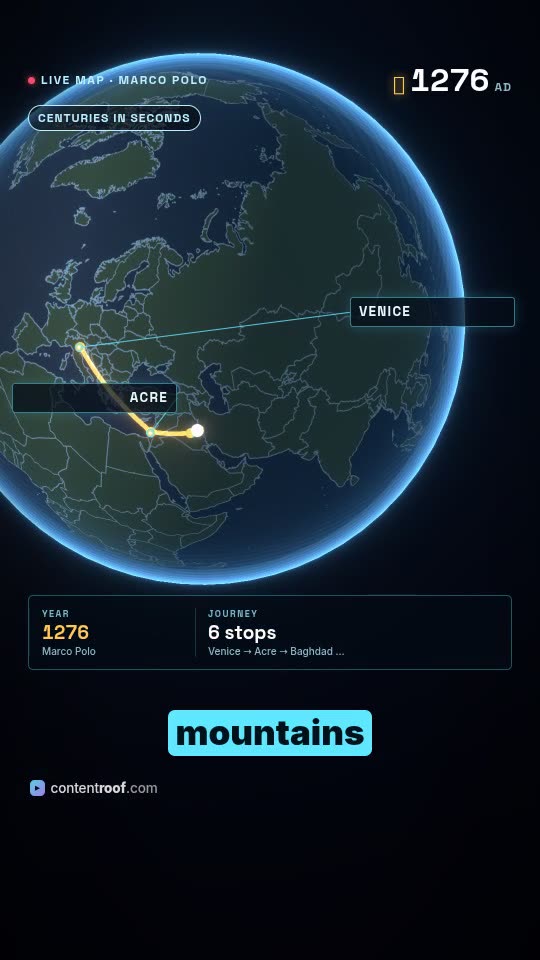 History in motion, on a 3D globe
How it works
- Type a question: “How does a jet engine work?”, “Why is the sky blue?”, “How does a vaccine work?”.
- ContentRoof picks the right simulation, researches the facts and writes a short script, cueing each moment to a word.
- A natural voice reads it; the simulation plays in time, with captions. Edit any line and the video follows.
- Download it for YouTube Shorts, TikTok, Reels or your lesson.
For teachers
A lesson students remember: show the heart's valves closing instead of describing them, the Moon's shadow instead of a diagram, molecules melting instead of a definition. Make one in the language your class speaks, and pair it with ContentRoof's lessons that end in a quiz. ContentRoof →
For science and education channels
Science Shorts that look like a studio made them, every day, in your language. A simulation holds attention because something is always moving, and it stays right because it runs the real thing.
Questions
What is a 3D simulation video?
A short narrated video where a real simulation runs on screen: a heart that actually pumps, light that actually bends, an engine whose pistons actually fire. ContentRoof writes the script, records the voice and plays the simulation so each moment lands on the word that names it.
How is it different from AI video generators?
AI video generators paint frames that look plausible, and often get the science wrong: valves in the wrong place, light bending the wrong way. A simulation runs the actual rules and numbers, so it is right every time, and it follows your narration word by word.
What topics can I make?
Anything the simulations cover: the human body (heart, lungs, digestion, muscles, the eye), cells, DNA and the brain, space and gravity, eclipses, heat and matter, electricity, chemistry, light, sound, forces, engines and jet engines, flight, earthquakes, the water cycle, evolution, atoms, technology, maths patterns, the scale of the universe and history on a globe. Ask a question and ContentRoof picks the right one.
Which languages?
Eleven: English, Urdu, Hindi, Arabic, Spanish, French, Portuguese, German, Italian, Russian and Polish, each with natural voices and captions written properly.
Is it free?
Yes, to try: the free plan makes 2 3D simulations a month (720p, with a small mark). Starter makes 4, Pro 12 and Studio 20, in 1080p without the mark.
Who is it for?
Teachers who want a lesson students remember, science and education channels, students making a project, and anyone who explains how things work.