3D simulation · Machines and engines
How a jet engine works, in 3D
Air sucked in by the fan, squeezed, burned and blasted out: the turbofan that carries an airliner. Not a drawing and not an AI guess: a simulation that runs the real numbers, narrated, with every moment landing on its word.
What the simulation shows
- A cut-away jet engine (a turbofan) running, labelled: fan, core.
- Close on the giant fan at the front pulling air in.
- Close on the compressor: stage after stage of smaller spinning blades squeezing the air (callout: squeezed 40 times).
- Fuel burns in the squeezed air in the combustor (flames, about 1,500 °C).
- The hot blast spins the turbine, which turns the shaft that drives the fan and compressor.
- Air thrown out of the back; the engine is pushed forward (thrust arrow).
- Most of the air goes round the core (bypass) and gives most of the thrust (callout).
- Full take-off power: everything spins faster and the thrust climbs to about 330 kilonewtons.
The real numbers it runs on
The simulation is built on these facts, so the narration and the picture always agree:
- A jet engine sucks air in, squeezes it, burns fuel in it and blasts it out the back; throwing air backwards pushes the engine forwards (Newton's third law).
- The compressor's many stages of spinning blades squeeze the air up to about 40 times.
- Fuel burns in the combustor at about 1,500 °C, hotter than the melting point of the turbine's own metal; the blades survive with cooling air and special coatings.
- The hot gas spins the turbine, which turns the shaft that drives the compressor and fan: the engine keeps itself running.
- In an airliner's turbofan most of the air (often 9 or more parts in 10) goes round the core (bypass air) and produces most of the thrust, quietly and efficiently.
- A big airliner engine's fan pulls in more than a tonne of air a second at take-off and can make over 300 kilonewtons of thrust, about the weight of 30 cars.
The script this video was made from
“How a jet engine works”: the narration of the video above. Each highlighted moment in the simulation happens on the word that names it.
A jet engine has one job: grab air and throw it backwards, very, very fast.
Suck
The giant fan pulls in more than a tonne of air every second.
Squeeze
Inside, the compressor squeezes it, stage after stage, forty times over.
Bang
Fuel is sprayed in and burns at fifteen hundred degrees.
Blow
The blast spins the turbine, which drives the fan, and roars out the back. Air goes back, the plane goes forward.
Make your own
- Type a question, like “How a jet engine works”, or your own angle on it.
- ContentRoof picks this simulation, researches the facts and writes a short script, with every moment cued to a word.
- A natural voice reads it in your language and the simulation plays in time with it. Change any line and it follows.
- Download a vertical video for Shorts, TikTok and Reels, or use it in class.
Questions
Is this a real simulation or an AI-generated video?
A real simulation. How a jet engine works runs on the numbers listed above, so what you see is what actually happens, frame by frame. AI video generators guess what a scene should look like; they often get the science wrong.
Can I change what the narrator says?
Yes. Type your own question or idea and the AI writes a new script for this simulation, or edit any line yourself. Every moment of the simulation lands on the word that names it.
Which languages can it narrate in?
Eleven: English, Urdu, Hindi, Arabic, Spanish, French, Portuguese, German, Italian, Russian and Polish, with captions written properly (Urdu in Nastaliq, Arabic right to left).
Can I use it in class or post it on YouTube?
Yes. The video is yours to use in lessons, on YouTube Shorts, TikTok and Instagram Reels. The free plan makes 2 3D simulations a month; paid plans make more, in 1080p without the small mark.
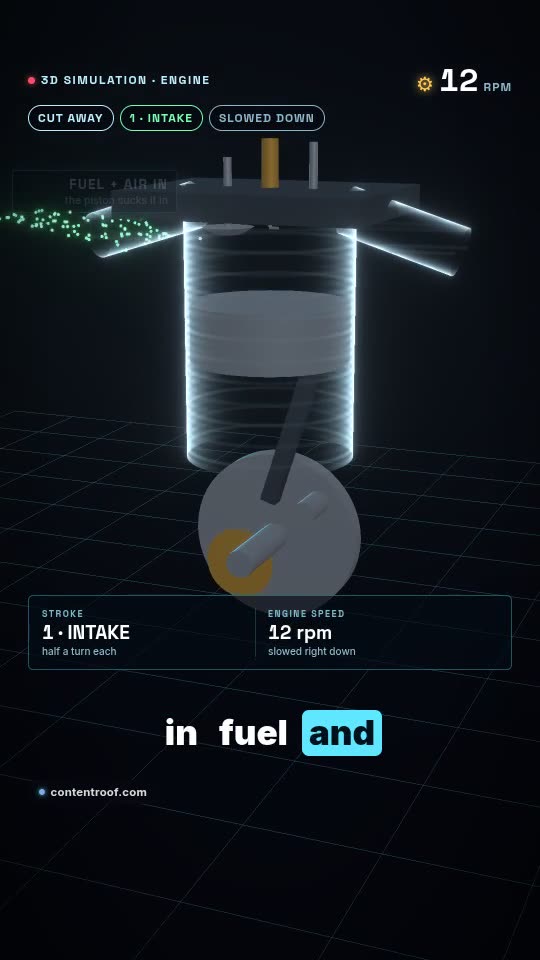 How a car engine works
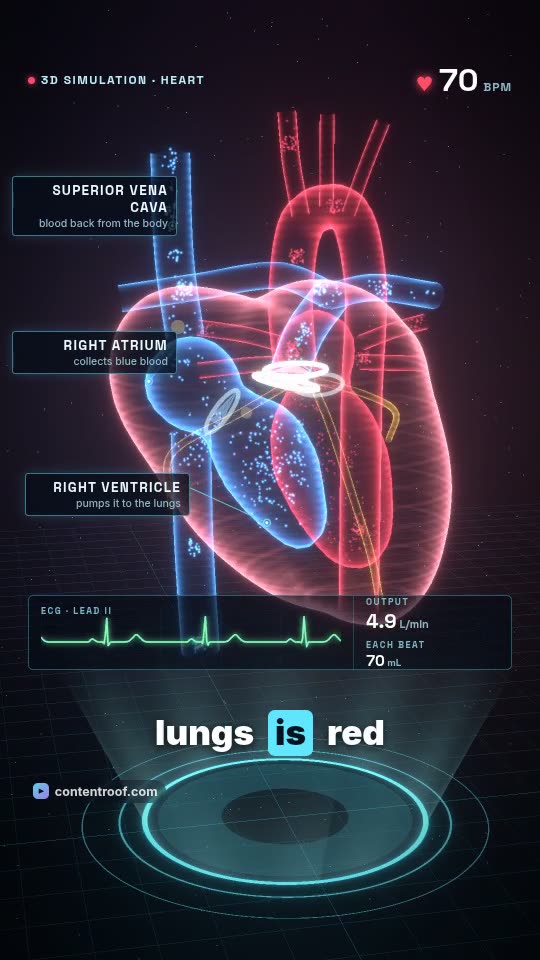 How the heart pumps blood
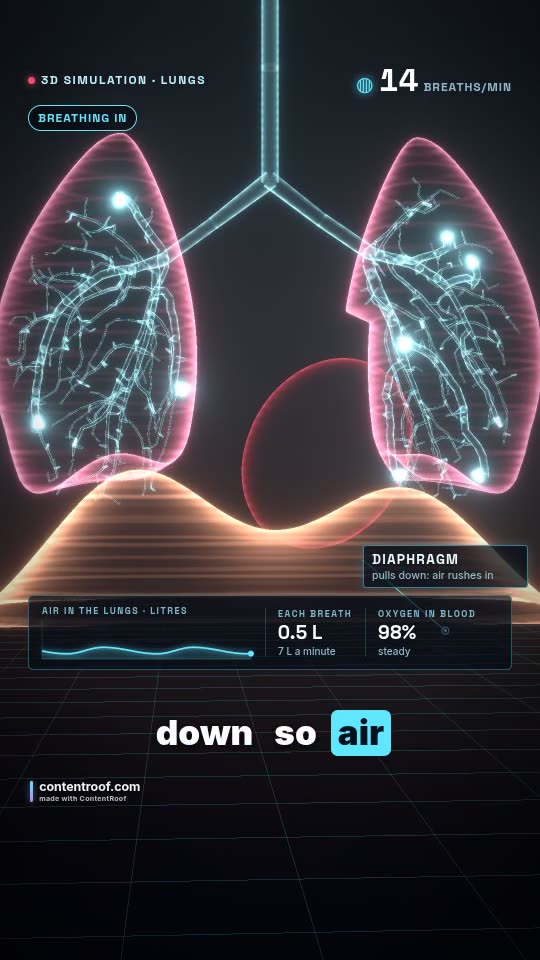 How the lungs work
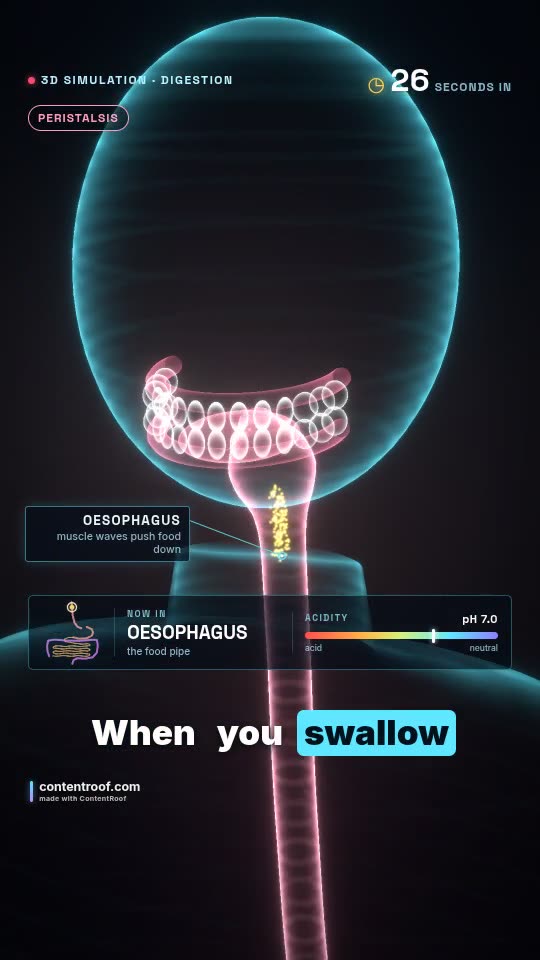 The digestive system
 How a muscle moves a bone
 How the eye works
 How a vaccine trains your immune system
 DNA