3D simulation · Body organs
How the heart pumps blood, in 3D
Blood flowing through both sides, the four valves snapping shut, the electrical spark that starts every beat, and a sprint to 150 beats a minute. Not a drawing and not an AI guess: a simulation that runs the real numbers, narrated, with every moment landing on its word.
What the simulation shows
- Blue, oxygen-poor blood flowing in from the body through the right side of the heart (labels the vena cava).
- Labels the right atrium and right ventricle.
- Red, oxygen-rich blood flowing through the left side (labels the left atrium and left ventricle).
- Labels the aorta, the main artery out to the body.
- Close-up cutaway of the four valves (tricuspid, pulmonary, mitral, aortic), labelled.
- Slow motion (0.2×): the valves open and snap shut, with the lub-dub sound.
- X-ray view: the heart's electrical signal starting at the SA node, the natural pacemaker.
- Labels the AV node, which holds the signal for about 0.1 s.
- Labels the Purkinje fibres: the ventricles squeeze from the bottom up.
- The heart speeds up to 150 beats a minute, as in a sprint; the pumped volume roughly triples.
- The heart slows back to a resting 70 beats a minute.
- A counter rolls up to 36.8 million: beats in a year.
The real numbers it runs on
The simulation is built on these facts, so the narration and the picture always agree:
- A resting heart beats about 70 times a minute; each beat pushes out about 70 millilitres; about 5 litres a minute, roughly all the blood in the body.
- The right side receives blue (oxygen-poor) blood from the body and pumps it to the lungs; the left side receives red (oxygen-rich) blood from the lungs and pumps it to the body through the aorta.
- Four valves keep blood moving one way: tricuspid, pulmonary, mitral, aortic. The 'lub-dub' sound is the valves snapping shut.
- Each beat starts at the SA node (the natural pacemaker); the AV node holds the signal about a tenth of a second so the atria finish first; the Purkinje fibres make the ventricles squeeze from the bottom up.
- In a sprint the heart can reach about 150 beats a minute and pump about three times as much blood (about 16 litres a minute).
- At 70 beats a minute that is about 100,000 beats a day and nearly 37 million a year.
The script this video was made from
“How your heart works”: the narration of the video above. Each highlighted moment in the simulation happens on the word that names it.
This is your heart. It beats about 70 times a minute, every minute of your life.
Two sides
Blood coming back from the body is blue, and it fills the right side. Blood from the lungs is red, full of oxygen, and leaves through the aorta.
Four valves
Four valves keep it all moving one way. Watch them snap shut.
The spark
Every beat starts with a spark. The signal waits a tenth of a second at the AV node, then the chambers squeeze from the bottom up.
Sprint
Now sprint. The beat climbs to 150, and the heart pumps three times more blood.
Never stops
Back at rest, it's seventy times a minute. Almost 40 million times a year. And it never stops.
Make your own
- Type a question, like “How your heart works”, or your own angle on it.
- ContentRoof picks this simulation, researches the facts and writes a short script, with every moment cued to a word.
- A natural voice reads it in your language and the simulation plays in time with it. Change any line and it follows.
- Download a vertical video for Shorts, TikTok and Reels, or use it in class.
Questions
Is this a real simulation or an AI-generated video?
A real simulation. How the heart pumps blood runs on the numbers listed above, so what you see is what actually happens, frame by frame. AI video generators guess what a scene should look like; they often get the science wrong.
Can I change what the narrator says?
Yes. Type your own question or idea and the AI writes a new script for this simulation, or edit any line yourself. Every moment of the simulation lands on the word that names it.
Which languages can it narrate in?
Eleven: English, Urdu, Hindi, Arabic, Spanish, French, Portuguese, German, Italian, Russian and Polish, with captions written properly (Urdu in Nastaliq, Arabic right to left).
Can I use it in class or post it on YouTube?
Yes. The video is yours to use in lessons, on YouTube Shorts, TikTok and Instagram Reels. The free plan makes 2 3D simulations a month; paid plans make more, in 1080p without the small mark.
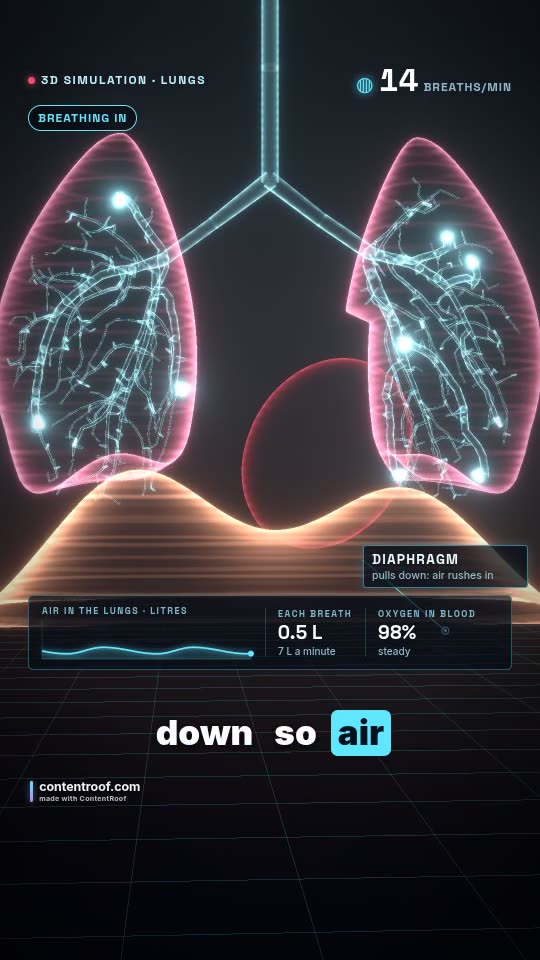 How the lungs work
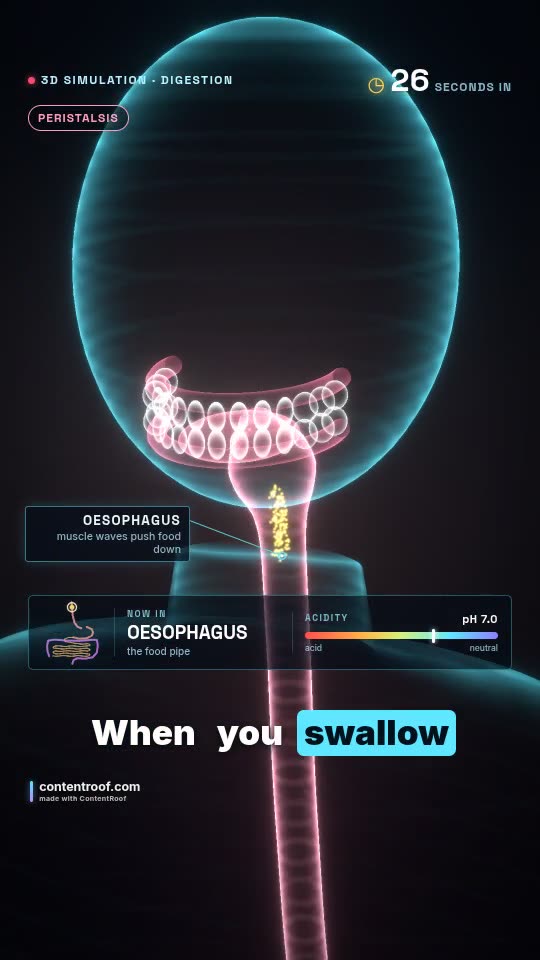 The digestive system
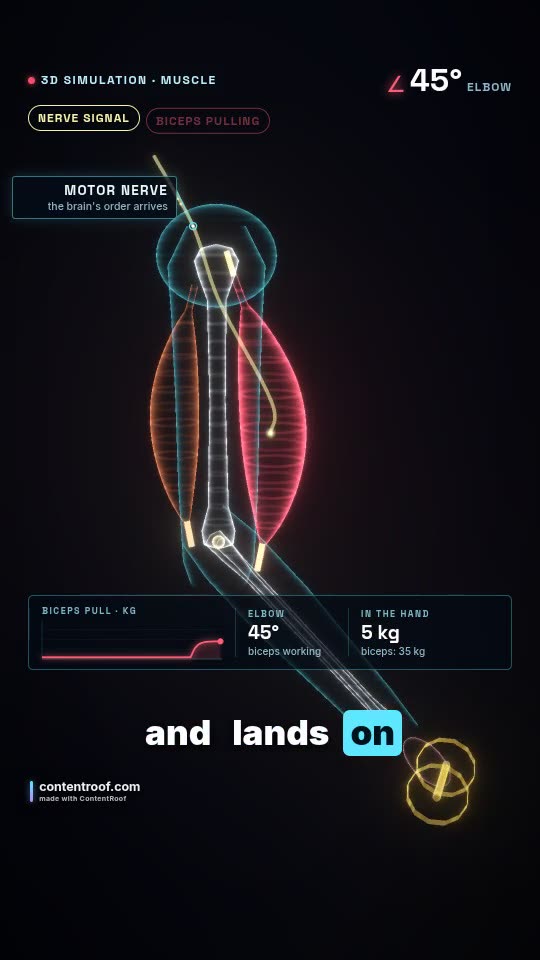 How a muscle moves a bone
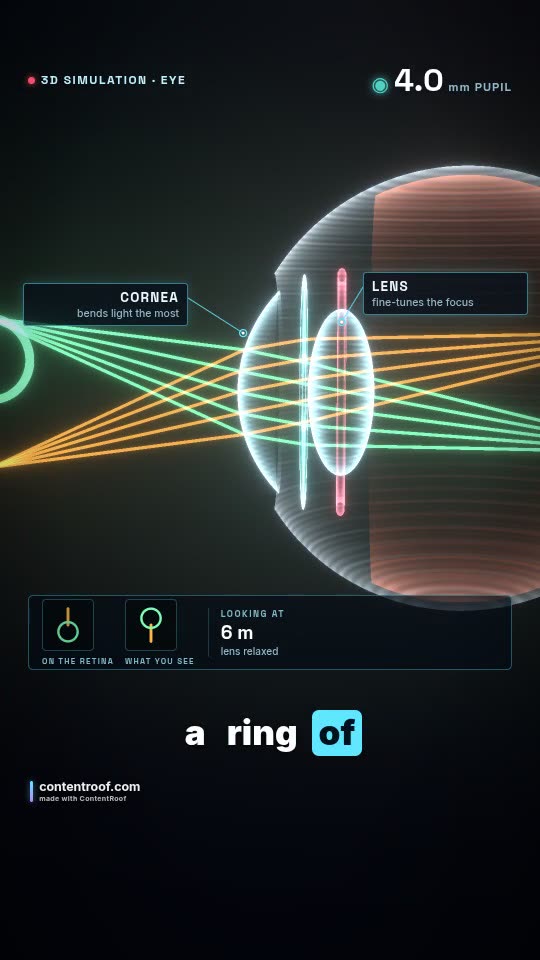 How the eye works
 How a vaccine trains your immune system
 DNA
 How a neuron sends a signal
 Gravity and orbits