3D simulation · Body organs
How the lungs work, in 3D
Air down the windpipe, the diaphragm pulling, oxygen crossing into the blood in the air sacs, and why you can't hold your breath for long. Not a drawing and not an AI guess: a simulation that runs the real numbers, narrated, with every moment landing on its word.
What the simulation shows
- Air streaming down the windpipe and through the airways, which split again and again (labels the windpipe and bronchi).
- The diaphragm (a dome of muscle under the lungs) pulling down as you breathe in, and the lungs swelling (labelled).
- Zooms 1000× into the tip of an airway: a cluster of tiny air sacs (alveoli) wrapped in blood vessels.
- Oxygen crossing from the air sacs into the blood (which turns red) while carbon dioxide crosses out.
- A callout: the air sacs spread flat would cover about 70 square metres, half a tennis court.
- Exercise: breathing speeds up to 40 breaths a minute and each breath gets four times deeper.
- Holding the breath: breathing stops, carbon dioxide builds up and the oxygen level slowly drops.
- Breathing settles back to a calm 14 breaths a minute.
- A counter rolls up to about 22,000: breaths in a day.
The real numbers it runs on
The simulation is built on these facts, so the narration and the picture always agree:
- At rest we breathe about 12 to 20 times a minute (the simulation shows 14), about half a litre each breath.
- Breathing in is mostly the diaphragm: a dome of muscle under the lungs that flattens and pulls down, so the lungs expand and air rushes in. Breathing out at rest is just relaxing.
- Air goes down the windpipe (trachea), which splits into two bronchi, then splits again and again, over 20 times, into ever smaller tubes.
- The tubes end in about 480 million tiny air sacs (alveoli); spread flat they'd cover about 70 square metres, around half a tennis court.
- Each air sac is wrapped in tiny blood vessels; its wall is thinner than a cell, so oxygen crosses into the blood and carbon dioxide crosses out.
- The right lung has three lobes, the left only two: it leaves room for the heart.
- During hard exercise breathing can reach about 40 breaths a minute, moving more than 15 times as much air.
- The urge to breathe when you hold your breath comes from carbon dioxide building up, not from running out of oxygen.
- We take about 22,000 breaths a day.
The script this video was made from
“Why you can't hold your breath”: the narration of the video above. Each highlighted moment in the simulation happens on the word that names it.
Try holding your breath. In a minute something will force you to stop. It isn't a lack of oxygen.
The pump
Each breath starts with the diaphragm, a dome of muscle that pulls down so air rushes in.
The tree
The air races down your windpipe into tubes that split again and again, twenty times over.
The swap
They end in millions of tiny air sacs. Here oxygen slips into your blood, and carbon dioxide slips out.
The alarm
So when you stop breathing, carbon dioxide piles up, and that is the alarm your brain can't ignore.
Every day
About 22,000 breaths a day, and you never have to think about one.
Make your own
- Type a question, like “Why you can't hold your breath”, or your own angle on it.
- ContentRoof picks this simulation, researches the facts and writes a short script, with every moment cued to a word.
- A natural voice reads it in your language and the simulation plays in time with it. Change any line and it follows.
- Download a vertical video for Shorts, TikTok and Reels, or use it in class.
Questions
Is this a real simulation or an AI-generated video?
A real simulation. How the lungs work runs on the numbers listed above, so what you see is what actually happens, frame by frame. AI video generators guess what a scene should look like; they often get the science wrong.
Can I change what the narrator says?
Yes. Type your own question or idea and the AI writes a new script for this simulation, or edit any line yourself. Every moment of the simulation lands on the word that names it.
Which languages can it narrate in?
Eleven: English, Urdu, Hindi, Arabic, Spanish, French, Portuguese, German, Italian, Russian and Polish, with captions written properly (Urdu in Nastaliq, Arabic right to left).
Can I use it in class or post it on YouTube?
Yes. The video is yours to use in lessons, on YouTube Shorts, TikTok and Instagram Reels. The free plan makes 2 3D simulations a month; paid plans make more, in 1080p without the small mark.
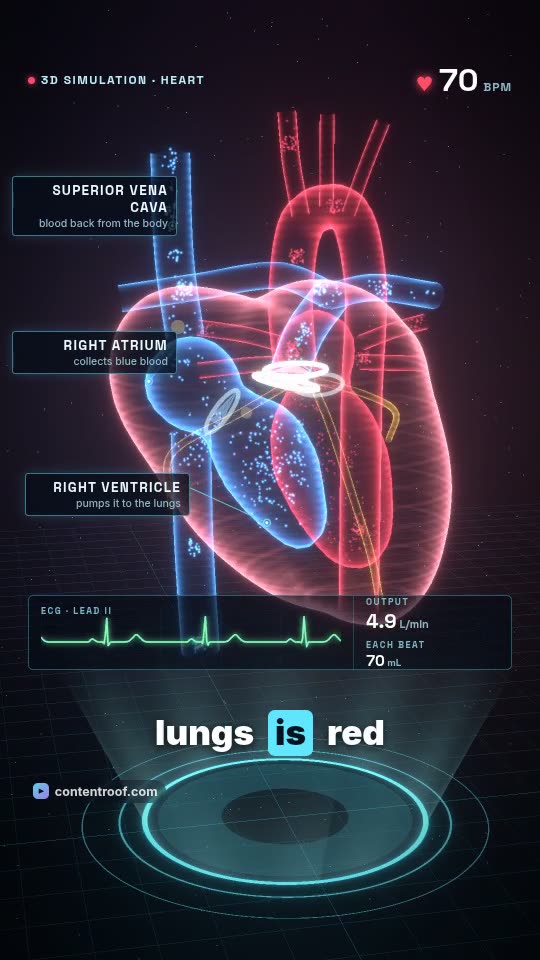 How the heart pumps blood
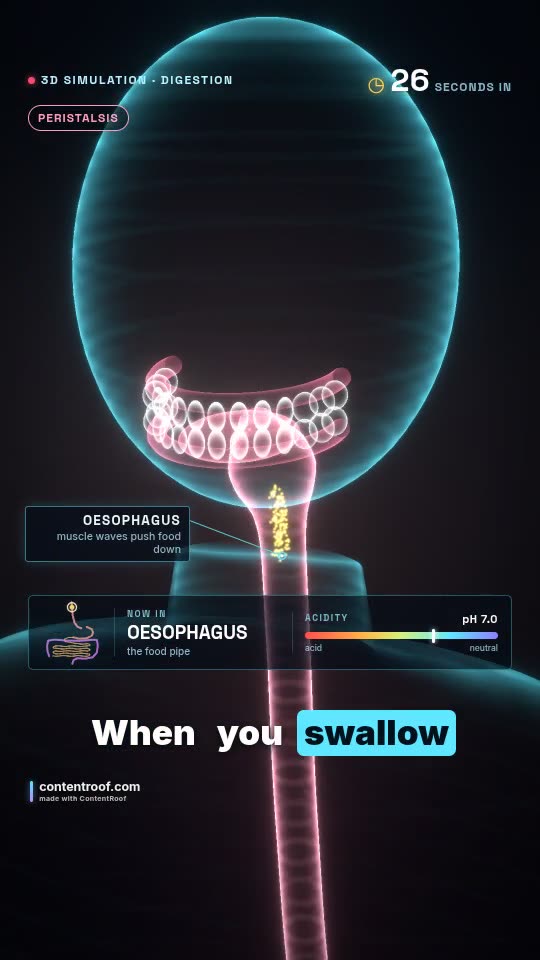 The digestive system
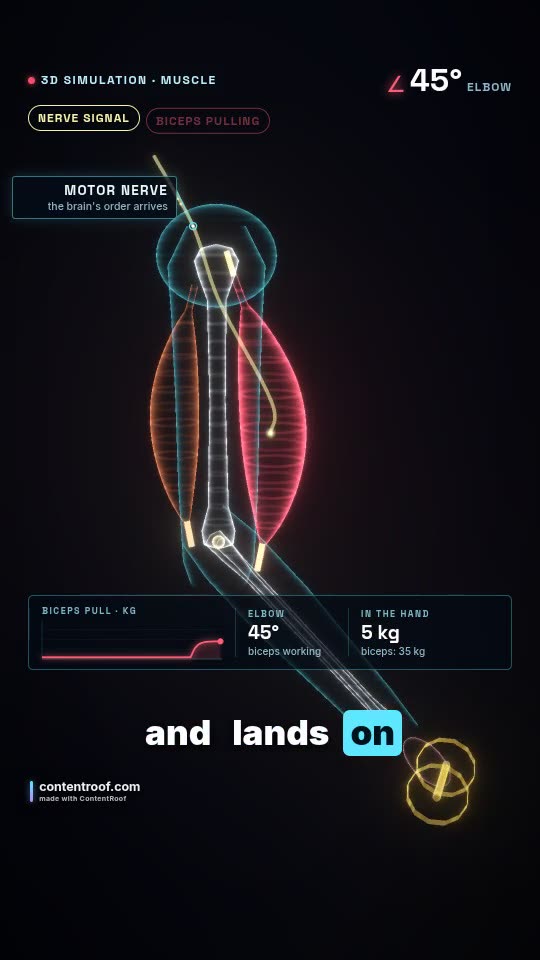 How a muscle moves a bone
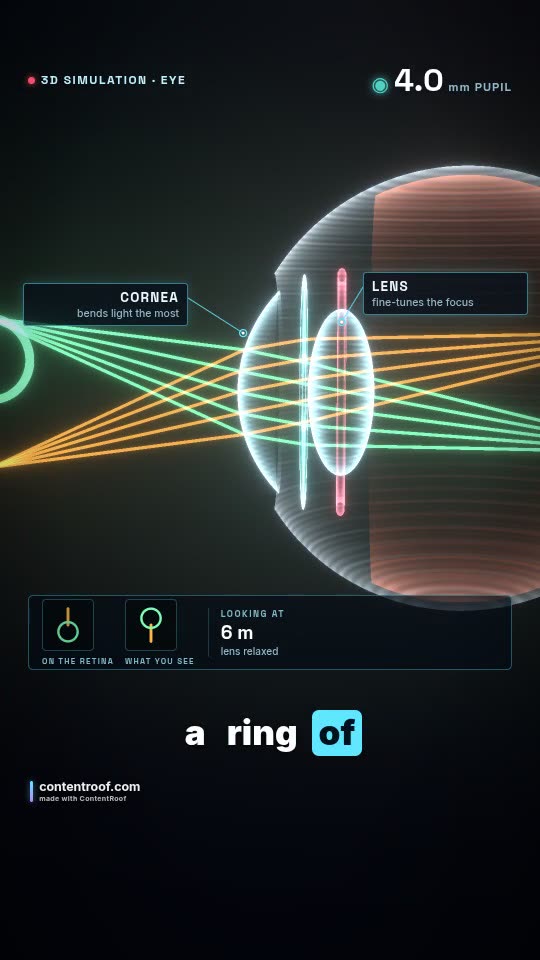 How the eye works
 How a vaccine trains your immune system
 DNA
 How a neuron sends a signal
 Gravity and orbits