3D simulation · Body organs
How the eye works, in 3D
Light bending through the cornea and lens, the pupil narrowing, an upside-down image on the retina, and the signal racing to the back of the brain. Not a drawing and not an AI guess: a simulation that runs the real numbers, narrated, with every moment landing on its word.
What the simulation shows
- Light from a tree enters the eye (a cut-away eyeball): the rays bend most at the cornea, then the lens bends them a little more (labels the cornea and lens).
- The eye seen from the front: in bright light the iris narrows the pupil to about 2 mm, in the dark it opens to about 8 mm (labels the iris and pupil; a light chip).
- The tree comes close: its image blurs (it would focus behind the retina), then the ciliary muscle tightens, the lens grows rounder and the image is sharp again (labelled).
- The picture of the tree lands on the retina upside down: the rays from its top land at the bottom (labels the retina and the fovea).
- Zooms into the retina: light passes the nerve cells and lands on rods (dim light) and red, green and blue cones (colour), which send signals back up (labelled).
- Signals race along the optic nerve to the visual cortex at the back of the brain, where the upside-down picture turns the right way up (labelled).
- Close on the back of the eye where the optic nerve leaves: no rods or cones, a blind spot; the gap in the picture is filled in (labelled).
The real numbers it runs on
The simulation is built on these facts, so the narration and the picture always agree:
- The eyeball is about 24 millimetres across.
- Light is bent (focused) first by the cornea, the clear dome at the front, which does about two thirds of the focusing; the lens behind the pupil does the rest and fine-tunes it.
- The iris is a ring of muscle; it narrows the pupil to about 2 millimetres in bright light and opens it to about 8 millimetres in the dark.
- To focus on something near, a ring of ciliary muscle tightens and the lens becomes rounder and stronger; for far things it relaxes and flattens. Without it a near object's image would fall behind the retina and look blurred.
- The picture on the retina is upside down (and left-right swapped); the brain turns it the right way up.
- The retina has about 120 million rods, which work in dim light but see no colour, and about 6 million cones, which see colour and detail; there are three kinds of cone, most sensitive to red, green or blue light. Cones are packed into the fovea, where vision is sharpest.
- Light passes through layers of nerve cells before it reaches the rods and cones at the back of the retina.
- The optic nerve, about a million nerve fibres, carries the signals to the visual cortex at the back of the brain.
- Where the optic nerve leaves the eye there are no rods or cones: a blind spot about 15 degrees to the side of where you look. The brain fills in the gap, so you never notice it.
The script this video was made from
“Your eyes see upside down”: the narration of the video above. Each highlighted moment in the simulation happens on the word that names it.
Everything you have ever seen arrived upside down.
The bend
Light from the world enters through the cornea, a clear dome that does most of the focusing.
The squeeze
For close things, a ring of muscle makes the lens rounder, so the picture stays sharp.
The flip
And the picture that lands on your retina is upside down.
The fix
Your optic nerve carries it to the back of your brain, which turns it the right way up.
The hole
It even hides a blind spot, where the nerve leaves the eye. You've never noticed it.
Make your own
- Type a question, like “Your eyes see upside down”, or your own angle on it.
- ContentRoof picks this simulation, researches the facts and writes a short script, with every moment cued to a word.
- A natural voice reads it in your language and the simulation plays in time with it. Change any line and it follows.
- Download a vertical video for Shorts, TikTok and Reels, or use it in class.
Questions
Is this a real simulation or an AI-generated video?
A real simulation. How the eye works runs on the numbers listed above, so what you see is what actually happens, frame by frame. AI video generators guess what a scene should look like; they often get the science wrong.
Can I change what the narrator says?
Yes. Type your own question or idea and the AI writes a new script for this simulation, or edit any line yourself. Every moment of the simulation lands on the word that names it.
Which languages can it narrate in?
Eleven: English, Urdu, Hindi, Arabic, Spanish, French, Portuguese, German, Italian, Russian and Polish, with captions written properly (Urdu in Nastaliq, Arabic right to left).
Can I use it in class or post it on YouTube?
Yes. The video is yours to use in lessons, on YouTube Shorts, TikTok and Instagram Reels. The free plan makes 2 3D simulations a month; paid plans make more, in 1080p without the small mark.
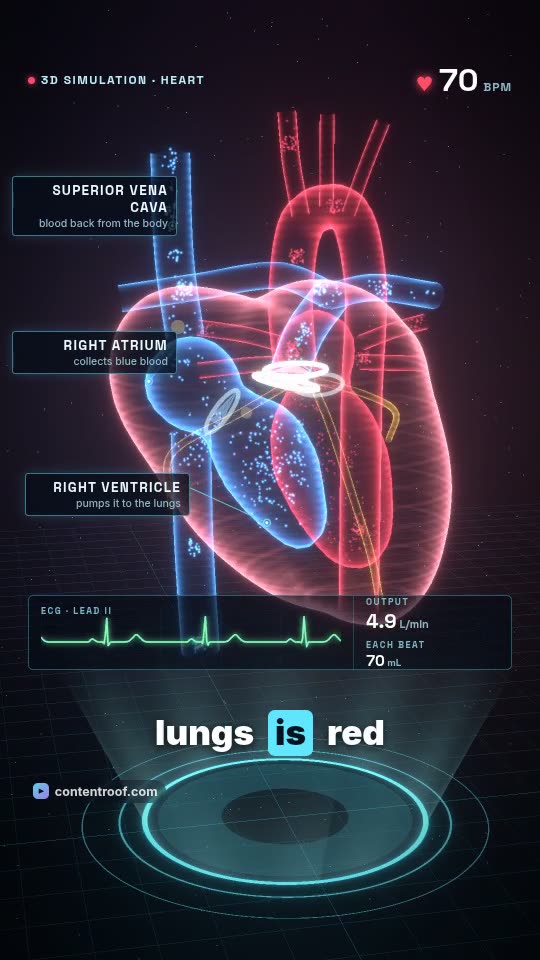 How the heart pumps blood
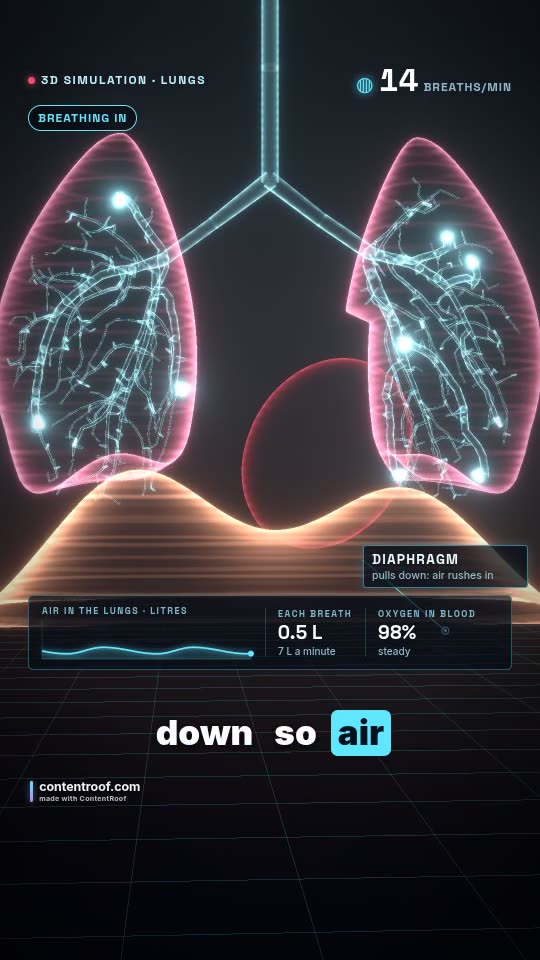 How the lungs work
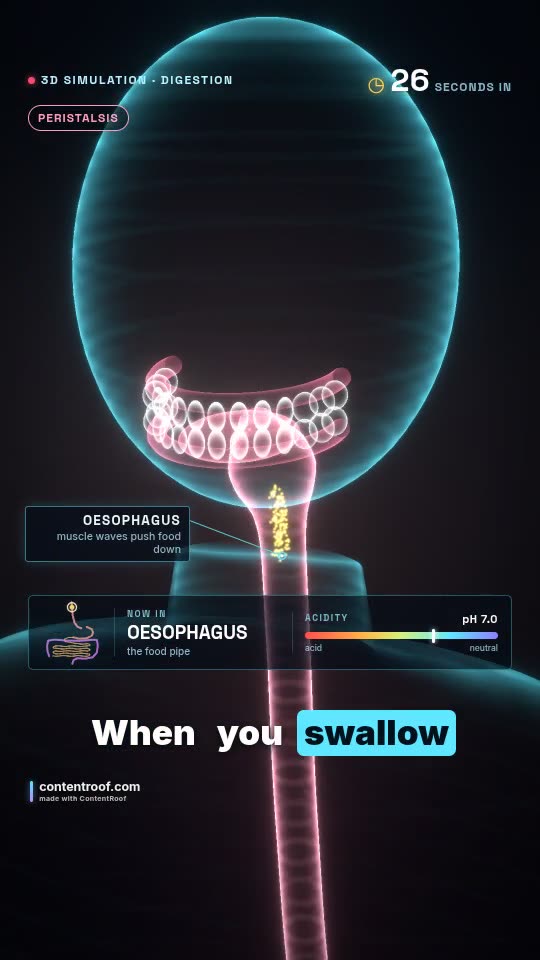 The digestive system
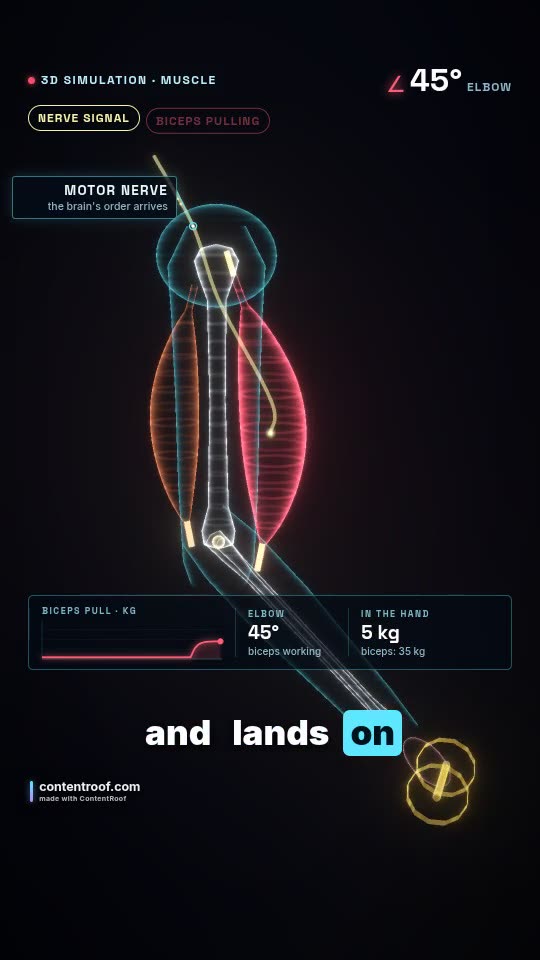 How a muscle moves a bone
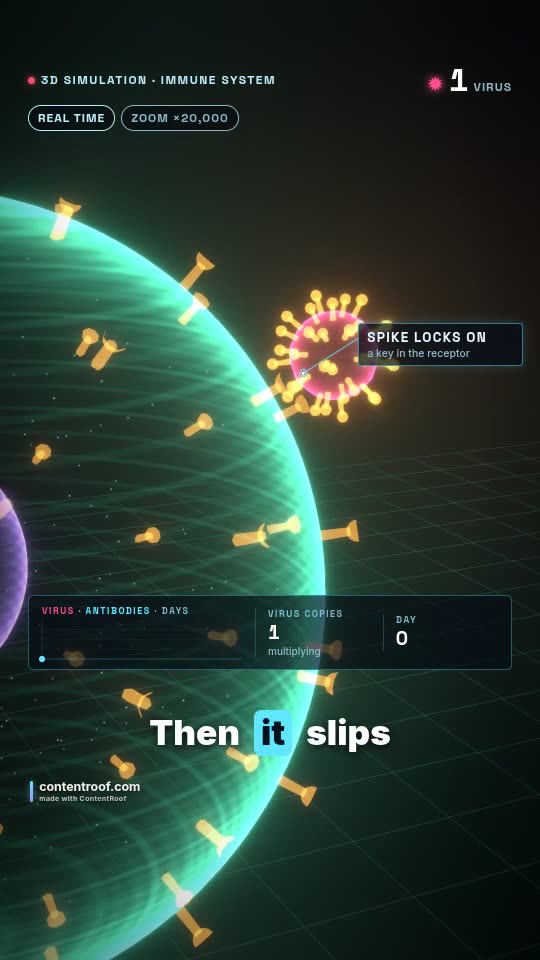 How a vaccine trains your immune system
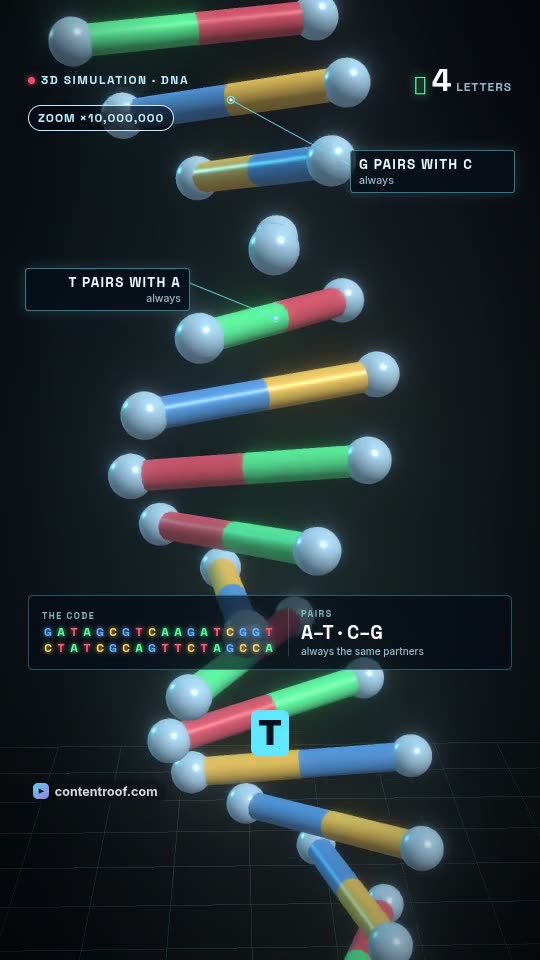 DNA
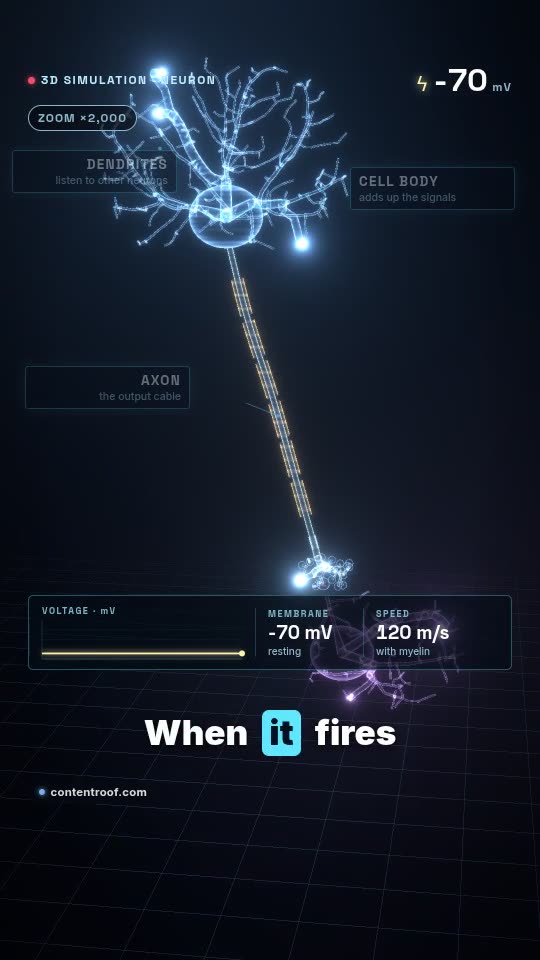 How a neuron sends a signal
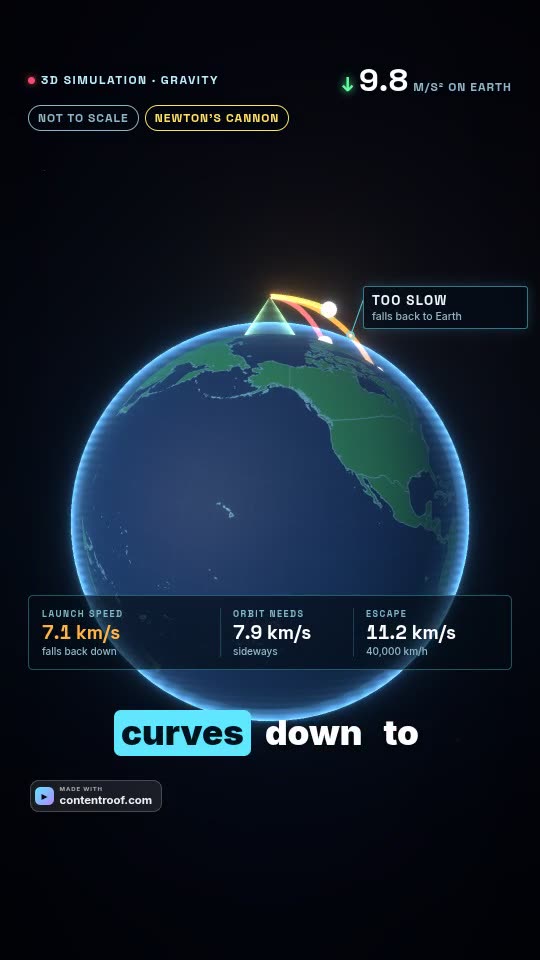 Gravity and orbits