3D simulation · Cells and microbes
How a neuron sends a signal, in 3D
An electrical signal racing down a nerve cell, chemical messengers crossing the gap to the next one, and how fast a thought really travels. Not a drawing and not an AI guess: a simulation that runs the real numbers, narrated, with every moment landing on its word.
What the simulation shows
- The neuron, labelled: dendrites (listen), cell body (adds up), axon (the output cable).
- A signal (action potential) racing down the axon; the voltage flips from −70 to +40 millivolts as sodium rushes in. It keeps firing after.
- Close on the axon: the myelin insulation, and the signal leaping from gap to gap.
- Zooms into the synapse: the signal releases chemical messengers that cross a tiny gap to the next neuron.
- The next neuron lighting up as it fires in turn.
- Zooms out: a network of neurons, signals cascading through it.
- A callout: about 430 kilometres an hour, a signal in an insulated nerve.
- A counter rolls up to 86 billion: neurons in the brain.
The real numbers it runs on
The simulation is built on these facts, so the narration and the picture always agree:
- A neuron has dendrites that receive signals, a cell body that adds them up, and an axon that sends its own signal on.
- At rest the inside of a neuron is about −70 millivolts. When it fires, sodium rushes in and the voltage flips to about +40 for about a millisecond: an action potential. It's all-or-nothing.
- Myelin is fatty insulation around many axons; the signal leaps from gap to gap, reaching about 120 metres a second (about 430 km/h). Without myelin some signals crawl at about 1 metre a second.
- At a synapse, the signal releases chemical messengers (neurotransmitters such as dopamine or serotonin) that cross a gap about 20 millionths of a millimetre wide to the next neuron.
- The brain has about 86 billion neurons, each connected to up to thousands of others.
- A neuron can fire hundreds of times a second.
The script this video was made from
“How a thought travels”: the narration of the video above. Each highlighted moment in the simulation happens on the word that names it.
Every thought you've ever had was a tiny burst of electricity jumping from cell to cell.
The cell
A neuron listens with its branches and answers down one long cable.
The spark
When it fires, the voltage flips in a millisecond and races down the cable, leaping between gaps in its insulation.
The gap
At the end there's a gap. The signal releases chemical messengers that cross it, and the next neuron fires.
The storm
Now multiply that by 86 billion neurons. That's your brain, thinking.
Make your own
- Type a question, like “How a thought travels”, or your own angle on it.
- ContentRoof picks this simulation, researches the facts and writes a short script, with every moment cued to a word.
- A natural voice reads it in your language and the simulation plays in time with it. Change any line and it follows.
- Download a vertical video for Shorts, TikTok and Reels, or use it in class.
Questions
Is this a real simulation or an AI-generated video?
A real simulation. How a neuron sends a signal runs on the numbers listed above, so what you see is what actually happens, frame by frame. AI video generators guess what a scene should look like; they often get the science wrong.
Can I change what the narrator says?
Yes. Type your own question or idea and the AI writes a new script for this simulation, or edit any line yourself. Every moment of the simulation lands on the word that names it.
Which languages can it narrate in?
Eleven: English, Urdu, Hindi, Arabic, Spanish, French, Portuguese, German, Italian, Russian and Polish, with captions written properly (Urdu in Nastaliq, Arabic right to left).
Can I use it in class or post it on YouTube?
Yes. The video is yours to use in lessons, on YouTube Shorts, TikTok and Instagram Reels. The free plan makes 2 3D simulations a month; paid plans make more, in 1080p without the small mark.
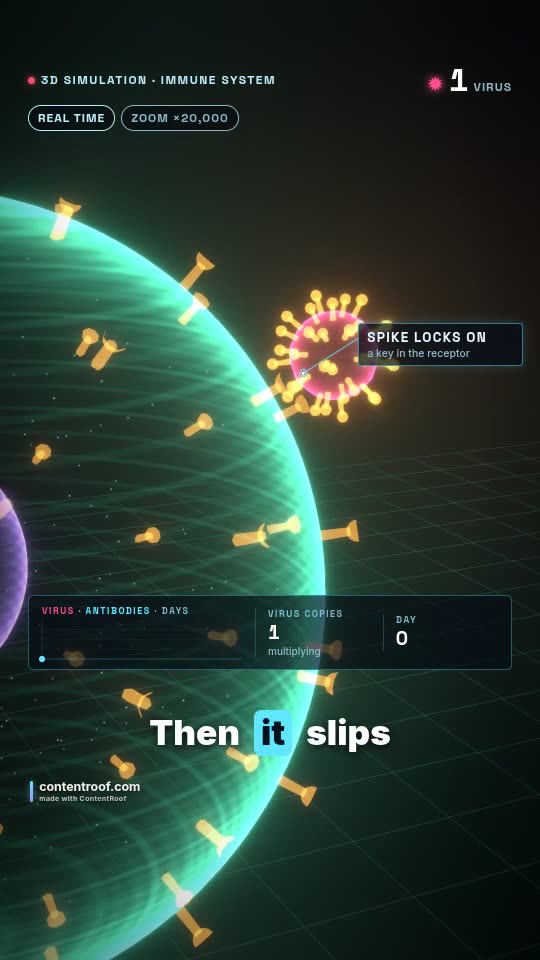 How a vaccine trains your immune system
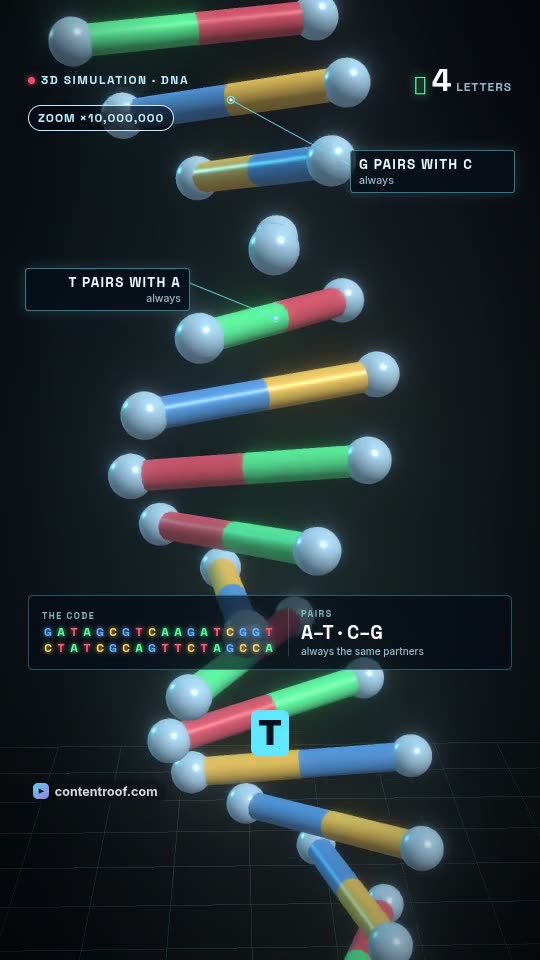 DNA
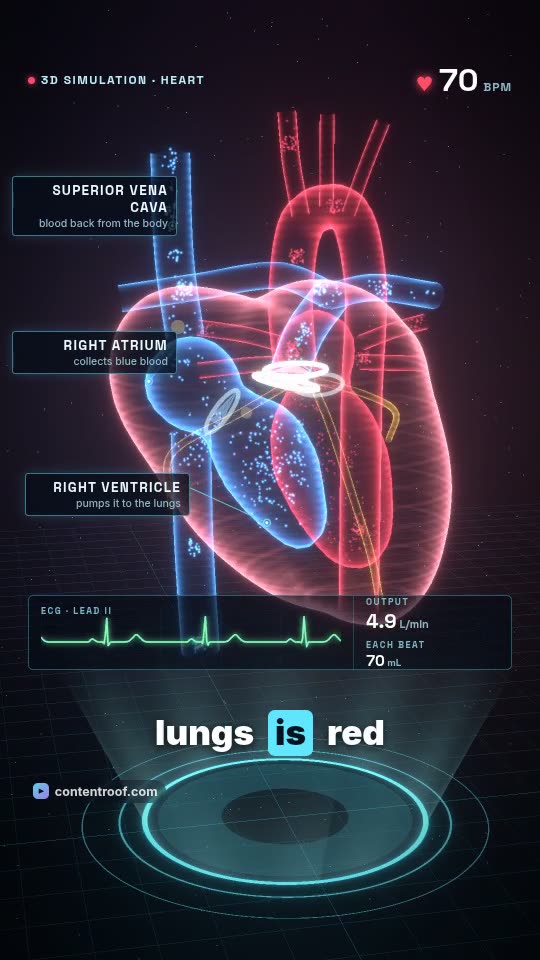 How the heart pumps blood
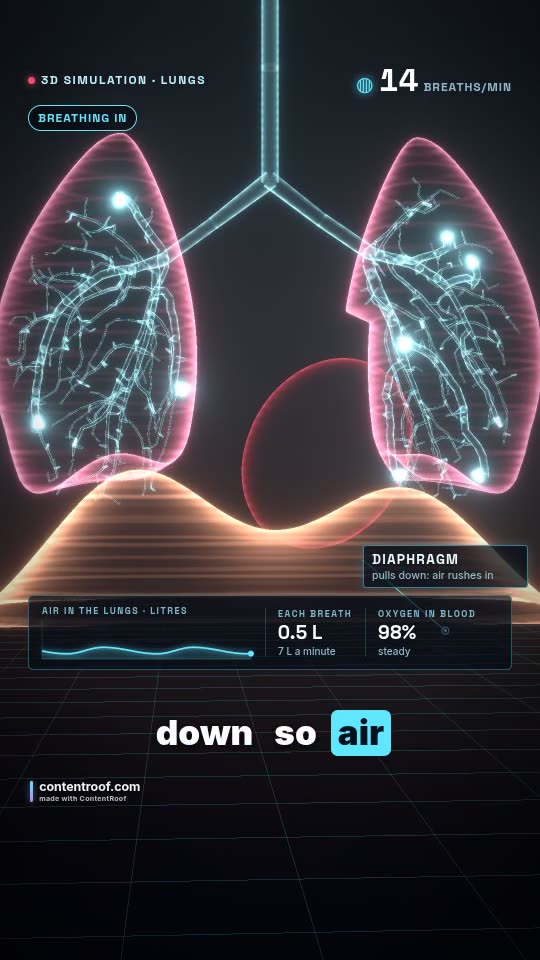 How the lungs work
 The digestive system
 How a muscle moves a bone
 How the eye works
 Gravity and orbits