3D simulation · Cells and microbes
How a vaccine trains your immune system, in 3D
A virus getting into cells and copying itself, the immune system fighting back, and how a vaccine lets it remember the enemy. Not a drawing and not an AI guess: a simulation that runs the real numbers, narrated, with every moment landing on its word.
What the simulation shows
- Viruses (spiky balls) drifting in towards a cell covered in receptors.
- One virus's spike locking onto a receptor on the cell, like a key in a lock (a flash).
- The virus slipping inside the cell and releasing its genes (a glowing strand).
- The hijacked cell building copies of the virus, one after another; the count climbs about tenfold a day.
- The new viruses bursting out of the cell to infect others.
- Y-shaped antibodies swarming in and sticking to the viruses, blocking their spikes; the virus count falls.
- A killer T cell docking onto the infected cell and destroying it.
- Memory cells remain, a callout: remembered for years, the next attack stopped in hours.
- A vaccine: harmless spike pieces with no virus inside; antibodies form and are already waiting.
The real numbers it runs on
The simulation is built on these facts, so the narration and the picture always agree:
- A virus is genes in a protein shell; it can't copy itself, so it must get inside a living cell.
- Its spike proteins fit receptors on the cell's surface like a key in a lock; that's how it gets in.
- Inside, the virus's genes make the cell build new viruses; one cell can release thousands of copies, and the count in the body can grow about tenfold a day.
- Antibodies are Y-shaped proteins that stick to the virus's spikes so it can't enter cells, and mark it for destruction; making the right ones takes about a week the first time.
- Killer T cells find infected cells and destroy them, stopping the factory.
- Memory cells remain for years, so a second infection is stopped within hours or days, often before you feel sick.
- A vaccine shows the immune system a harmless piece of the virus (like its spike), so the antibodies and memory are ready before the real virus arrives.
- The fever and aches of being ill are mostly the immune system fighting, not the virus itself.
- Your body has about 30 trillion cells.
The script this video was made from
“How a vaccine trains you”: the narration of the video above. Each highlighted moment in the simulation happens on the word that names it.
A virus can't do anything on its own. To multiply, it has to break into one of your cells.
The key
It drifts in and its spike fits a receptor like a key in a lock. Then it slips inside and unpacks its genes.
The factory
Your cell is now a factory, building copies, until they burst out to infect more cells.
The fight
It takes about a week for your body to make the right antibodies. They stick to the spikes, and the virus can't get in anymore.
The head start
A vaccine shows your body just the spike, harmless on its own, so the antibodies are already waiting.
Remembered
And memory cells keep the lesson for years.
Make your own
- Type a question, like “How a vaccine trains you”, or your own angle on it.
- ContentRoof picks this simulation, researches the facts and writes a short script, with every moment cued to a word.
- A natural voice reads it in your language and the simulation plays in time with it. Change any line and it follows.
- Download a vertical video for Shorts, TikTok and Reels, or use it in class.
Questions
Is this a real simulation or an AI-generated video?
A real simulation. How a vaccine trains your immune system runs on the numbers listed above, so what you see is what actually happens, frame by frame. AI video generators guess what a scene should look like; they often get the science wrong.
Can I change what the narrator says?
Yes. Type your own question or idea and the AI writes a new script for this simulation, or edit any line yourself. Every moment of the simulation lands on the word that names it.
Which languages can it narrate in?
Eleven: English, Urdu, Hindi, Arabic, Spanish, French, Portuguese, German, Italian, Russian and Polish, with captions written properly (Urdu in Nastaliq, Arabic right to left).
Can I use it in class or post it on YouTube?
Yes. The video is yours to use in lessons, on YouTube Shorts, TikTok and Instagram Reels. The free plan makes 2 3D simulations a month; paid plans make more, in 1080p without the small mark.
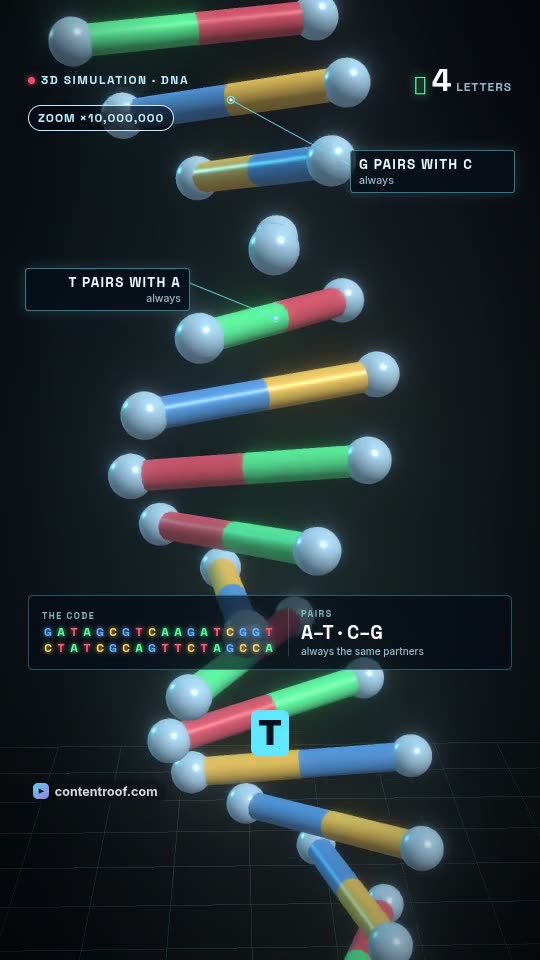 DNA
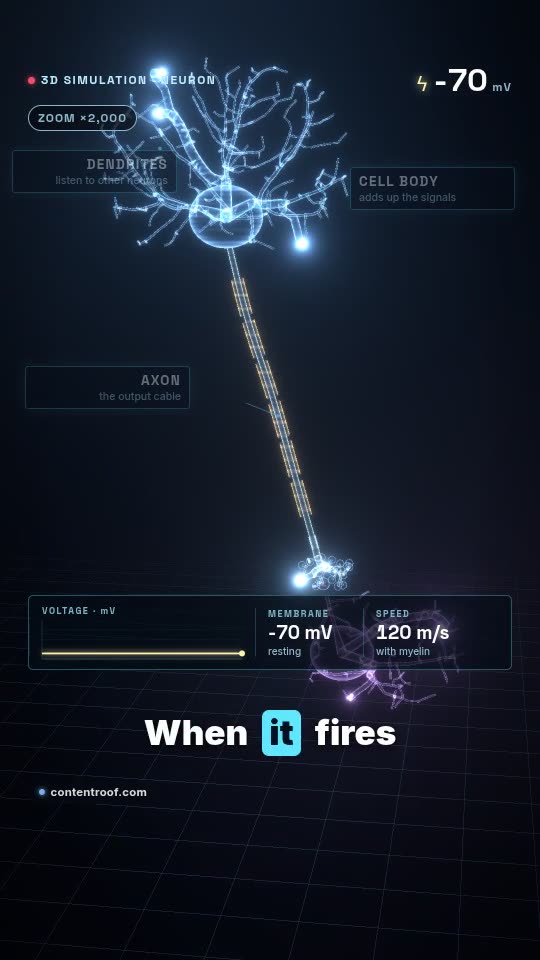 How a neuron sends a signal
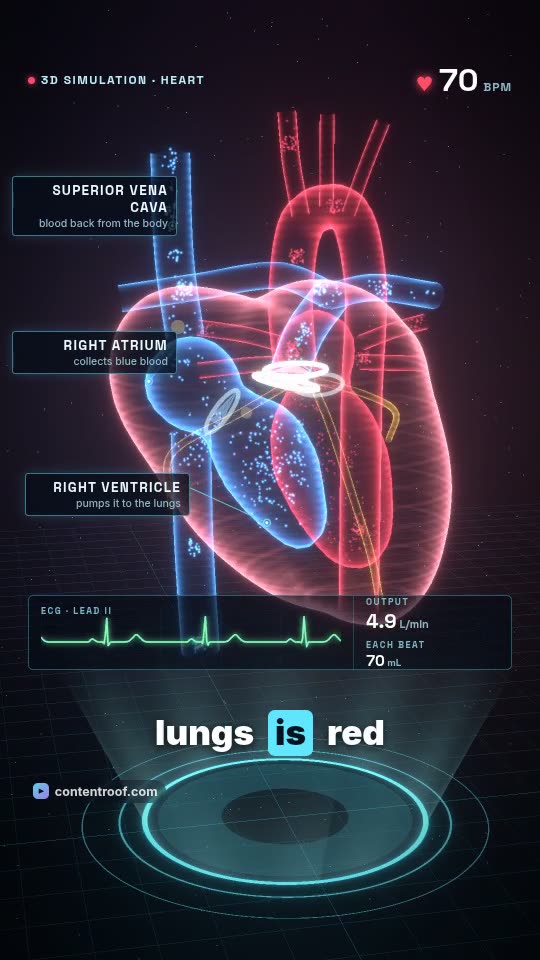 How the heart pumps blood
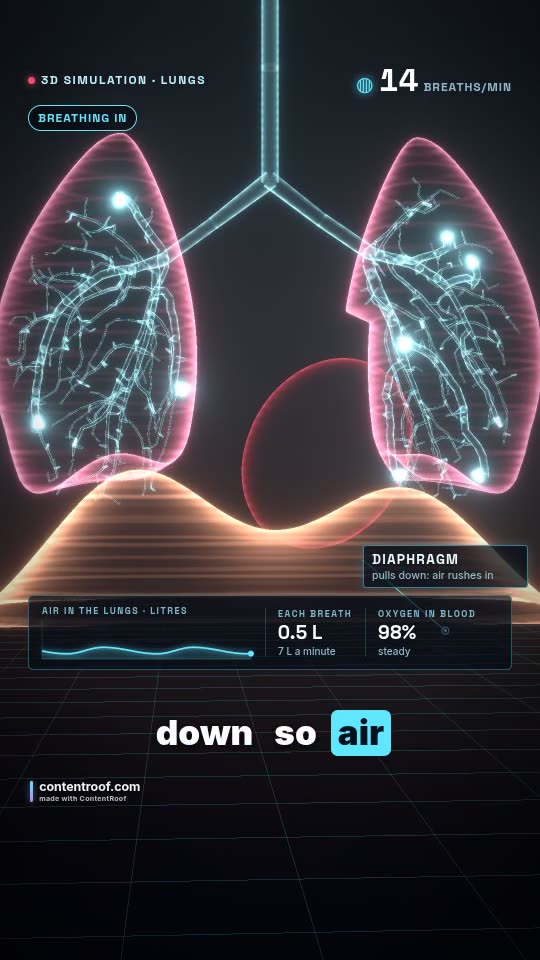 How the lungs work
 The digestive system
 How a muscle moves a bone
 How the eye works
 Gravity and orbits