3D simulation · Body organs
The digestive system, in 3D
A meal's journey: chewed, swallowed, churned in stomach acid, then through metres of intestine where the villi take in what the body needs. Not a drawing and not an AI guess: a simulation that runs the real numbers, narrated, with every moment landing on its word.
What the simulation shows
- Close on the mouth: the teeth chew the food into smaller pieces and saliva flows in (labels the teeth and saliva).
- The food is swallowed: a wave of muscle squeezes it down the food pipe (oesophagus) into the stomach, the camera riding along (labelled).
- The stomach churns the food in acid into a soupy mix; the acidity drops to about pH 2 (labels the stomach and the pylorus, its exit valve).
- Time-lapse: the food streams through the coils of the small intestine and nutrients pass into the blood, on to the liver (labelled); the clock runs to about 7 hours.
- Zooms into the small intestine's lining: a forest of swaying villi catching nutrients and passing them into their blood vessels (callout: about 30 square metres of surface).
- Time-lapse: the leftovers move round the large intestine, water is drawn back out, gut bacteria swarm (labelled); the clock runs to about 36 hours.
- The whole tract lights up from mouth to end while a counter measures it: up to about 9 metres when stretched out.
The real numbers it runs on
The simulation is built on these facts, so the narration and the picture always agree:
- From mouth to end the digestive tract is one long tube, up to about 9 metres when stretched out (shorter in a living body, where its muscles keep it taut), folded up inside the belly. Say "up to" or "several metres", never an exact length.
- Chewing breaks food into small pieces; saliva wets it and starts digesting starch. We make about half a litre to a litre and a half of saliva a day.
- Swallowed food is pushed down the oesophagus (the food pipe, about 25 centimetres) by waves of muscle called peristalsis, in about 8 seconds; it works even upside down.
- The stomach churns food with strong acid (about pH 1.5 to 3.5) and enzymes into a thick soup called chyme; a ring of muscle at its exit, the pylorus, lets a little out at a time. A meal stays in the stomach for about 2 to 4 hours.
- The small intestine, several metres long (about 3 to 5 in a living body, up to 6 or 7 stretched out), is where most nutrients are absorbed. Its lining is folded and covered in tiny finger-like villi, about a millimetre tall, so its inner surface is about 30 square metres.
- Nutrients pass through the villi into tiny blood vessels and go first to the liver. Getting through the stomach and small intestine takes about 6 to 8 hours.
- The large intestine, about 1.5 metres long, draws water back out of what's left; trillions of bacteria live there and help break down fibre.
- The whole journey usually takes about 24 to 72 hours; most of that time is spent in the large intestine.
The script this video was made from
“Where your lunch goes”: the narration of the video above. Each highlighted moment in the simulation happens on the word that names it.
Your lunch is about to travel up to nine metres, and it takes days.
The grind
It starts with your teeth, grinding each bite while saliva begins to digest it.
The squeeze
When you swallow, a wave of muscle squeezes it down to your stomach in about eight seconds.
The acid bath
Your stomach churns it in strong acid for two to four hours, until it's a thick soup.
The real work
Then the small intestine, metres of coils, pulls the nutrients into your blood through tiny fingers that line it.
The long wait
Last, the large intestine takes the water back. In all, about a day or two.
Make your own
- Type a question, like “Where your lunch goes”, or your own angle on it.
- ContentRoof picks this simulation, researches the facts and writes a short script, with every moment cued to a word.
- A natural voice reads it in your language and the simulation plays in time with it. Change any line and it follows.
- Download a vertical video for Shorts, TikTok and Reels, or use it in class.
Questions
Is this a real simulation or an AI-generated video?
A real simulation. The digestive system runs on the numbers listed above, so what you see is what actually happens, frame by frame. AI video generators guess what a scene should look like; they often get the science wrong.
Can I change what the narrator says?
Yes. Type your own question or idea and the AI writes a new script for this simulation, or edit any line yourself. Every moment of the simulation lands on the word that names it.
Which languages can it narrate in?
Eleven: English, Urdu, Hindi, Arabic, Spanish, French, Portuguese, German, Italian, Russian and Polish, with captions written properly (Urdu in Nastaliq, Arabic right to left).
Can I use it in class or post it on YouTube?
Yes. The video is yours to use in lessons, on YouTube Shorts, TikTok and Instagram Reels. The free plan makes 2 3D simulations a month; paid plans make more, in 1080p without the small mark.
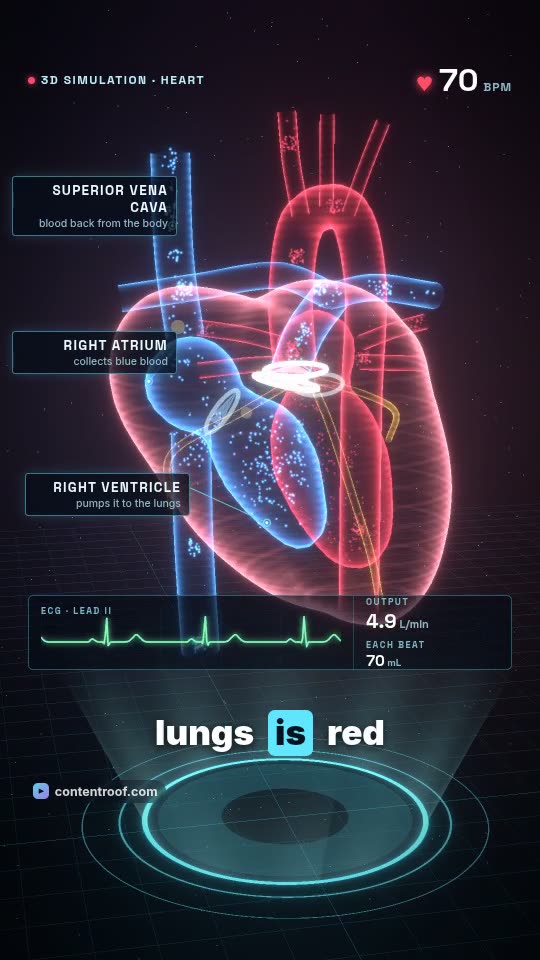 How the heart pumps blood
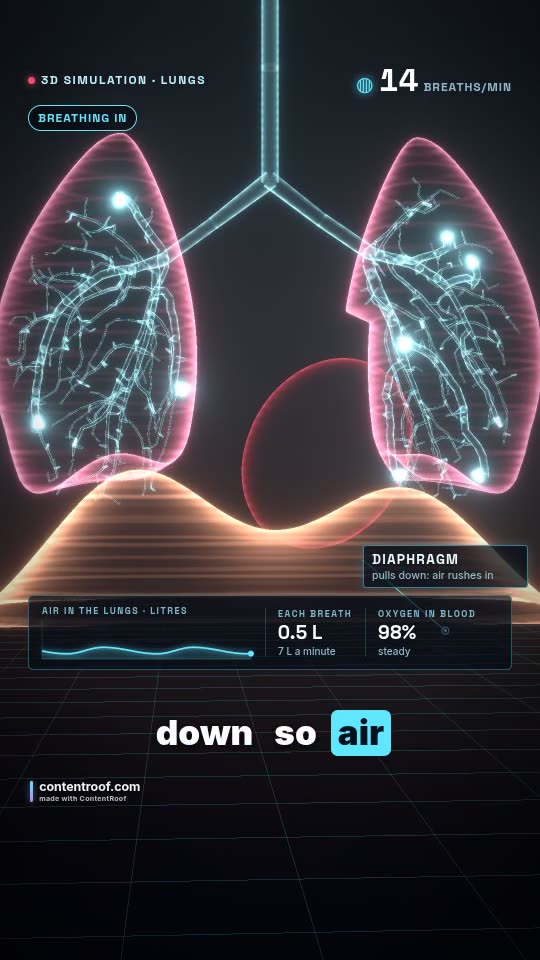 How the lungs work
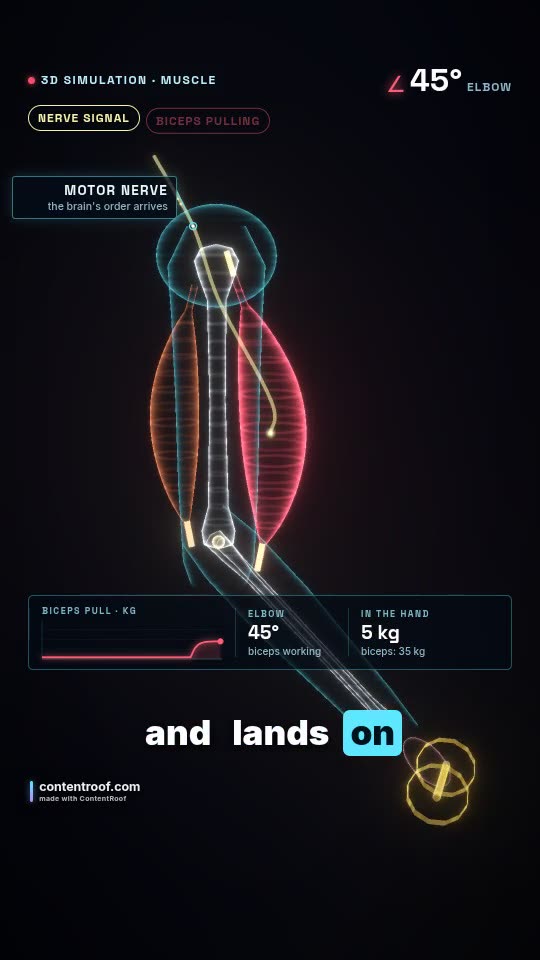 How a muscle moves a bone
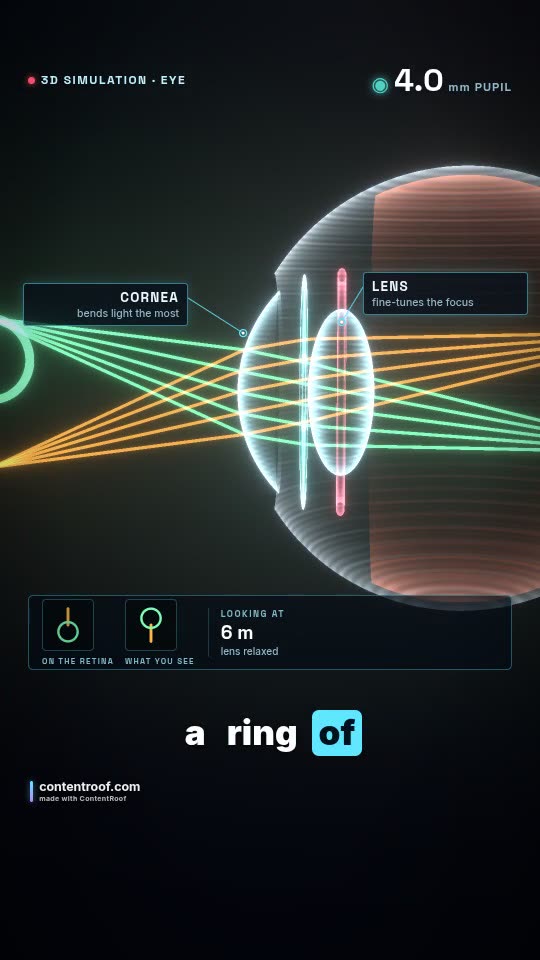 How the eye works
 How a vaccine trains your immune system
 DNA
 How a neuron sends a signal
 Gravity and orbits