3D simulation · Growth and spread
How things spread, in 3D
One case becoming millions: how a virus, a rumour or a viral post spreads, and what slows it down. Not a drawing and not an AI guess: a simulation that runs the real numbers, narrated, with every moment landing on its word.
What the simulation shows
- Close on the first person to catch it in a town of 720 people.
- It starts to spread from person to person, outwards through the neighbourhoods; the curve begins to rise.
- A callout: each case passes it to R others, 1 → 2 → 6 → 16…
- A callout: doubling every few days, slow and then all at once.
- People move less and meet fewer others; the spread slows and the curve flattens.
- Many people are vaccinated (they turn gold) and the chain breaks around them.
- A callout: once enough people are immune (1 − 1/R), it can no longer spread: herd immunity.
The real numbers it runs on
The simulation is built on these facts, so the narration and the picture always agree:
- Epidemics are modelled by splitting people into susceptible, infected and recovered (the SIR model).
- R (the reproduction number) is how many others each case infects on average: about 1.5 for flu, about 2.5 for early covid, 12 to 18 for measles.
- While R is above 1 cases grow exponentially, doubling every few days; below 1 the outbreak shrinks.
- Distancing lowers R by cutting contacts; it 'flattens the curve': fewer people sick at the same time, so hospitals can cope.
- Herd immunity: once a share of 1 − 1/R people is immune, each case passes it to fewer than one other person and it dies out: 60% for R = 2.5, about 93% for measles.
- Rumours and viral posts spread the same way: each person who shares reaches some others.
The script this video was made from
“Why one case becomes millions”: the narration of the video above. Each highlighted moment in the simulation happens on the word that names it.
It starts with one person. A month later, half the town is sick. How?
Passing it on
Each case passes it to two or three others. Then each of them does the same, and it spreads through the neighbourhoods.
Doubling
That's doubling every few days. Slow, slow, then all at once.
Slowing it
If people meet fewer others, the curve flattens, and fewer are sick at the same time.
The wall
And when enough are vaccinated, the chain breaks. That's herd immunity.
Make your own
- Type a question, like “Why one case becomes millions”, or your own angle on it.
- ContentRoof picks this simulation, researches the facts and writes a short script, with every moment cued to a word.
- A natural voice reads it in your language and the simulation plays in time with it. Change any line and it follows.
- Download a vertical video for Shorts, TikTok and Reels, or use it in class.
Questions
Is this a real simulation or an AI-generated video?
A real simulation. How things spread runs on the numbers listed above, so what you see is what actually happens, frame by frame. AI video generators guess what a scene should look like; they often get the science wrong.
Can I change what the narrator says?
Yes. Type your own question or idea and the AI writes a new script for this simulation, or edit any line yourself. Every moment of the simulation lands on the word that names it.
Which languages can it narrate in?
Eleven: English, Urdu, Hindi, Arabic, Spanish, French, Portuguese, German, Italian, Russian and Polish, with captions written properly (Urdu in Nastaliq, Arabic right to left).
Can I use it in class or post it on YouTube?
Yes. The video is yours to use in lessons, on YouTube Shorts, TikTok and Instagram Reels. The free plan makes 2 3D simulations a month; paid plans make more, in 1080p without the small mark.
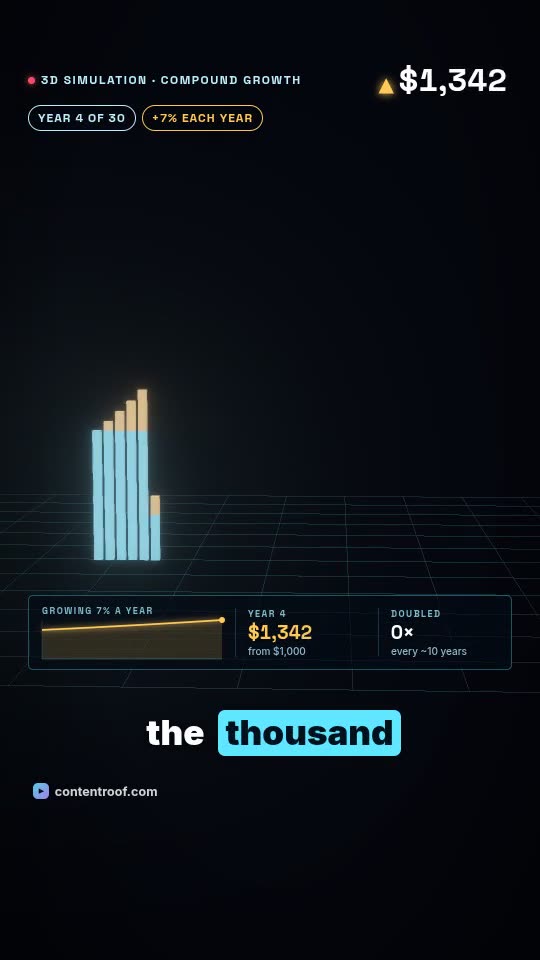 Compound growth
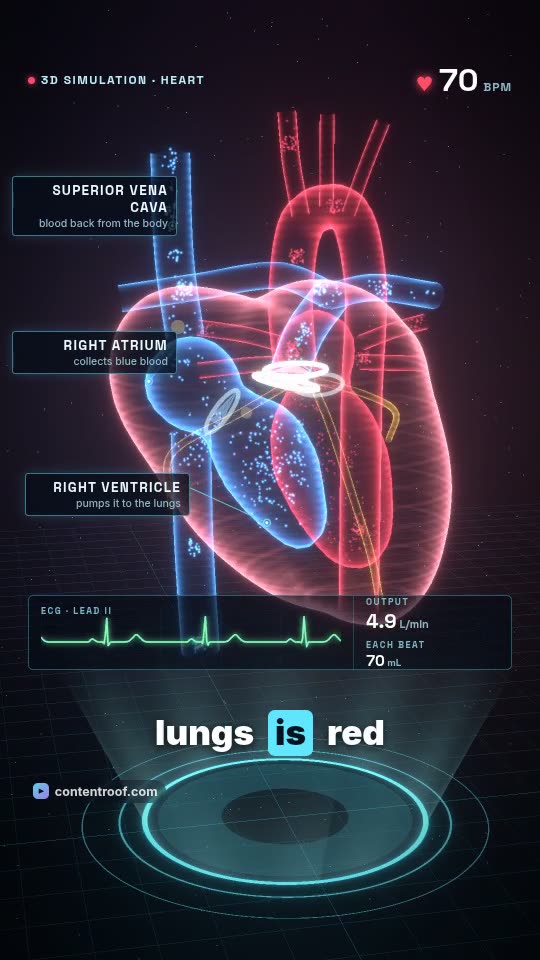 How the heart pumps blood
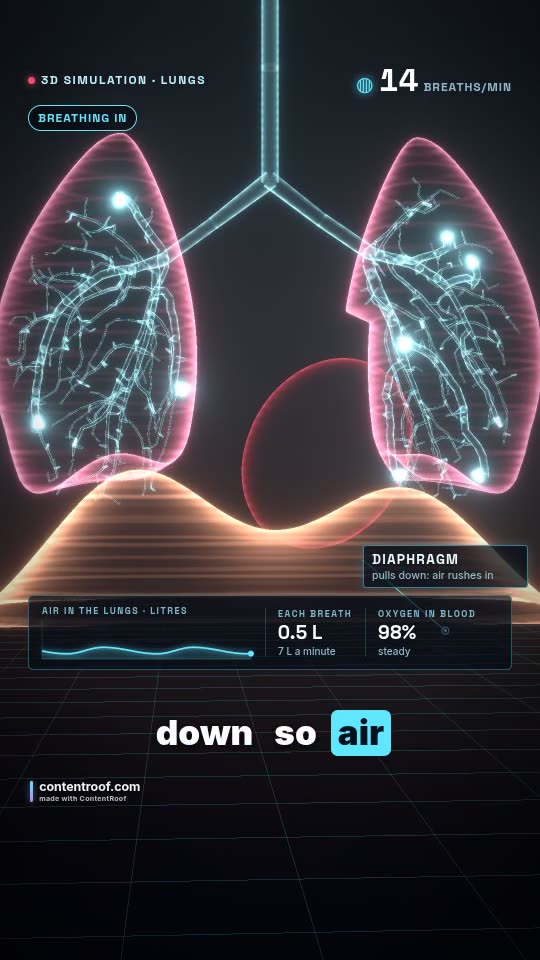 How the lungs work
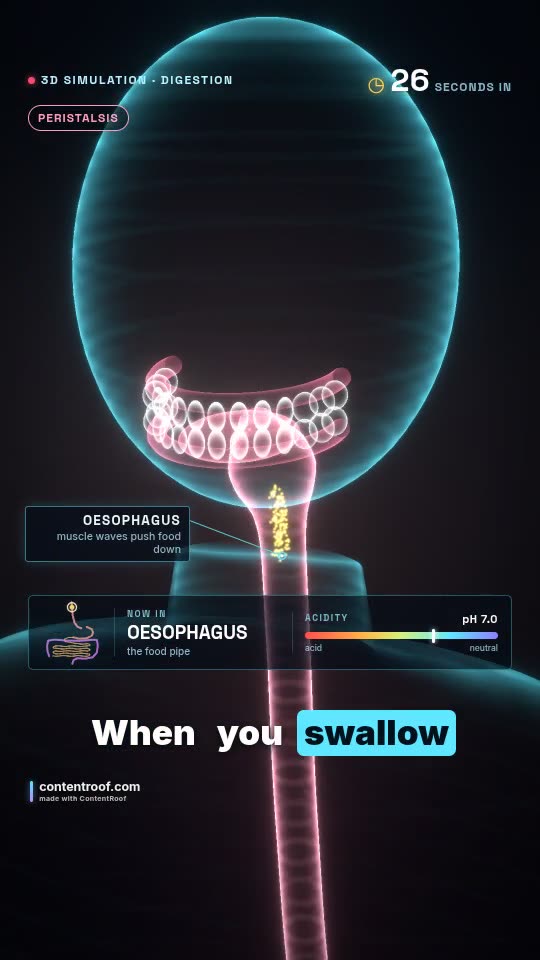 The digestive system
 How a muscle moves a bone
 How the eye works
 How a vaccine trains your immune system
 DNA