3D simulation · Life and evolution
Evolution and natural selection, in 3D
How soot changed the colour of a moth: a population changing over generations, as it really happened. Not a drawing and not an AI guess: a simulation that runs the real numbers, narrated, with every moment landing on its word.
What the simulation shows
- Moths resting on pale tree bark: most are pale and hard to see; a rare dark one stands out (labelled).
- A bird swoops and picks off the moths that stand out, one after another.
- Soot from factories blackens the bark: now the pale moths stand out and the dark ones are hidden.
- Generations pass in seconds: the dark moths go from rare to almost all of them (the chart rises).
- A food pyramid: plants, plant eaters, meat eaters, a top predator, each level much smaller.
- Energy climbing the pyramid: only about 10% passes to the next level, the rest is lost as heat.
The real numbers it runs on
The simulation is built on these facts, so the narration and the picture always agree:
- Individuals in a species vary; some differences come from random mutations and are passed on to offspring.
- Those whose traits help them survive and breed leave more young, so over generations those traits become common: natural selection.
- Peppered moths in England: in the 1800s soot from factories blackened trees; birds found pale moths more easily, and in Manchester dark moths went from about 2% to about 98% in 50 years. When the air was cleaned, pale moths came back.
- Individuals don't evolve; populations do, over generations.
- In a food chain only about 10% of the energy at one level reaches the next; the rest is used to live and lost as heat. That's why there are far fewer predators than plants.
The script this video was made from
“How soot changed a moth”: the narration of the video above. Each highlighted moment in the simulation happens on the word that names it.
In the 1800s, a moth in England changed colour in just fifty years. No moth changed. The population did.
The odd one
Most peppered moths were pale, hidden on pale tree bark. A rare few were dark.
The hunt
Birds eat what they can see, so the dark ones rarely lasted.
The soot
Then factory smoke blackened the trees. Now the pale moths stood out.
The shift
Generation after generation, the dark moths survived more, until almost all of them were dark. That's natural selection.
Make your own
- Type a question, like “How soot changed a moth”, or your own angle on it.
- ContentRoof picks this simulation, researches the facts and writes a short script, with every moment cued to a word.
- A natural voice reads it in your language and the simulation plays in time with it. Change any line and it follows.
- Download a vertical video for Shorts, TikTok and Reels, or use it in class.
Questions
Is this a real simulation or an AI-generated video?
A real simulation. Evolution and natural selection runs on the numbers listed above, so what you see is what actually happens, frame by frame. AI video generators guess what a scene should look like; they often get the science wrong.
Can I change what the narrator says?
Yes. Type your own question or idea and the AI writes a new script for this simulation, or edit any line yourself. Every moment of the simulation lands on the word that names it.
Which languages can it narrate in?
Eleven: English, Urdu, Hindi, Arabic, Spanish, French, Portuguese, German, Italian, Russian and Polish, with captions written properly (Urdu in Nastaliq, Arabic right to left).
Can I use it in class or post it on YouTube?
Yes. The video is yours to use in lessons, on YouTube Shorts, TikTok and Instagram Reels. The free plan makes 2 3D simulations a month; paid plans make more, in 1080p without the small mark.
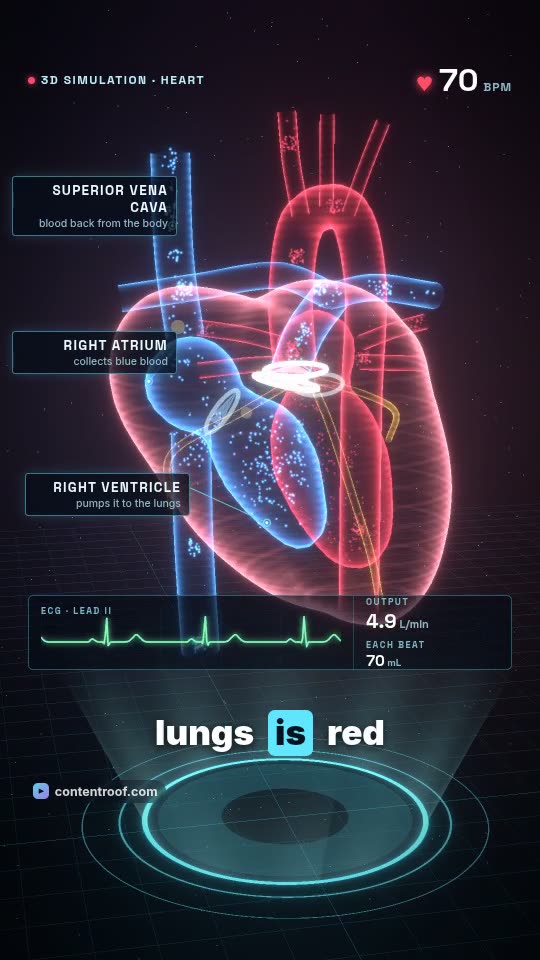 How the heart pumps blood
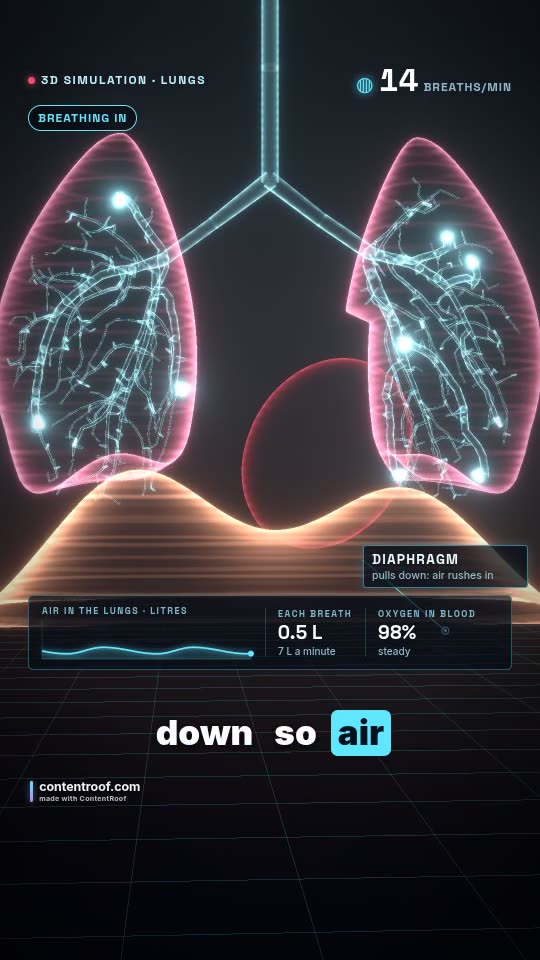 How the lungs work
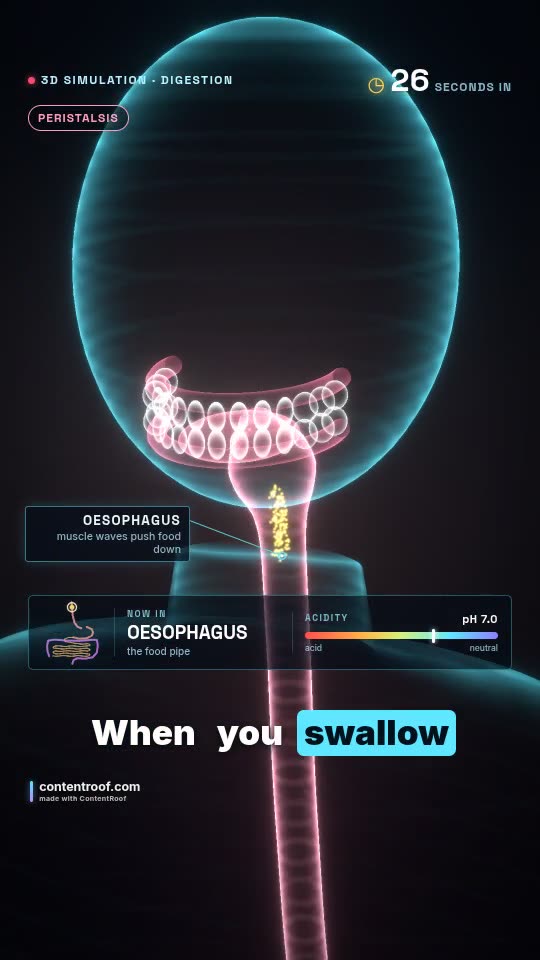 The digestive system
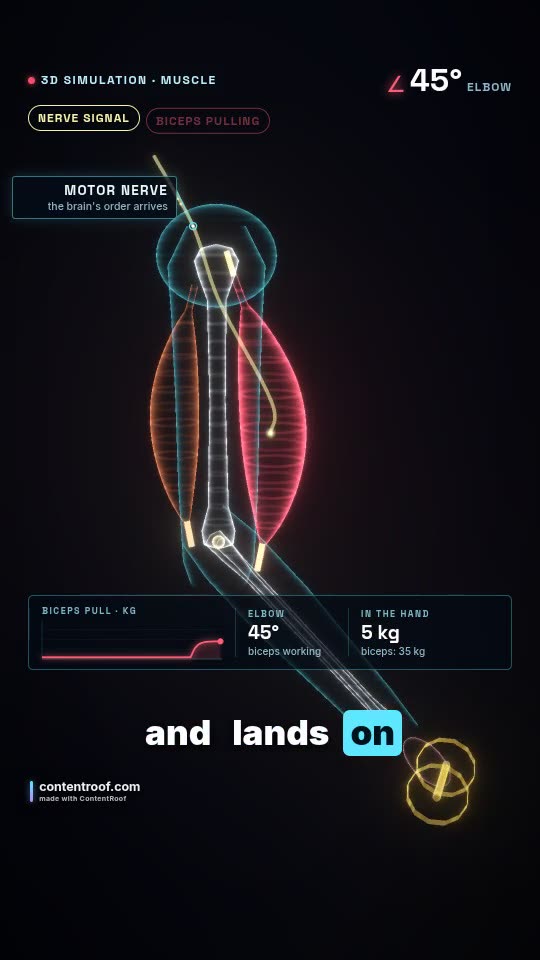 How a muscle moves a bone
 How the eye works
 How a vaccine trains your immune system
 DNA
 How a neuron sends a signal