3D simulation · History in motion
History in motion, on a 3D globe
Journeys and empires moving across a globe: the road that connected the world, trade routes and conquests. Not a drawing and not an AI guess: a simulation that runs the real numbers, narrated, with every moment landing on its word.
What the simulation shows
- The globe turns to the region of the story, the places marked.
- A journey travels the route stop by stop along great circles, each place named as it's reached.
- The empire's lands light up one after another in the order they were taken; the year counts on.
- The empire at its height, glowing.
- The empire fades away: its fall.
The real numbers it runs on
The simulation is built on these facts, so the narration and the picture always agree:
- Use only well-known, widely agreed dates, places and numbers for this story (the simulation shows the places and years you set).
- Give years as plain numbers in the setup; in the narration say them the way a narrator would.
- Name places by today's names in the setup (Istanbul for Constantinople) even if the narration uses the old name.
The script this video was made from
“The road that connected the world”: the narration of the video above. Each highlighted moment in the simulation happens on the word that names it.
In twelve seventy-one, a seventeen-year-old left Venice on a journey that would take twenty-four years.
The road east
Marco Polo travelled the Silk Road, across deserts and mountains, through Baghdad and Samarkand.
The great khan
He reached the court of Kublai Khan in China and stayed for seventeen years.
The book
His stories of the East amazed Europe, and inspired explorers for centuries.
Make your own
- Type a question, like “The road that connected the world”, or your own angle on it.
- ContentRoof picks this simulation, researches the facts and writes a short script, with every moment cued to a word.
- A natural voice reads it in your language and the simulation plays in time with it. Change any line and it follows.
- Download a vertical video for Shorts, TikTok and Reels, or use it in class.
Questions
Is this a real simulation or an AI-generated video?
A real simulation. History in motion runs on the numbers listed above, so what you see is what actually happens, frame by frame. AI video generators guess what a scene should look like; they often get the science wrong.
Can I change what the narrator says?
Yes. Type your own question or idea and the AI writes a new script for this simulation, or edit any line yourself. Every moment of the simulation lands on the word that names it.
Which languages can it narrate in?
Eleven: English, Urdu, Hindi, Arabic, Spanish, French, Portuguese, German, Italian, Russian and Polish, with captions written properly (Urdu in Nastaliq, Arabic right to left).
Can I use it in class or post it on YouTube?
Yes. The video is yours to use in lessons, on YouTube Shorts, TikTok and Instagram Reels. The free plan makes 2 3D simulations a month; paid plans make more, in 1080p without the small mark.
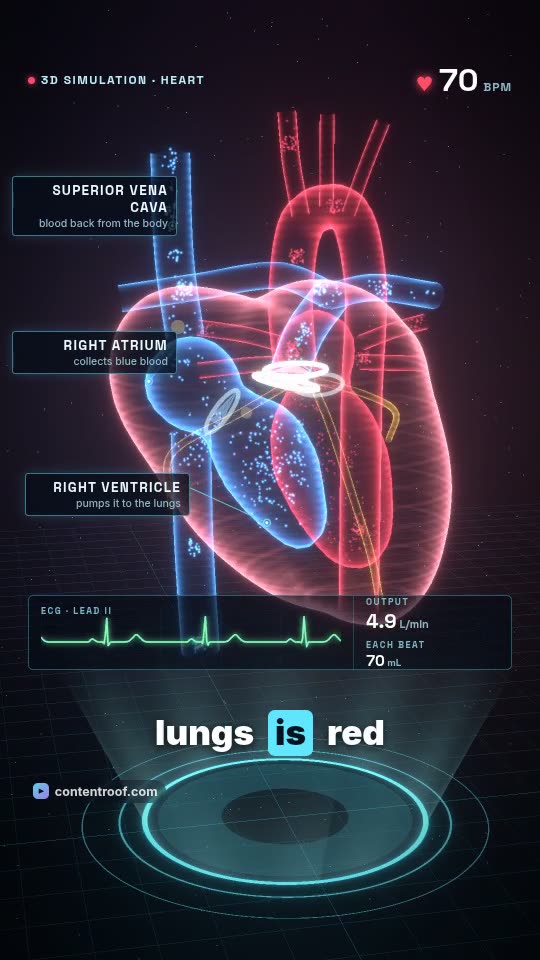 How the heart pumps blood
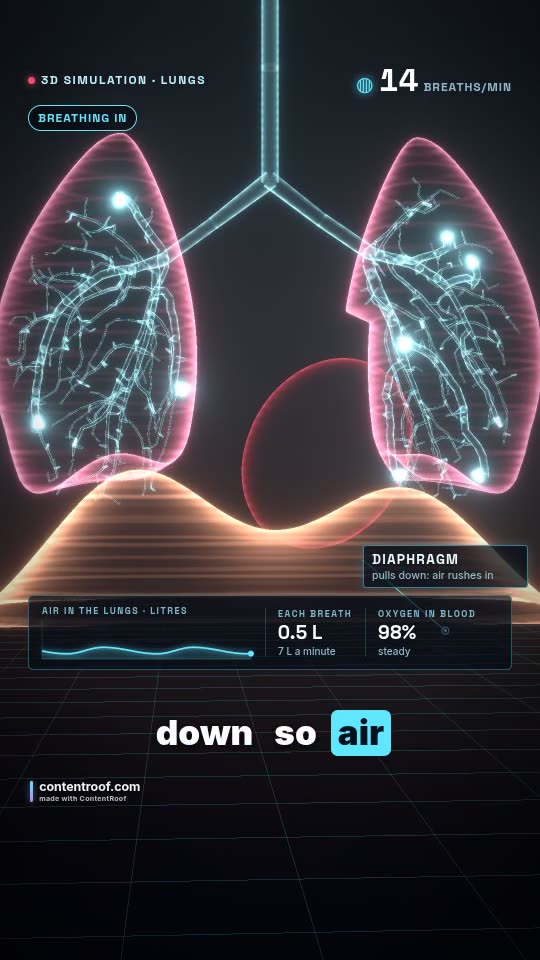 How the lungs work
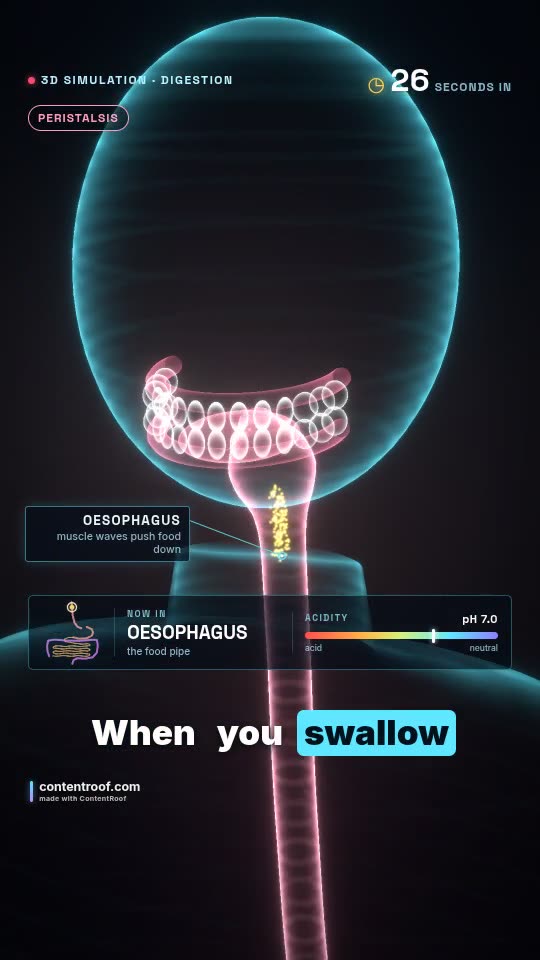 The digestive system
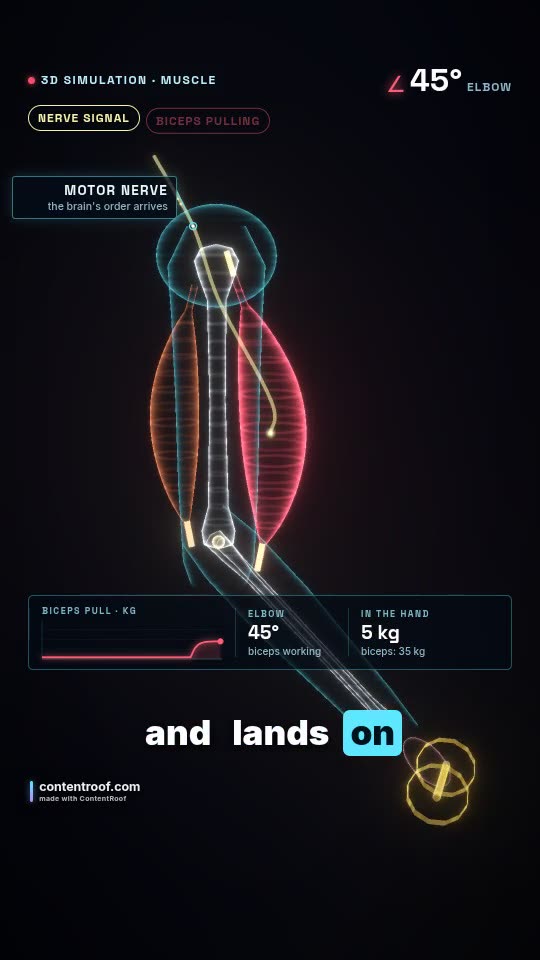 How a muscle moves a bone
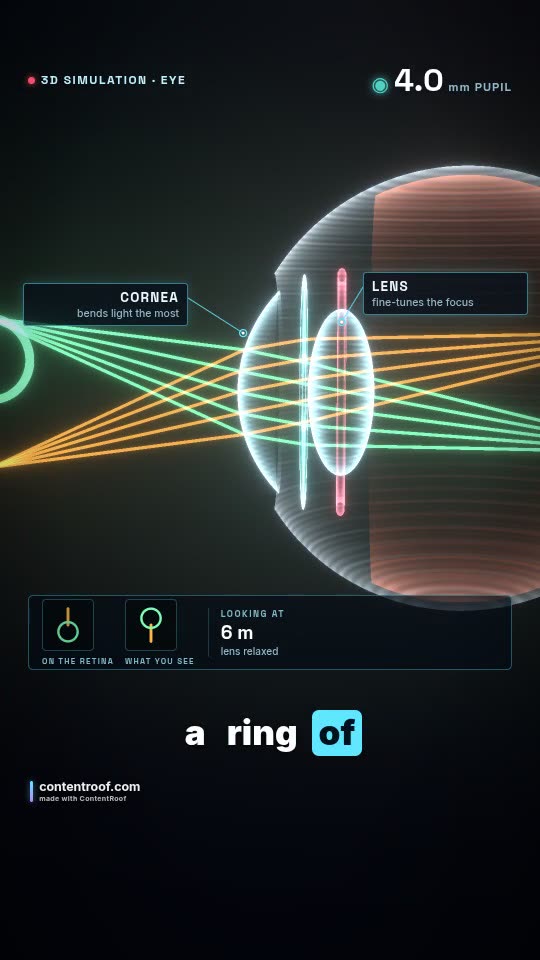 How the eye works
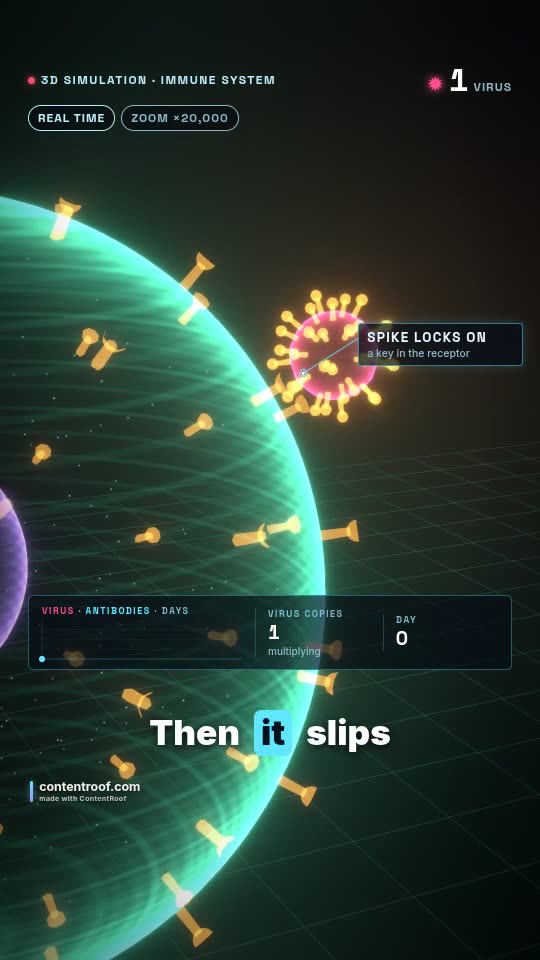 How a vaccine trains your immune system
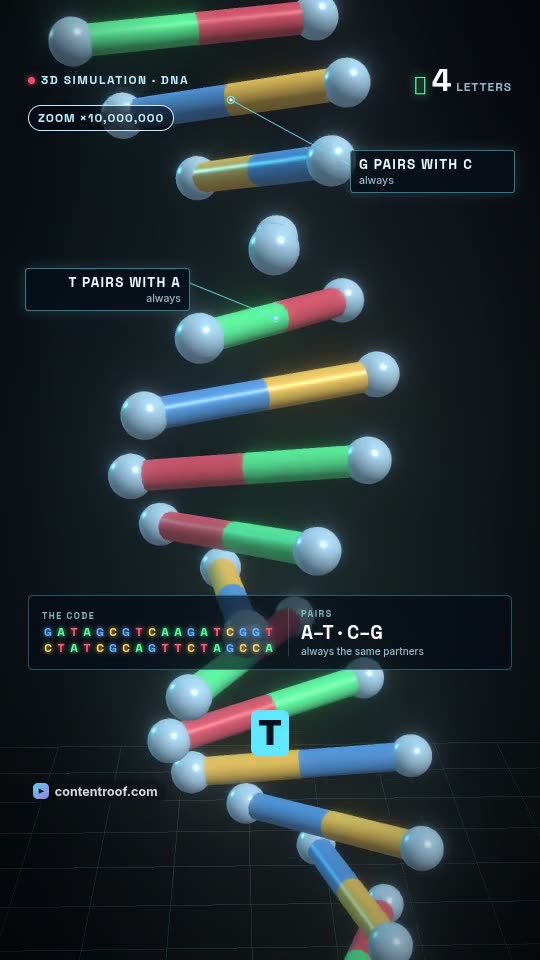 DNA
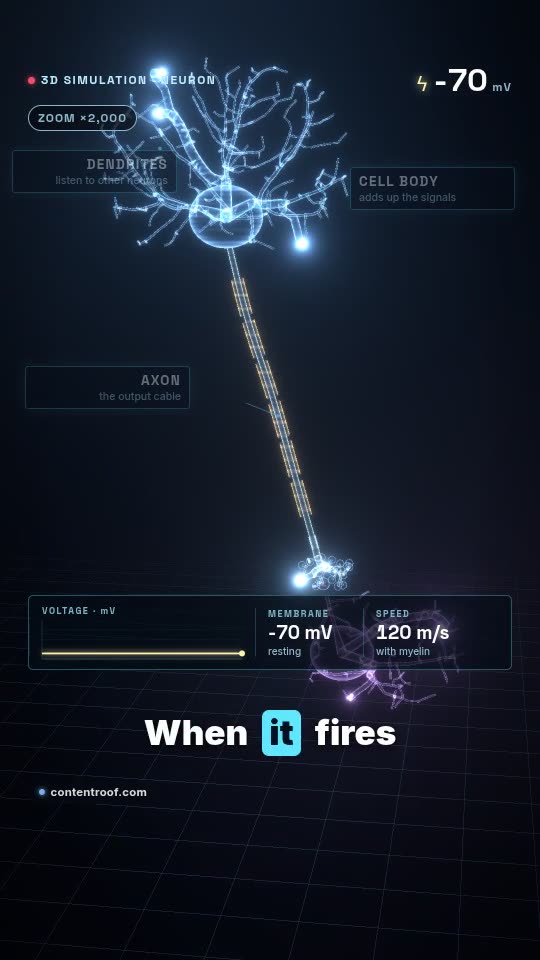 How a neuron sends a signal