3D simulation · Molecules and reactions
Chemical reactions, in 3D
Molecules colliding, bonds breaking and forming, and the energy that comes out: what fire really is. Not a drawing and not an AI guess: a simulation that runs the real numbers, narrated, with every moment landing on its word.
What the simulation shows
- One molecule turning (the setup's molecule), ball-and-stick.
- Labels the molecule's atoms (oxygen, hydrogen, carbon…).
- The bonds glow: pairs of shared electrons holding the atoms together.
- Close on the molecule: its shape and bond angle (water bends at 104.5°).
- Charge clouds: the oxygen slightly negative (red), the hydrogens slightly positive (blue).
- Six water molecules linking up: each one's positive hydrogen sticks to the next one's negative oxygen (hydrogen bonds).
- A reaction (the setup's): molecules approach, their bonds break, the same atoms regroup into new molecules with a flash of energy.
- A flash and the energy released (the new bonds hold tighter than the old ones; the difference comes out as heat and light).
- A callout: 602 sextillion molecules in one mole (18 grams of water).
The real numbers it runs on
The simulation is built on these facts, so the narration and the picture always agree:
- Molecules are atoms joined by bonds; a bond is a pair of electrons the atoms share.
- Water is H₂O: one oxygen and two hydrogens, bent at 104.5°. Carbon dioxide is straight (180°); methane is a pyramid with four corners (109.5°).
- Oxygen pulls the shared electrons towards itself, so in water the oxygen end is slightly negative and the hydrogens slightly positive: water is polar.
- That lets water molecules stick to each other (hydrogen bonds), which is why water has a high boiling point, surface tension, and why ice floats (its crystal is an open hexagonal network).
- In a reaction atoms are never created or destroyed: bonds break and the same atoms regroup. Burning methane: CH₄ + 2O₂ → CO₂ + 2H₂O, releasing 890 kJ per mole.
- Hydrogen and oxygen make water and a lot of energy (2H₂ + O₂ → 2H₂O); it's rocket fuel.
- 18 grams of water (a mouthful) contains about 602 sextillion molecules (Avogadro's number).
The script this video was made from
“What fire really is”: the narration of the video above. Each highlighted moment in the simulation happens on the word that names it.
Fire looks like a thing. It's actually atoms swapping partners, billions of times a second.
The fuel
This is methane, the gas in your stove: one carbon holding four hydrogens by its bonds.
The swap
Heat it with oxygen and the bonds snap. The same atoms regroup into carbon dioxide and water.
The glow
The new bonds hold tighter than the old ones. The difference comes out as heat and light. That's the flame.
Make your own
- Type a question, like “What fire really is”, or your own angle on it.
- ContentRoof picks this simulation, researches the facts and writes a short script, with every moment cued to a word.
- A natural voice reads it in your language and the simulation plays in time with it. Change any line and it follows.
- Download a vertical video for Shorts, TikTok and Reels, or use it in class.
Questions
Is this a real simulation or an AI-generated video?
A real simulation. Chemical reactions runs on the numbers listed above, so what you see is what actually happens, frame by frame. AI video generators guess what a scene should look like; they often get the science wrong.
Can I change what the narrator says?
Yes. Type your own question or idea and the AI writes a new script for this simulation, or edit any line yourself. Every moment of the simulation lands on the word that names it.
Which languages can it narrate in?
Eleven: English, Urdu, Hindi, Arabic, Spanish, French, Portuguese, German, Italian, Russian and Polish, with captions written properly (Urdu in Nastaliq, Arabic right to left).
Can I use it in class or post it on YouTube?
Yes. The video is yours to use in lessons, on YouTube Shorts, TikTok and Instagram Reels. The free plan makes 2 3D simulations a month; paid plans make more, in 1080p without the small mark.
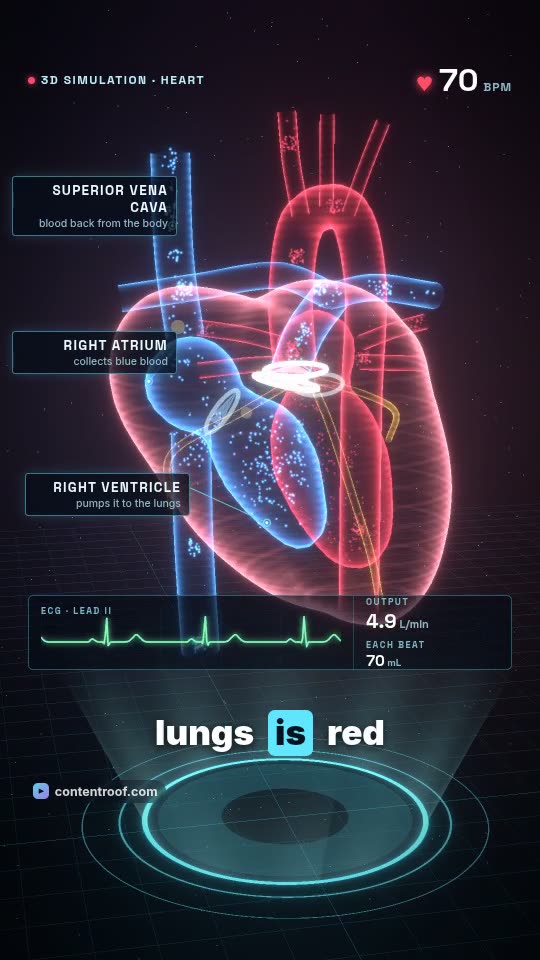 How the heart pumps blood
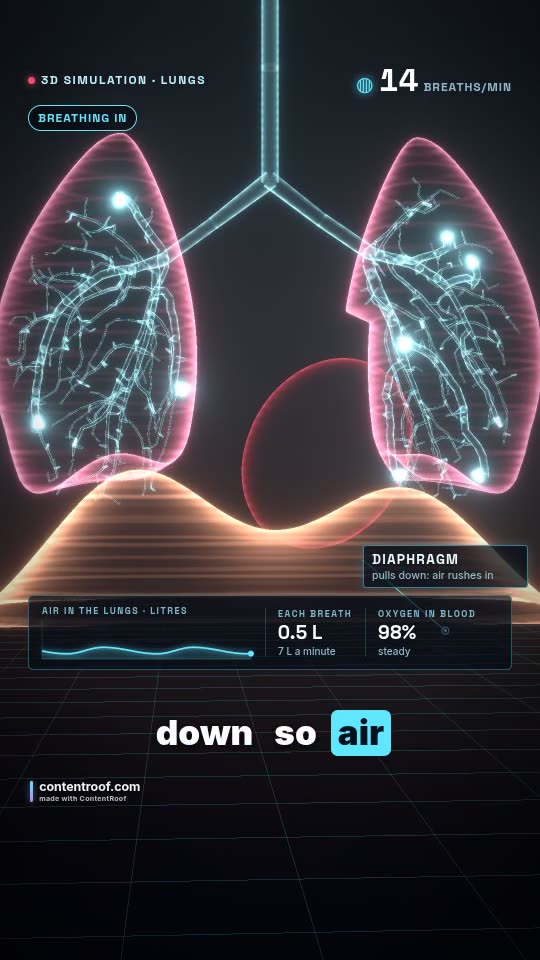 How the lungs work
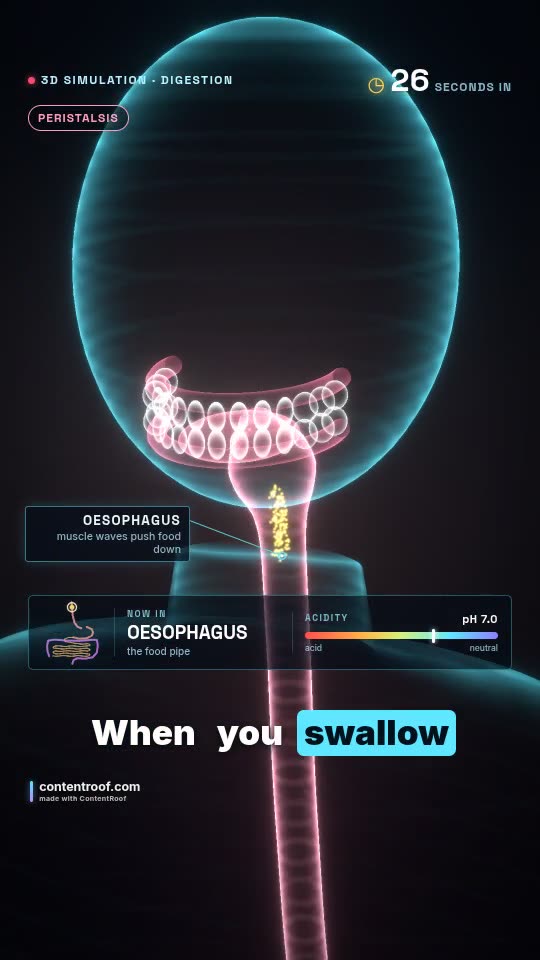 The digestive system
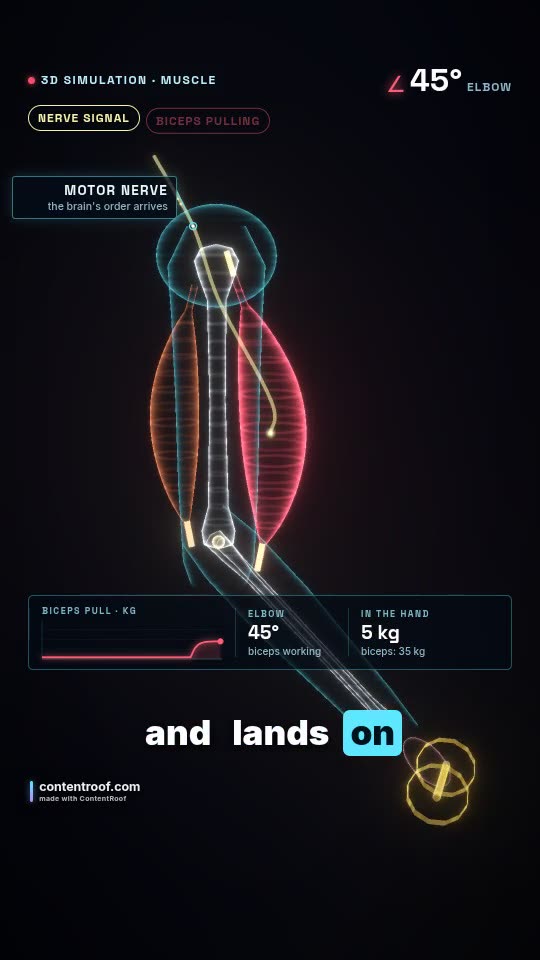 How a muscle moves a bone
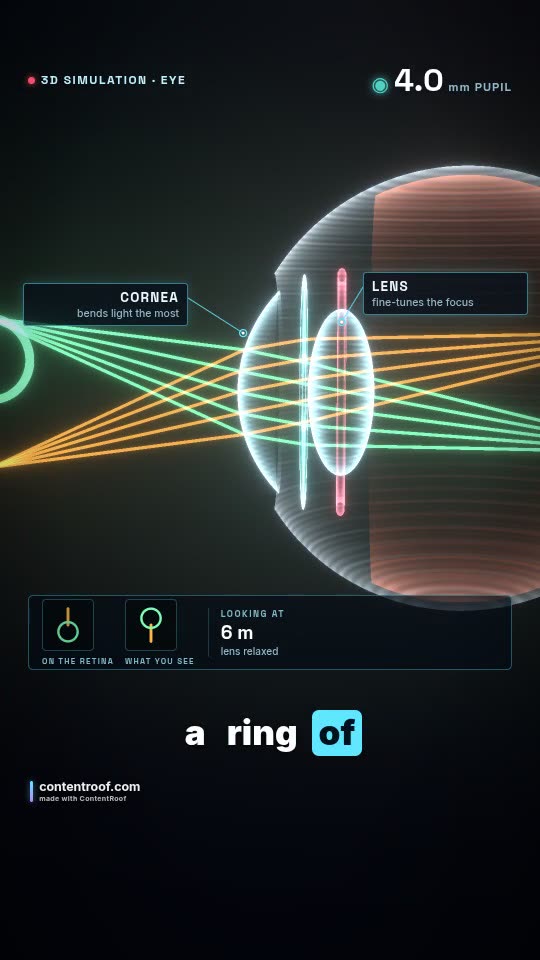 How the eye works
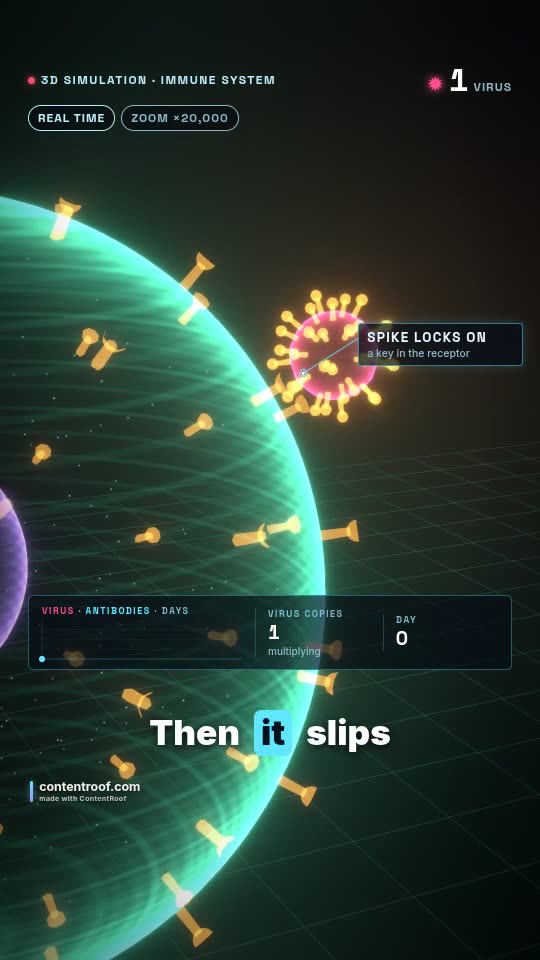 How a vaccine trains your immune system
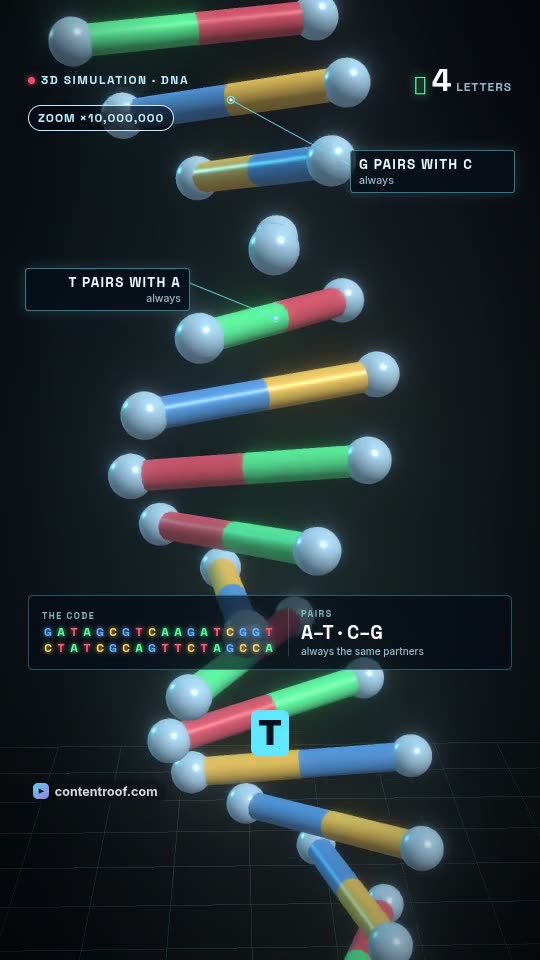 DNA
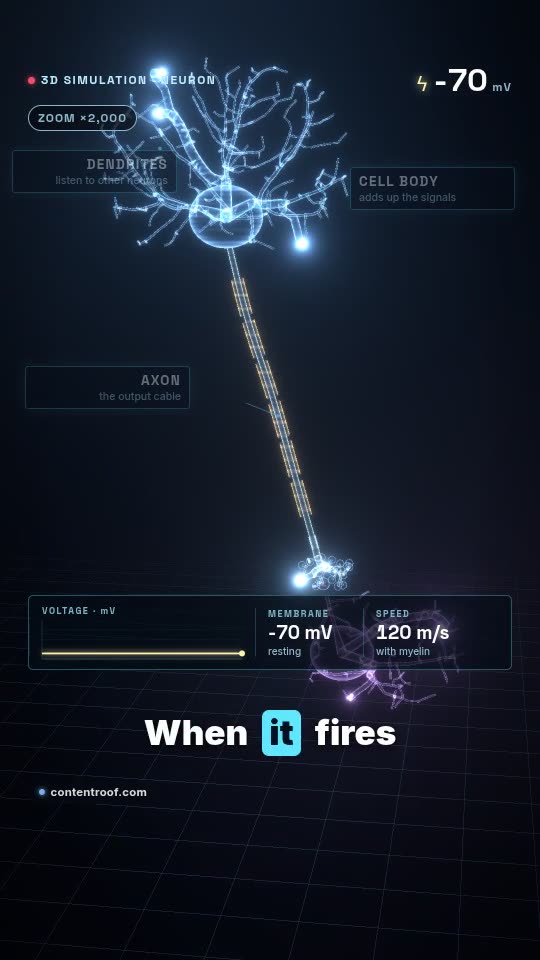 How a neuron sends a signal