3D simulation · Air and water flow
How planes fly and ships float, in 3D
Air flowing over a wing and the lift it makes, and why a steel ship floats. Not a drawing and not an AI guess: a simulation that runs the real numbers, narrated, with every moment landing on its word.
What the simulation shows
- A wing in a wind tunnel: streams of air bend round it.
- A lift arrow grows from the wing.
- Colours show the air's speed: faster over the top (white), slower underneath (orange); a callout: faster air, lower pressure.
- The wing tilts steeper (from 5° to 14°): the air bends more and the lift grows.
- A tank of water: wood and ice are dropped in and float (ice nine tenths under).
- A rock and a steel block are dropped in and sink.
- The same steel shaped as a hollow hull is dropped in and floats.
- A callout: lighter than water floats; it's pushed up by the weight of the water it moves aside.
The real numbers it runs on
The simulation is built on these facts, so the narration and the picture always agree:
- A wing turns the air flowing past it downwards; pushing air down pushes the wing up (lift).
- Air over the curved top moves faster than air underneath; faster air has lower pressure (Bernoulli), so the wing is also pulled up from above.
- Tilting the wing more (the angle of attack) gives more lift, up to about 15°; beyond that the air tears away from the top and the wing stalls.
- A plane's wings can lift hundreds of tonnes: a full Airbus A380 weighs about 575 tonnes.
- Archimedes: anything in water is pushed up by the weight of the water it moves aside. If that's more than its own weight, it floats.
- Wood (about 0.6 grams per cubic centimetre) floats; ice (0.92) floats with nine tenths under water; rock and steel (7.8) sink.
- A steel ship floats because its hull is mostly air: the whole ship is lighter than the water it pushes aside.
The script this video was made from
“How a 500-tonne plane flies”: the narration of the video above. Each highlighted moment in the simulation happens on the word that names it.
A jumbo jet weighs as much as 400 cars. And yet air holds it up.
The wing
Watch the air flow round a wing. It bends down as it leaves, and pushing air down pushes the wing up.
The speed
Over the top the air races faster, and faster air has lower pressure. The wing is pulled up too.
The angle
Tilt the wing steeper and the lift grows. Enough of it, and 500 tonnes leave the ground.
Make your own
- Type a question, like “How a 500-tonne plane flies”, or your own angle on it.
- ContentRoof picks this simulation, researches the facts and writes a short script, with every moment cued to a word.
- A natural voice reads it in your language and the simulation plays in time with it. Change any line and it follows.
- Download a vertical video for Shorts, TikTok and Reels, or use it in class.
Questions
Is this a real simulation or an AI-generated video?
A real simulation. How planes fly and ships float runs on the numbers listed above, so what you see is what actually happens, frame by frame. AI video generators guess what a scene should look like; they often get the science wrong.
Can I change what the narrator says?
Yes. Type your own question or idea and the AI writes a new script for this simulation, or edit any line yourself. Every moment of the simulation lands on the word that names it.
Which languages can it narrate in?
Eleven: English, Urdu, Hindi, Arabic, Spanish, French, Portuguese, German, Italian, Russian and Polish, with captions written properly (Urdu in Nastaliq, Arabic right to left).
Can I use it in class or post it on YouTube?
Yes. The video is yours to use in lessons, on YouTube Shorts, TikTok and Instagram Reels. The free plan makes 2 3D simulations a month; paid plans make more, in 1080p without the small mark.
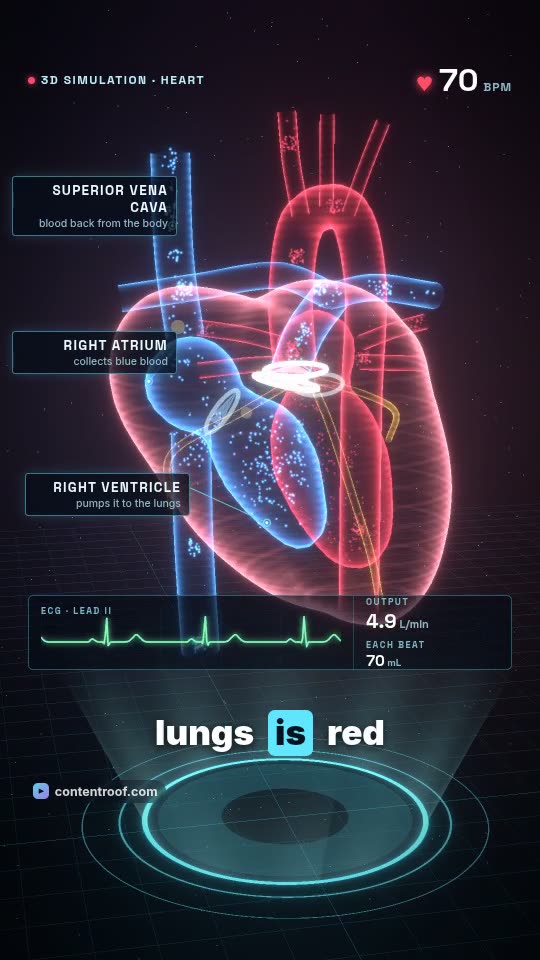 How the heart pumps blood
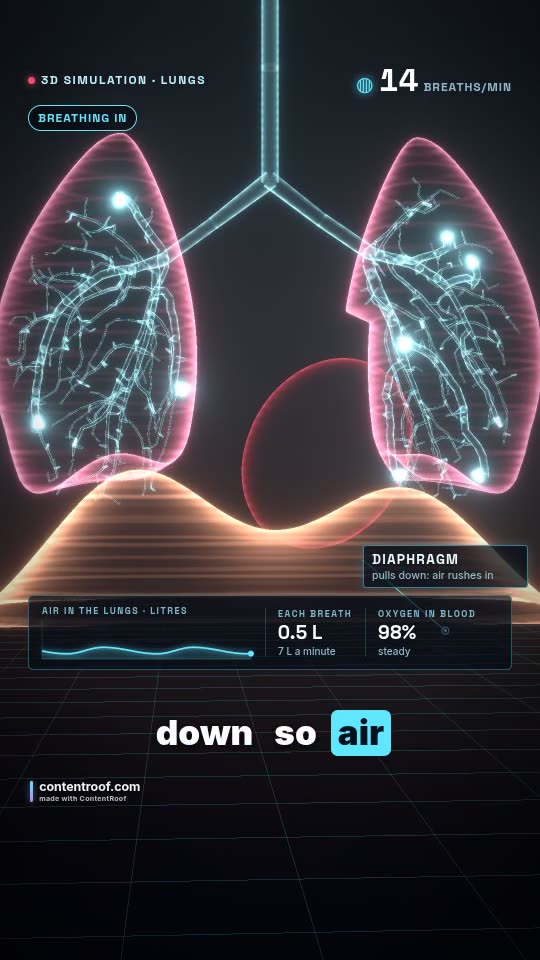 How the lungs work
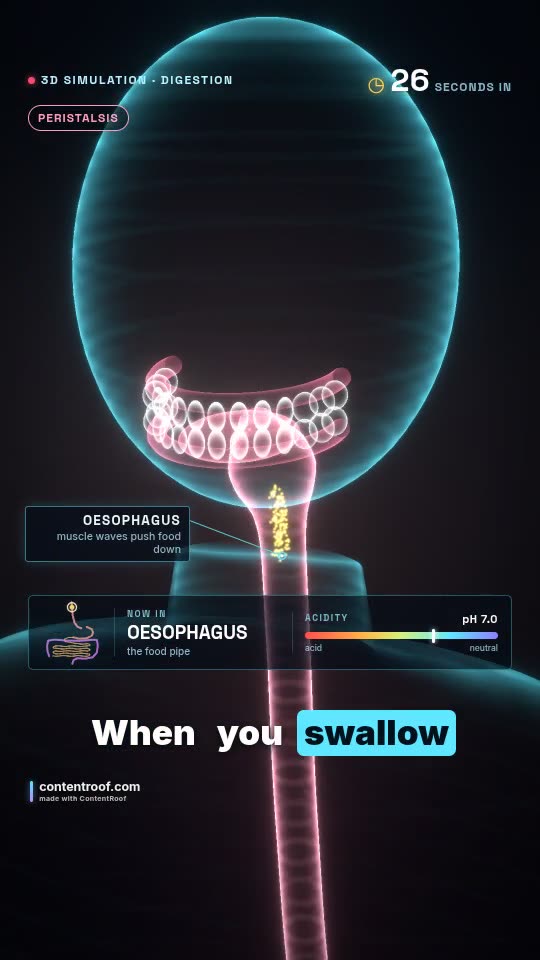 The digestive system
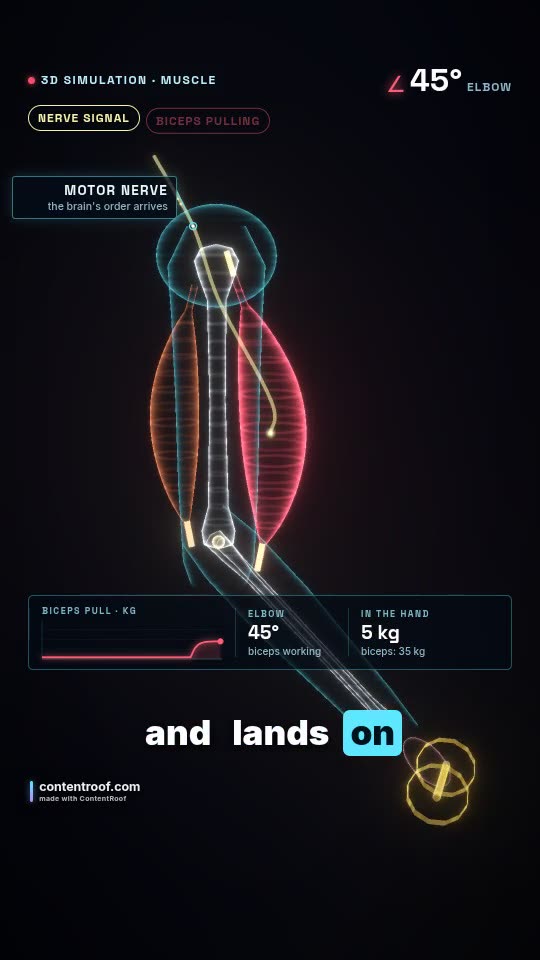 How a muscle moves a bone
 How the eye works
 How a vaccine trains your immune system
 DNA
 How a neuron sends a signal