3D simulation · Forces and motion
Newton's laws of motion, in 3D
Forces, mass and acceleration, and why a hammer and a feather fall together on the Moon. Not a drawing and not an AI guess: a simulation that runs the real numbers, narrated, with every moment landing on its word.
What the simulation shows
- A hammer and a feather dropped together in air: the hammer hits first, the feather drifts down.
- The same drop in a vacuum tube (no air): they fall side by side and land together.
- A 200-newton push on a 10 kg cart: it speeds up fast.
- The same push on a 40 kg block: a quarter of the speed-up; callout F = m × a.
- Two skaters push apart: equal pushes both ways, the lighter one goes twice as fast.
- Two pucks sliding: on ice it keeps going, on carpet friction stops it within metres.
- A ball thrown sideways and another dropped at the same moment: they stay at the same height and land together.
- A 1 m and a 4 m pendulum: the longer one swings half as fast, whatever the weight.
- Newton's cradle: one ball swings in, one swings out the other side.
The real numbers it runs on
The simulation is built on these facts, so the narration and the picture always agree:
- Without air, everything falls at the same rate, whatever its weight: it speeds up by 9.8 metres a second every second. Apollo 15's commander dropped a hammer and a feather on the Moon and they landed together.
- In air, a feather falls slowly because the air pushes back; a hammer barely notices.
- Newton's first law: things keep moving at the same speed unless a force acts (on ice, friction is tiny, so a puck slides on).
- Newton's second law: force = mass × acceleration (F = ma); the same push on four times the mass gives a quarter of the acceleration.
- Newton's third law: every push has an equal and opposite push; that's how rockets and swimmers move.
- A ball thrown sideways falls exactly as fast as one dropped: sideways and downward motion don't affect each other.
- A pendulum's swing time depends only on its length (not its weight): four times longer swings twice as slowly; a 1 m pendulum takes about 2 seconds.
The script this video was made from
“The hammer and the feather”: the narration of the video above. Each highlighted moment in the simulation happens on the word that names it.
Drop a hammer and a feather. The hammer wins every time. But it isn't because it's heavier.
The race
Let them fall, and the feather drifts while the hammer plunges.
No air
Now take the air away. In a vacuum they fall side by side and land together. Astronauts did this on the Moon.
The reason
Gravity speeds everything up at the same rate. A heavier thing is pulled harder, but it's also harder to move, by exactly the same amount.
Make your own
- Type a question, like “The hammer and the feather”, or your own angle on it.
- ContentRoof picks this simulation, researches the facts and writes a short script, with every moment cued to a word.
- A natural voice reads it in your language and the simulation plays in time with it. Change any line and it follows.
- Download a vertical video for Shorts, TikTok and Reels, or use it in class.
Questions
Is this a real simulation or an AI-generated video?
A real simulation. Newton's laws of motion runs on the numbers listed above, so what you see is what actually happens, frame by frame. AI video generators guess what a scene should look like; they often get the science wrong.
Can I change what the narrator says?
Yes. Type your own question or idea and the AI writes a new script for this simulation, or edit any line yourself. Every moment of the simulation lands on the word that names it.
Which languages can it narrate in?
Eleven: English, Urdu, Hindi, Arabic, Spanish, French, Portuguese, German, Italian, Russian and Polish, with captions written properly (Urdu in Nastaliq, Arabic right to left).
Can I use it in class or post it on YouTube?
Yes. The video is yours to use in lessons, on YouTube Shorts, TikTok and Instagram Reels. The free plan makes 2 3D simulations a month; paid plans make more, in 1080p without the small mark.
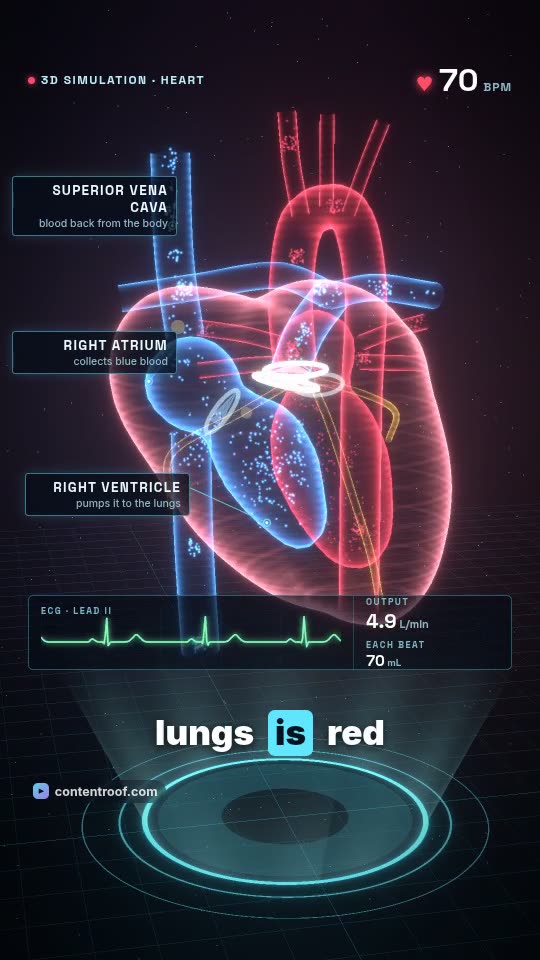 How the heart pumps blood
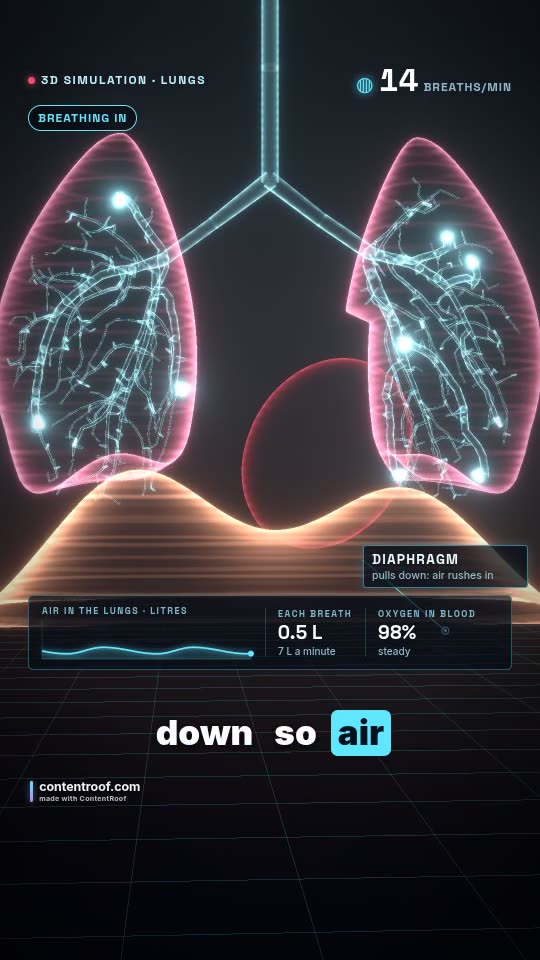 How the lungs work
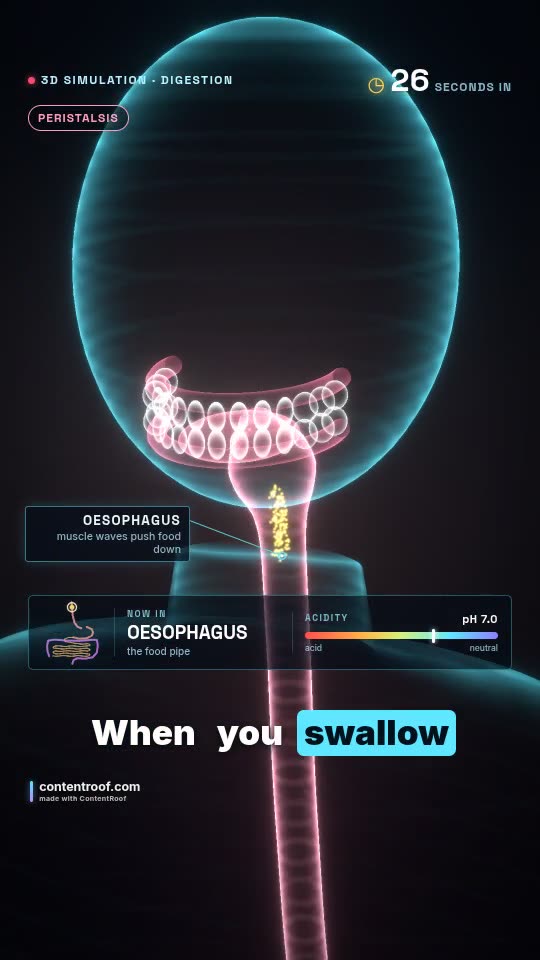 The digestive system
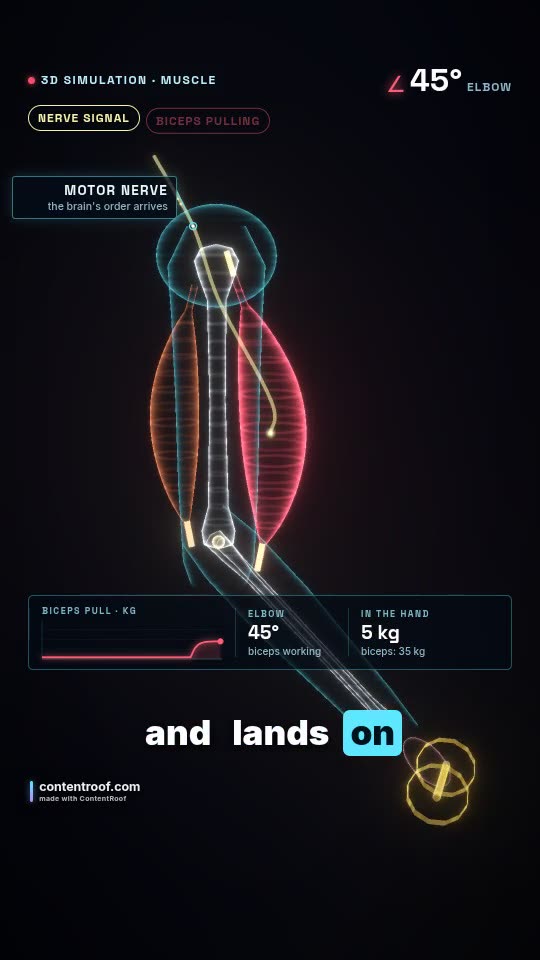 How a muscle moves a bone
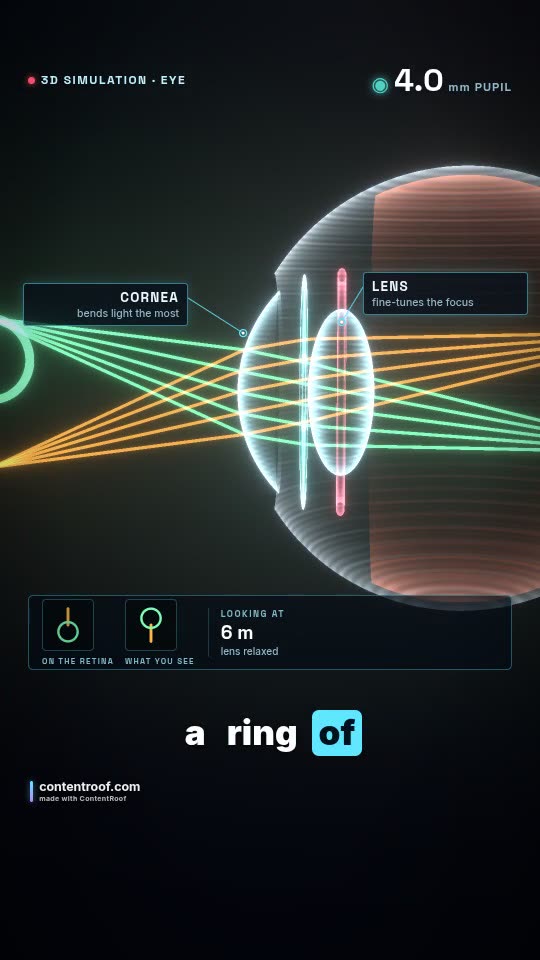 How the eye works
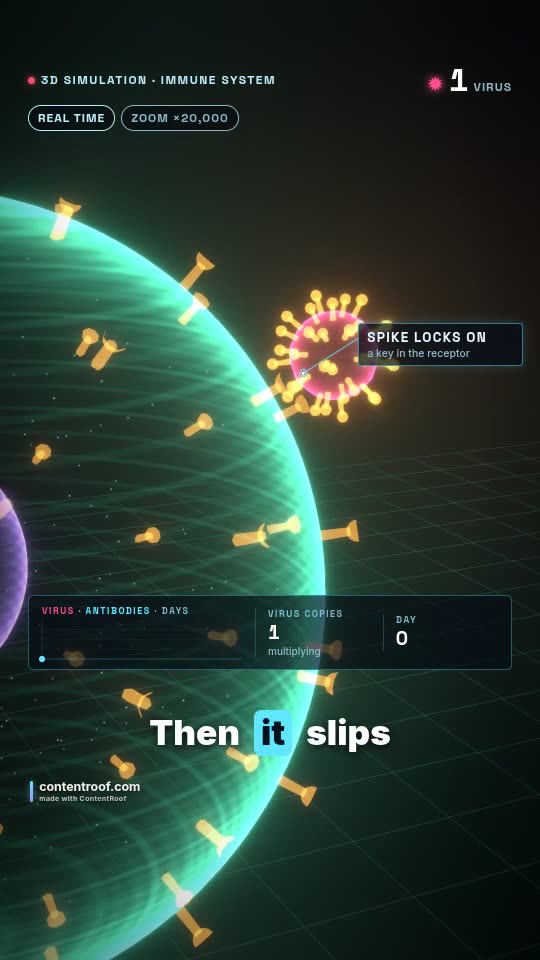 How a vaccine trains your immune system
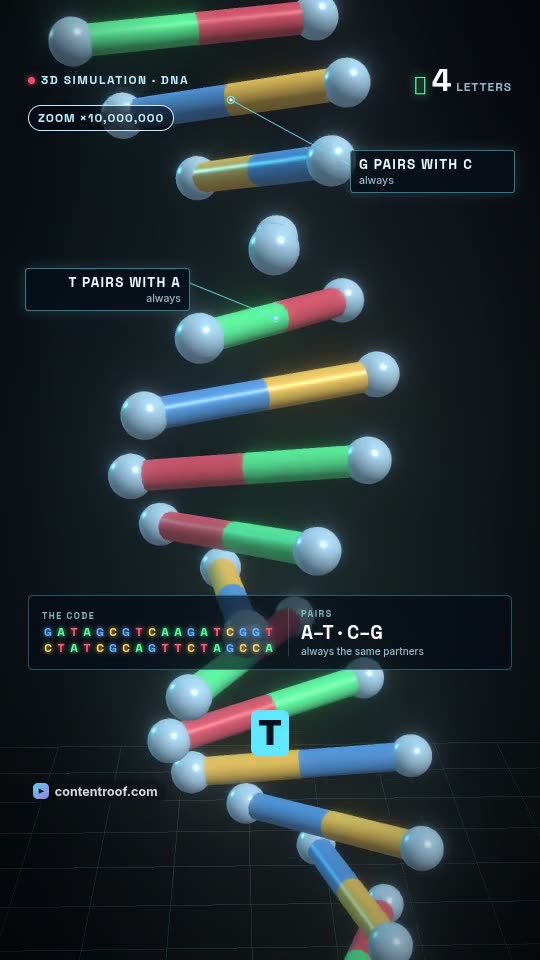 DNA
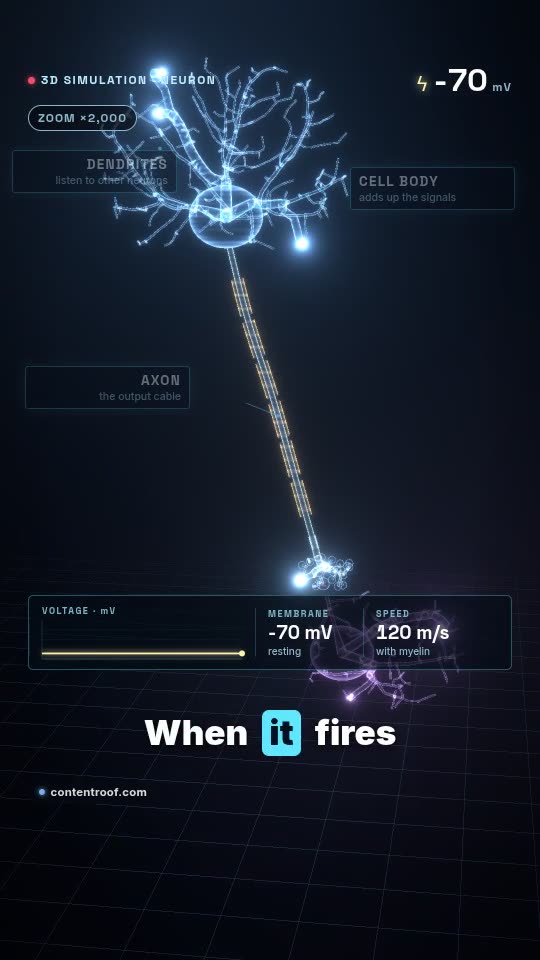 How a neuron sends a signal