3D simulation · Inside the Earth
Inside the Earth: earthquakes and volcanoes, in 3D
The Earth's layers, plates grinding against each other, and the waves that shake the ground. Not a drawing and not an AI guess: a simulation that runs the real numbers, narrated, with every moment landing on its word.
What the simulation shows
- The Earth cut open to scale: crust, mantle, outer core, inner core (labelled).
- Close on the core: the solid inner core glowing, as hot as the Sun's surface.
- Currents in the mantle: hot rock slowly rising and cooler rock sinking.
- A cross-section: an ocean plate moving away from a ridge where new rock rises.
- The ocean plate diving under a continent (it's heavier).
- The diving plate melts; magma rises and a volcano erupts above it.
- Crust crumpling upwards into mountains where the plates push.
- A fault seen from above: a road across it bends as stress builds, then the blocks suddenly slip and snap it.
- Seismic waves rippling out from the quake; the seismograph swings; a callout: magnitude 7.
The real numbers it runs on
The simulation is built on these facts, so the narration and the picture always agree:
- The Earth has four main layers: a thin rocky crust (5 to 70 km), the mantle (hot rock that flows very slowly, down to 2,900 km), a liquid iron outer core and a solid iron inner core, about 5,400 °C, as hot as the Sun's surface. It's 6,371 km to the centre; the deepest hole ever dug reached 12 km.
- Heat from inside keeps the mantle slowly churning; the crust is broken into plates that ride on it, moving about 5 cm a year, about as fast as fingernails grow.
- At mid-ocean ridges plates move apart and magma rises to make new crust. Where an ocean plate meets a continent it dives under it (subduction), because ocean crust is heavier.
- The diving plate melts, and the magma rises to feed volcanoes: the Pacific 'Ring of Fire'.
- Where plates push together the crust crumples into mountains: India pushing into Asia raised the Himalayas, still rising about 5 mm a year.
- At a fault the plates lock and stress builds for years; when it snaps, the rock slips metres in seconds: an earthquake. Each step up in magnitude is about 32 times more energy.
The script this video was made from
“Why the ground shakes”: the narration of the video above. Each highlighted moment in the simulation happens on the word that names it.
The ground under your feet is moving right now, about as fast as your fingernails grow.
The layers
Under the thin crust, hot rock flows in slow currents. They drag the Earth's plates around.
The lock
Where plates grind past each other, they lock. For decades the strain builds, bending the rock.
The snap
Then it slips, metres in seconds, and the waves race out. That's an earthquake.
Make your own
- Type a question, like “Why the ground shakes”, or your own angle on it.
- ContentRoof picks this simulation, researches the facts and writes a short script, with every moment cued to a word.
- A natural voice reads it in your language and the simulation plays in time with it. Change any line and it follows.
- Download a vertical video for Shorts, TikTok and Reels, or use it in class.
Questions
Is this a real simulation or an AI-generated video?
A real simulation. Inside the Earth: earthquakes and volcanoes runs on the numbers listed above, so what you see is what actually happens, frame by frame. AI video generators guess what a scene should look like; they often get the science wrong.
Can I change what the narrator says?
Yes. Type your own question or idea and the AI writes a new script for this simulation, or edit any line yourself. Every moment of the simulation lands on the word that names it.
Which languages can it narrate in?
Eleven: English, Urdu, Hindi, Arabic, Spanish, French, Portuguese, German, Italian, Russian and Polish, with captions written properly (Urdu in Nastaliq, Arabic right to left).
Can I use it in class or post it on YouTube?
Yes. The video is yours to use in lessons, on YouTube Shorts, TikTok and Instagram Reels. The free plan makes 2 3D simulations a month; paid plans make more, in 1080p without the small mark.
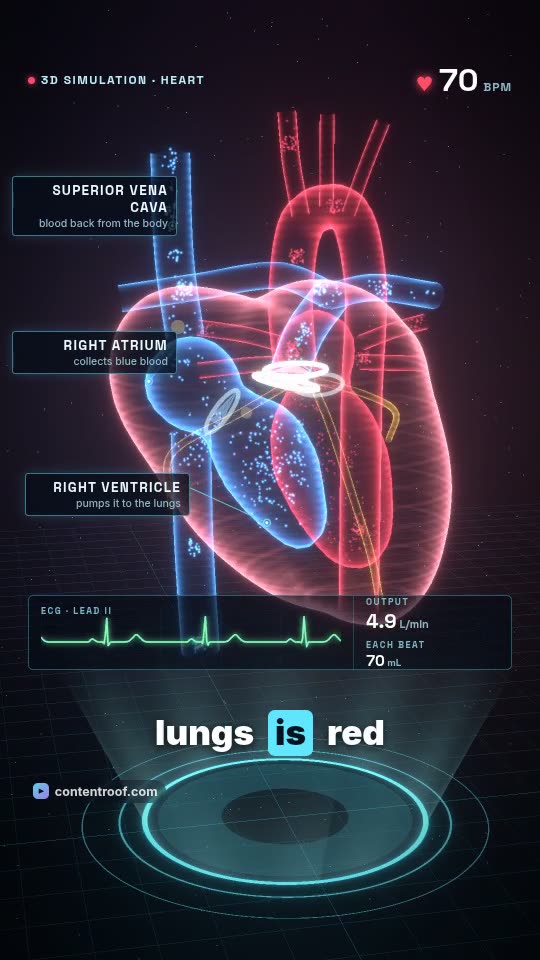 How the heart pumps blood
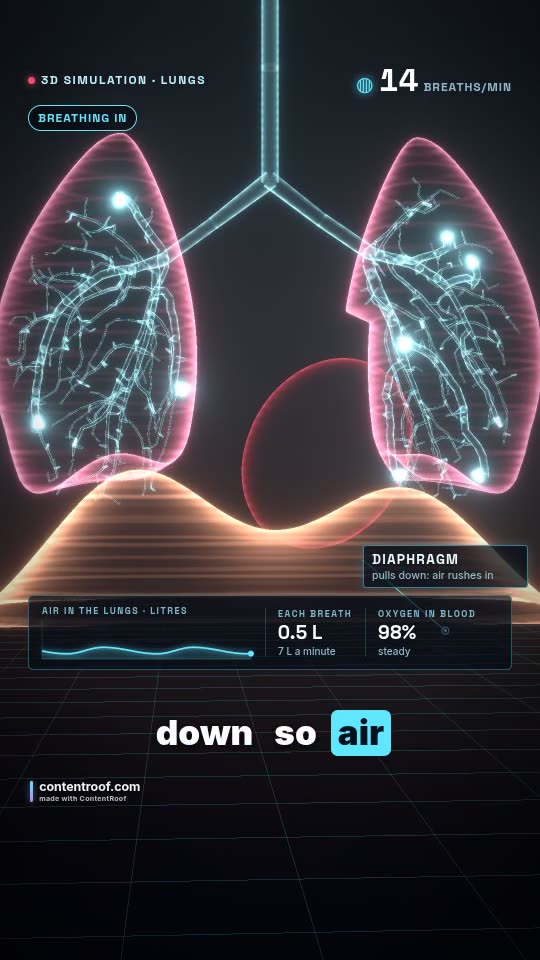 How the lungs work
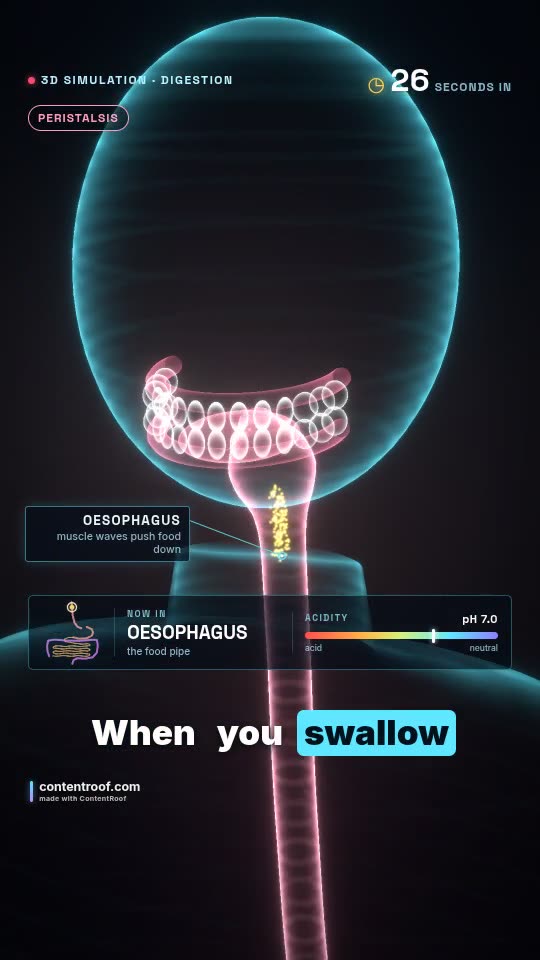 The digestive system
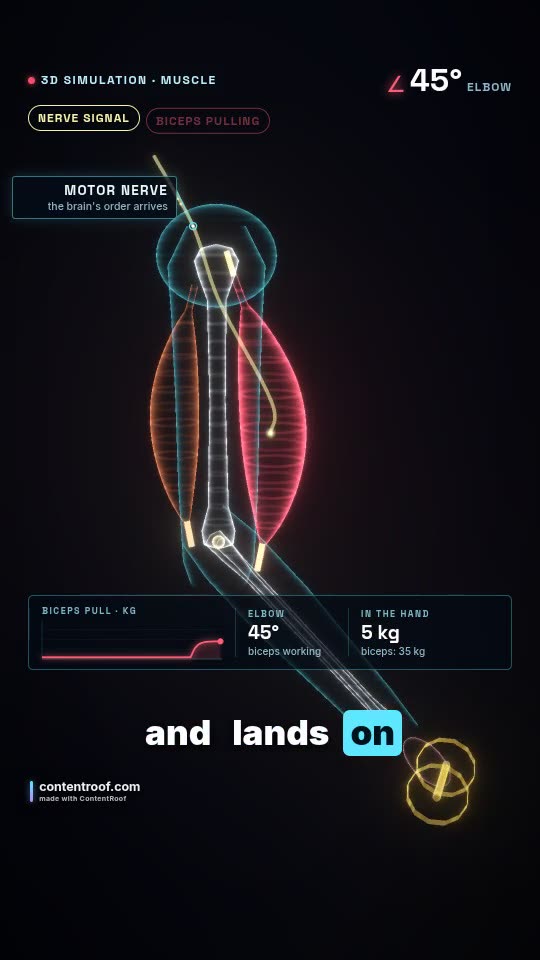 How a muscle moves a bone
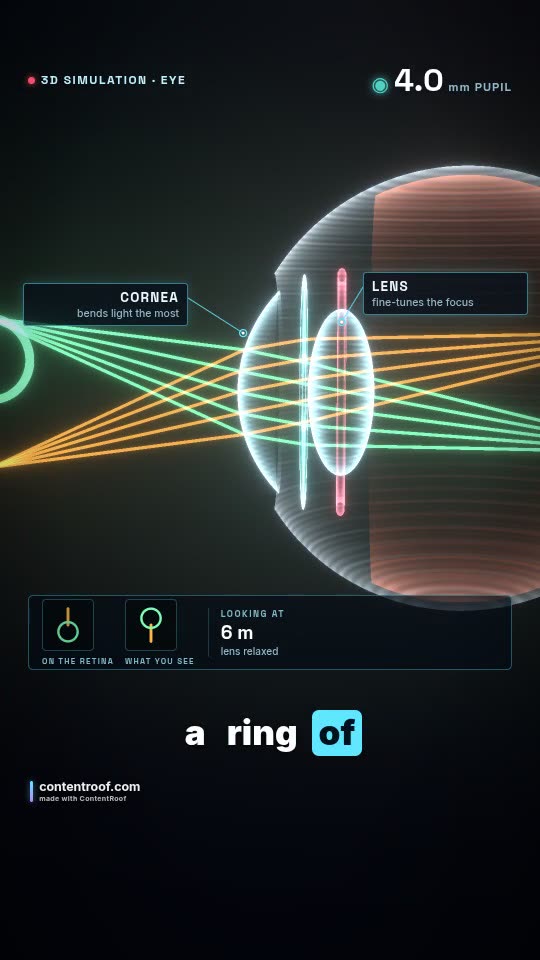 How the eye works
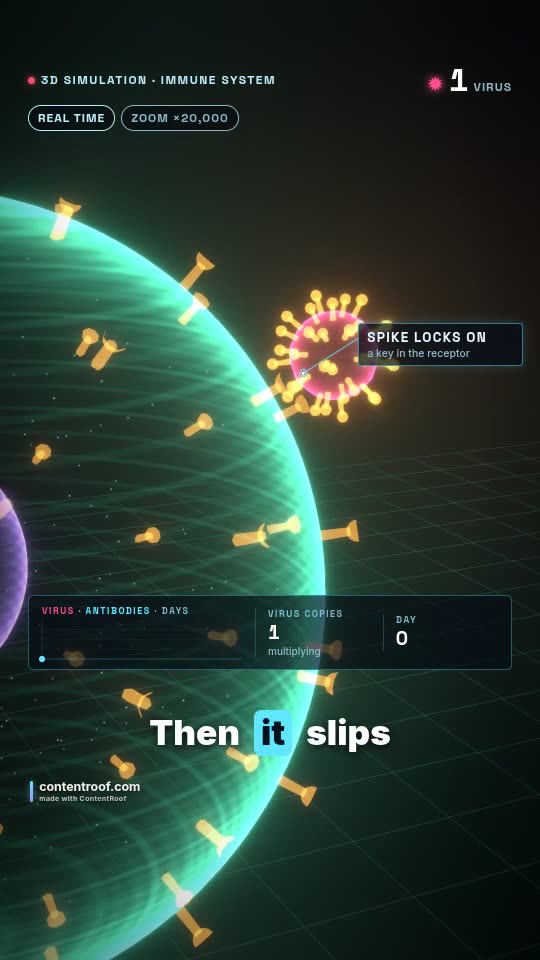 How a vaccine trains your immune system
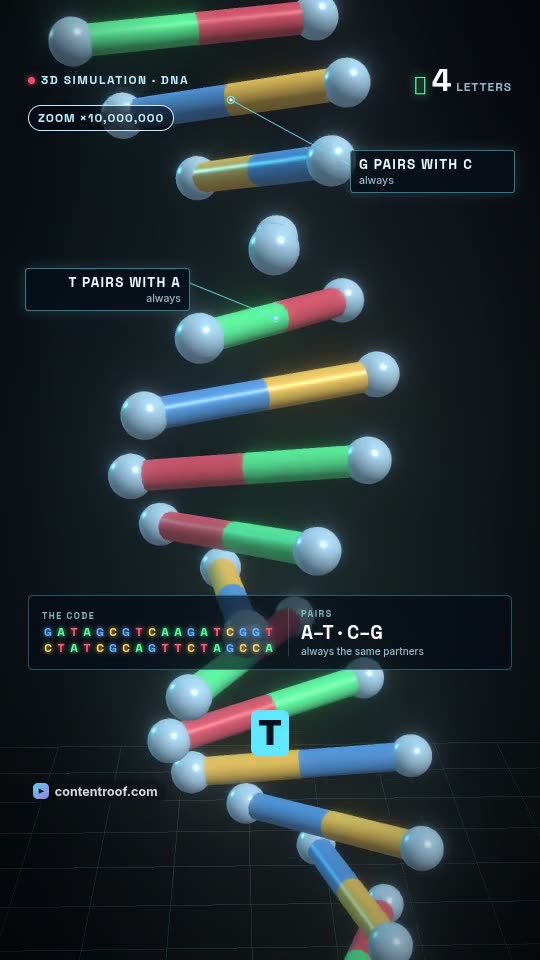 DNA
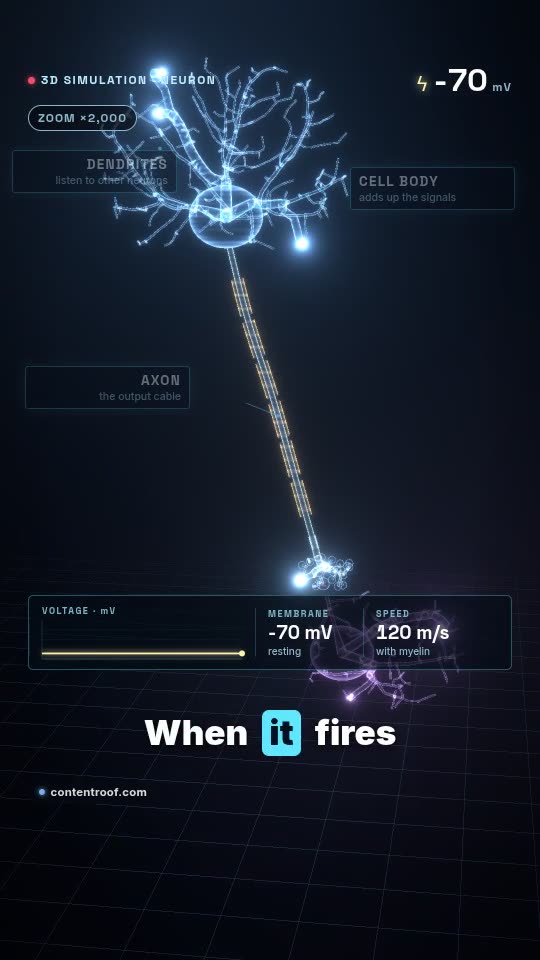 How a neuron sends a signal