3D simulation · Math and patterns
Fibonacci, the golden ratio and fractals, in 3D
Nature's secret number in sunflowers and shells, fractals building themselves, π and chance. Not a drawing and not an AI guess: a simulation that runs the real numbers, narrated, with every moment landing on its word.
What the simulation shows
- Squares of Fibonacci sizes (1, 1, 2, 3, 5, 8, 13) appear one by one, each fitting against the last.
- A golden spiral is drawn through the squares, a quarter turn in each.
- A sunflower head fills with seeds, each turned 137.5° from the last (the golden angle): perfect spirals.
- The angle changes to 137.0°: the seeds break into spokes with gaps.
- The Mandelbrot set computed live, the camera diving in thousands of times: the pattern never ends.
- A wheel one unit across rolls one full turn: it travels 3.14159… (π).
- A Galton board: balls bounce left or right at random off pegs and pile into a bell curve.
- The flower of life drawn circle by circle: 19 equal circles, each centred on another's edge.
The real numbers it runs on
The simulation is built on these facts, so the narration and the picture always agree:
- The Fibonacci sequence: each number is the sum of the two before (1, 1, 2, 3, 5, 8, 13, 21…). The ratio of neighbours approaches the golden ratio, φ ≈ 1.618.
- Squares with Fibonacci sides tile together, and quarter circles through them make a golden spiral.
- Sunflowers place each new seed 137.5° (the golden angle) from the last: it packs seeds with no gaps and makes spirals in Fibonacci numbers (often 34 and 55). A slightly different angle leaves gaps.
- The Mandelbrot set comes from repeating one rule, z → z² + c; its edge shows new detail however far you zoom.
- π (3.14159…) is a circle's circumference divided by its diameter: roll a wheel one turn and it travels π times its width. Its digits never end or repeat.
- Random 50/50 choices add up to predictable patterns: a Galton board's balls pile into a bell curve (the normal distribution).
- The flower of life is 19 equal circles, each centred on the edge of others, a pattern found in ancient art across many cultures.
The script this video was made from
“Nature's secret number”: the narration of the video above. Each highlighted moment in the simulation happens on the word that names it.
Count the spirals in a sunflower and you'll find the same numbers again and again.
The sequence
Start with one and one, and add the last two each time: one, two, three, five, eight, thirteen.
The spiral
Draw squares that size, and a spiral appears.
The seeds
A sunflower turns each seed 137 and a half degrees from the last. Change it by a hair and gaps appear.
Make your own
- Type a question, like “Nature's secret number”, or your own angle on it.
- ContentRoof picks this simulation, researches the facts and writes a short script, with every moment cued to a word.
- A natural voice reads it in your language and the simulation plays in time with it. Change any line and it follows.
- Download a vertical video for Shorts, TikTok and Reels, or use it in class.
Questions
Is this a real simulation or an AI-generated video?
A real simulation. Fibonacci, the golden ratio and fractals runs on the numbers listed above, so what you see is what actually happens, frame by frame. AI video generators guess what a scene should look like; they often get the science wrong.
Can I change what the narrator says?
Yes. Type your own question or idea and the AI writes a new script for this simulation, or edit any line yourself. Every moment of the simulation lands on the word that names it.
Which languages can it narrate in?
Eleven: English, Urdu, Hindi, Arabic, Spanish, French, Portuguese, German, Italian, Russian and Polish, with captions written properly (Urdu in Nastaliq, Arabic right to left).
Can I use it in class or post it on YouTube?
Yes. The video is yours to use in lessons, on YouTube Shorts, TikTok and Instagram Reels. The free plan makes 2 3D simulations a month; paid plans make more, in 1080p without the small mark.
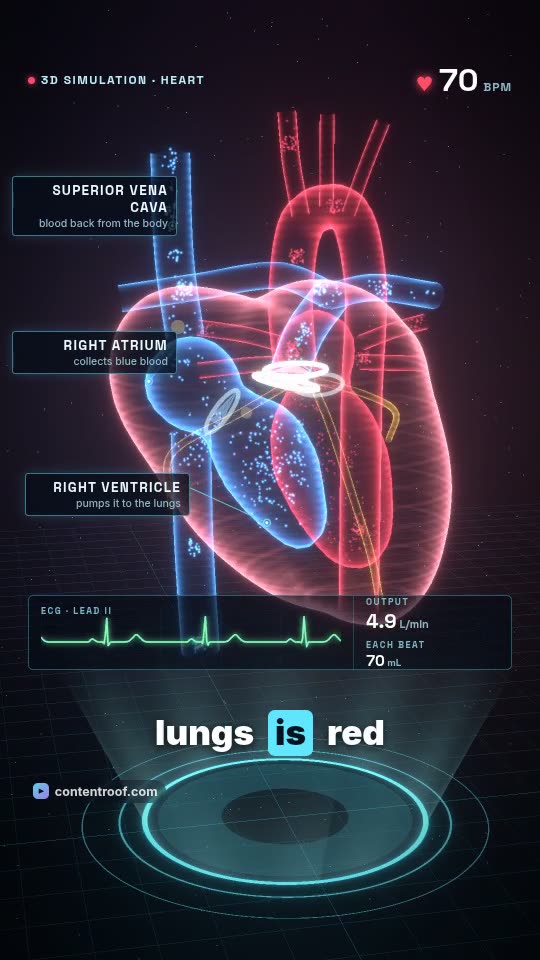 How the heart pumps blood
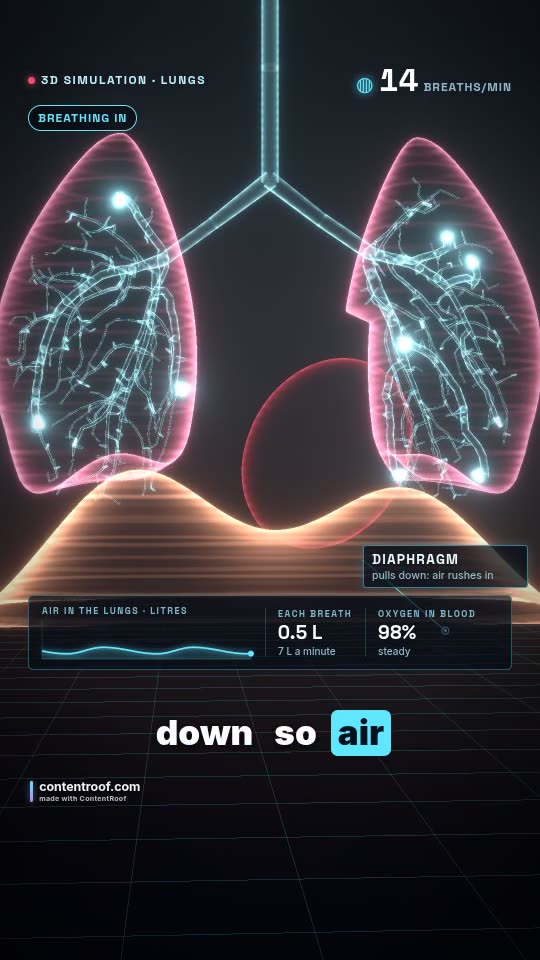 How the lungs work
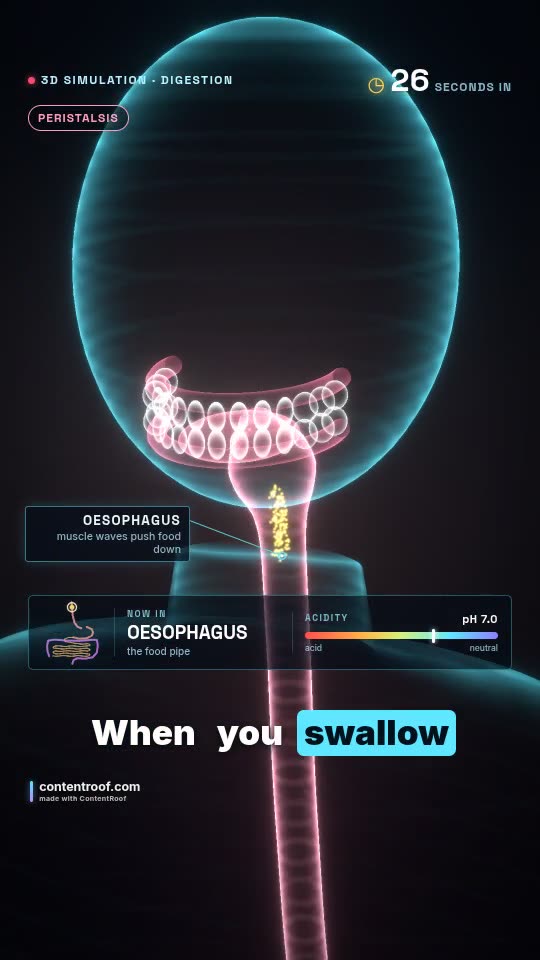 The digestive system
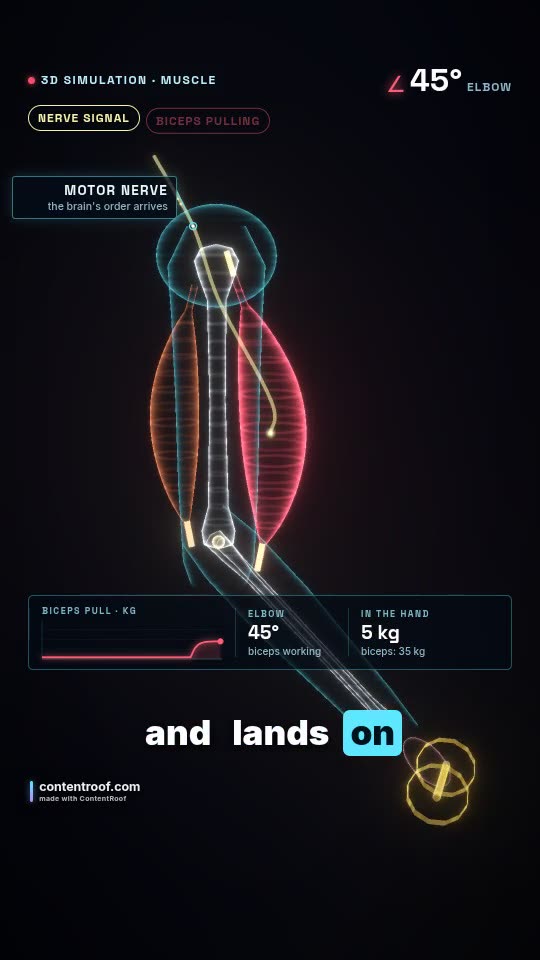 How a muscle moves a bone
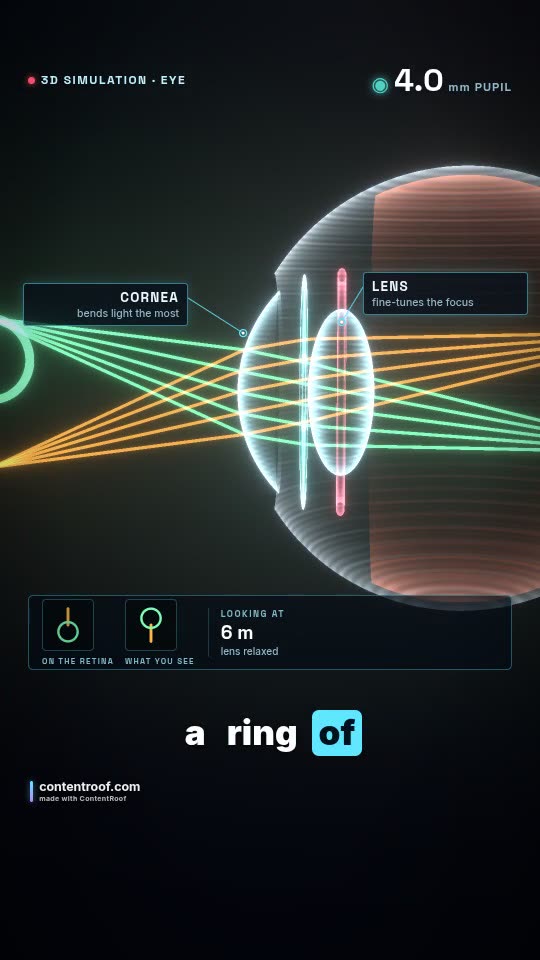 How the eye works
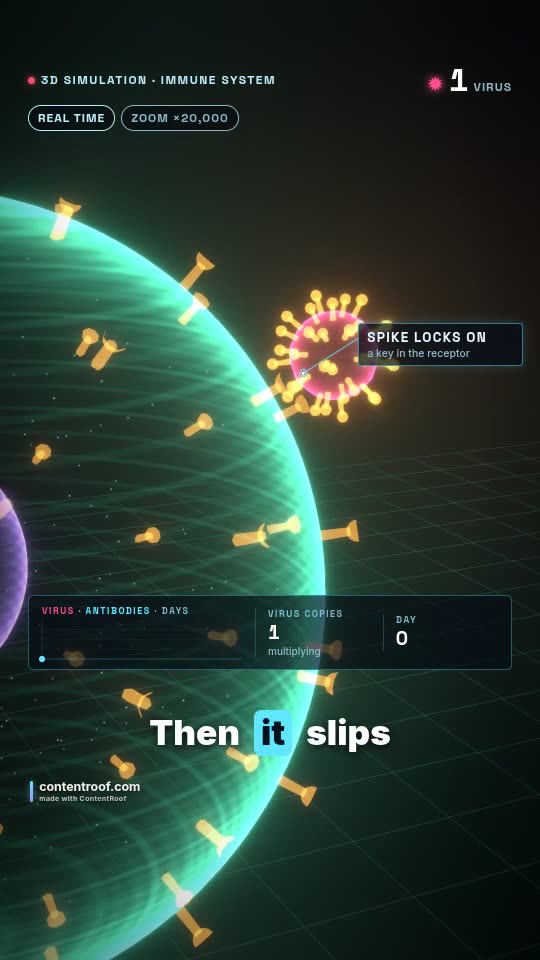 How a vaccine trains your immune system
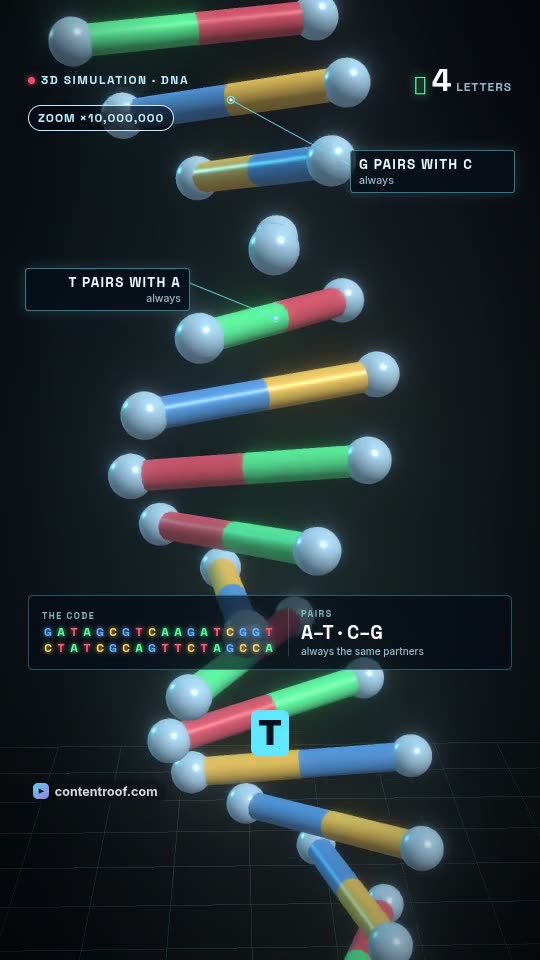 DNA
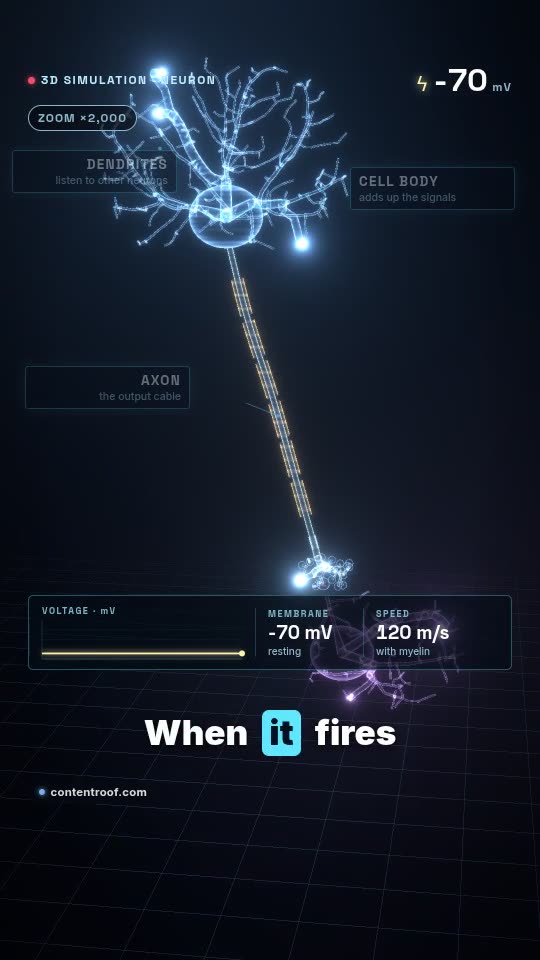 How a neuron sends a signal