3D simulation · Light
Light and colour, in 3D
Sunlight scattering in the air, rainbows, lenses and prisms, with real rays bending as they should. Not a drawing and not an AI guess: a simulation that runs the real numbers, narrated, with every moment landing on its word.
What the simulation shows
- White light entering a glass prism and fanning out into the colours of the spectrum (red bends least, violet most).
- A raindrop: sunlight bends in, reflects off the back and comes out split into colours at about 42°.
- Parallel light through a convex lens, bending to meet at a focus.
- The lens inside an eye: the image of an arrow lands upside down on the retina.
- A beam bouncing off a mirror: angle in equals angle out.
- Light zigzagging along a glass fibre, trapped by total internal reflection.
- Sunlight through the air: blue light scatters in every direction (filling the sky), red goes straight on.
- The Sun low: its light crosses much more air, the blue is scattered away and only red and orange arrive.
- A callout: 300,000 kilometres a second, seven and a half times round the Earth each second.
The real numbers it runs on
The simulation is built on these facts, so the narration and the picture always agree:
- White light is a mix of all colours. Glass and water bend (refract) light, violet slightly more than red, so a prism or raindrop spreads them into a spectrum.
- In a raindrop sunlight bends in, reflects off the back and bends out; the colours come back at about 42° from the point opposite the Sun, which is why a rainbow is a circle around the shadow of your head.
- A convex lens bends light to a focus. The eye's lens focuses an upside-down image on the retina, and the brain turns it the right way up.
- A mirror reflects light at the same angle it arrives.
- Light inside a glass fibre hits the wall at a shallow angle and is totally reflected, so it stays trapped even round bends: that's how the internet crosses oceans.
- Air scatters blue light about five times more than red (Rayleigh scattering), so blue reaches us from every direction: the sky looks blue. At sunset light crosses many times more air; most blue is scattered away and the Sun looks red.
- Light travels at about 300,000 kilometres a second: about 7.5 times round the Earth in one second; sunlight takes 8 minutes 20 seconds to reach us.
The script this video was made from
“Why the sky is blue”: the narration of the video above. Each highlighted moment in the simulation happens on the word that names it.
Sunlight is white. So why is the sky blue, and why does it turn red at sunset?
Hidden colours
White light is every colour mixed together. A prism pulls them apart.
The bounce
When sunlight hits the air, blue light bounces off it in every direction, about five times more than red. Look anywhere, and blue comes at you.
Sunset
When the Sun is low, its light crosses far more air. The blue is scattered away long before it reaches you, and only red is left.
Make your own
- Type a question, like “Why the sky is blue”, or your own angle on it.
- ContentRoof picks this simulation, researches the facts and writes a short script, with every moment cued to a word.
- A natural voice reads it in your language and the simulation plays in time with it. Change any line and it follows.
- Download a vertical video for Shorts, TikTok and Reels, or use it in class.
Questions
Is this a real simulation or an AI-generated video?
A real simulation. Light and colour runs on the numbers listed above, so what you see is what actually happens, frame by frame. AI video generators guess what a scene should look like; they often get the science wrong.
Can I change what the narrator says?
Yes. Type your own question or idea and the AI writes a new script for this simulation, or edit any line yourself. Every moment of the simulation lands on the word that names it.
Which languages can it narrate in?
Eleven: English, Urdu, Hindi, Arabic, Spanish, French, Portuguese, German, Italian, Russian and Polish, with captions written properly (Urdu in Nastaliq, Arabic right to left).
Can I use it in class or post it on YouTube?
Yes. The video is yours to use in lessons, on YouTube Shorts, TikTok and Instagram Reels. The free plan makes 2 3D simulations a month; paid plans make more, in 1080p without the small mark.
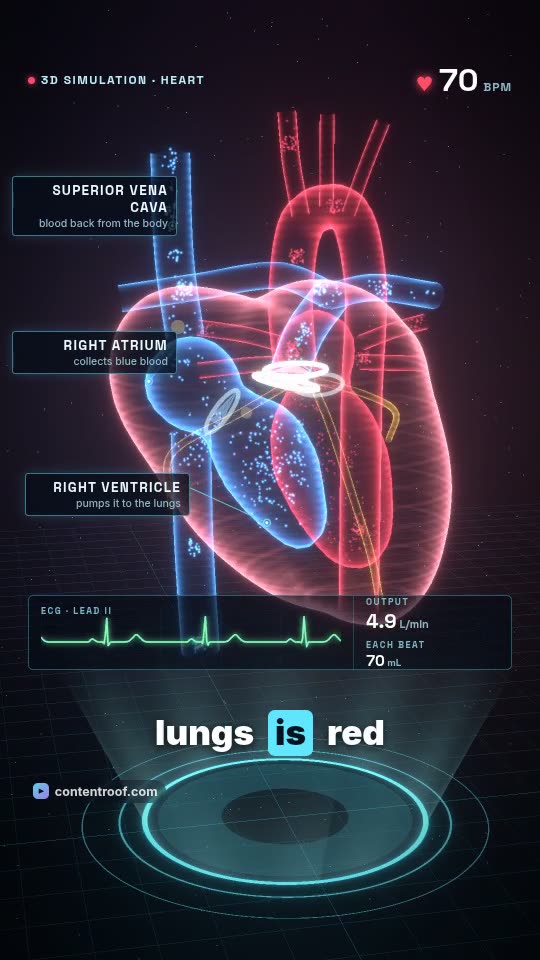 How the heart pumps blood
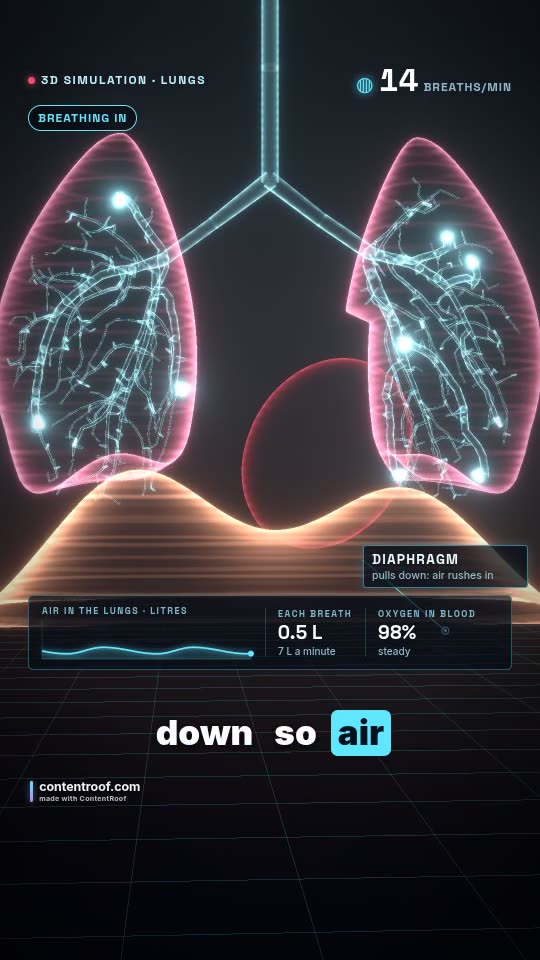 How the lungs work
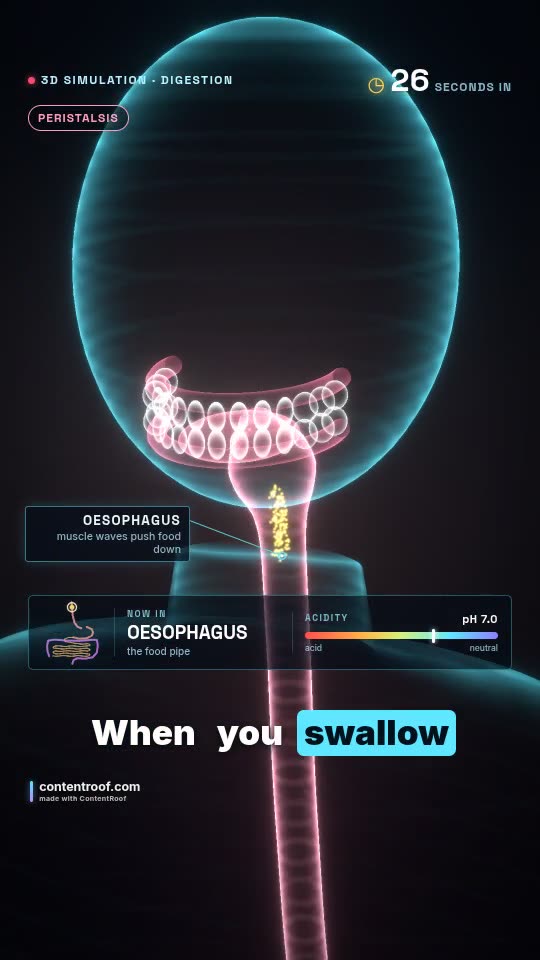 The digestive system
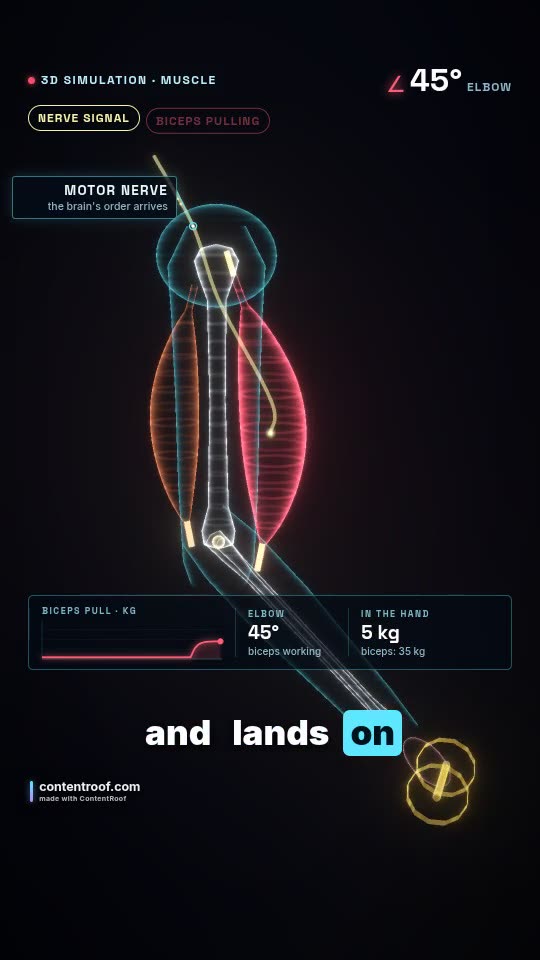 How a muscle moves a bone
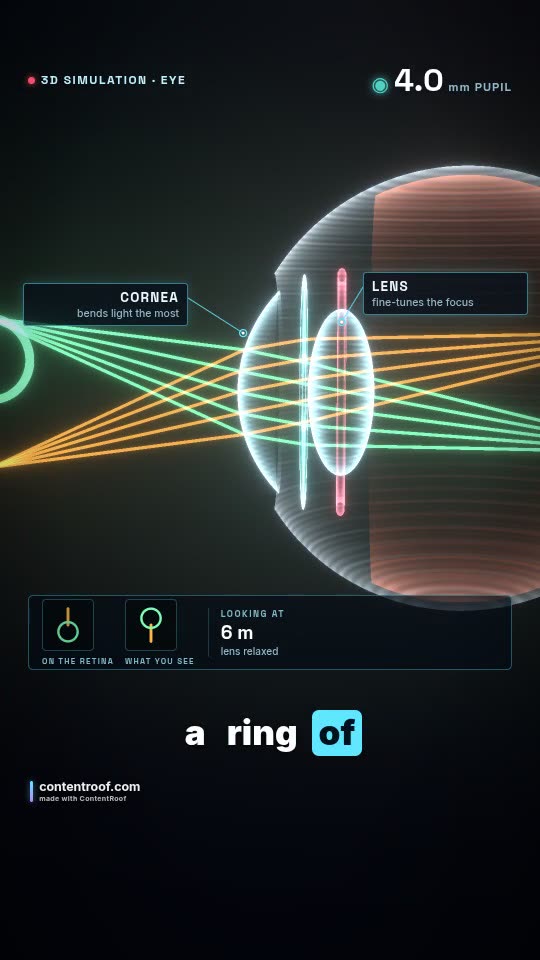 How the eye works
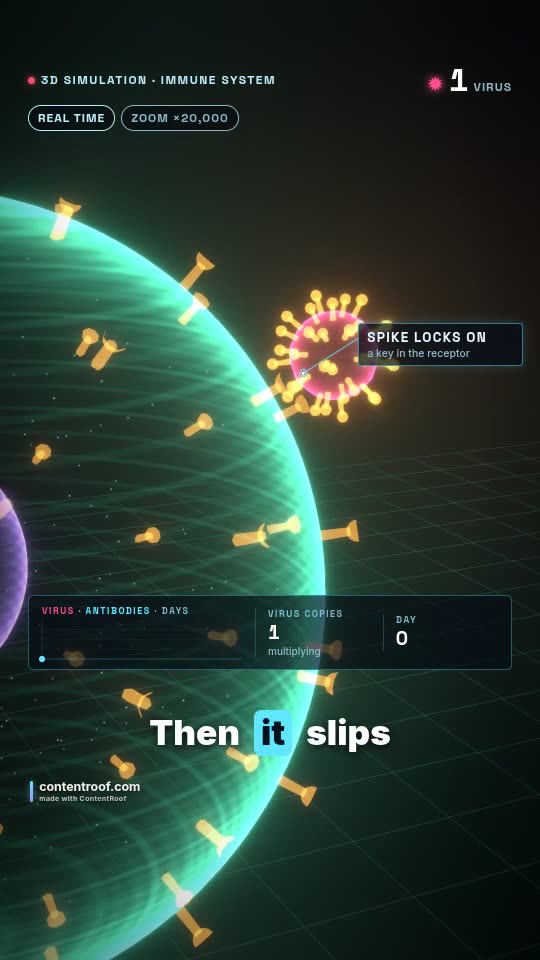 How a vaccine trains your immune system
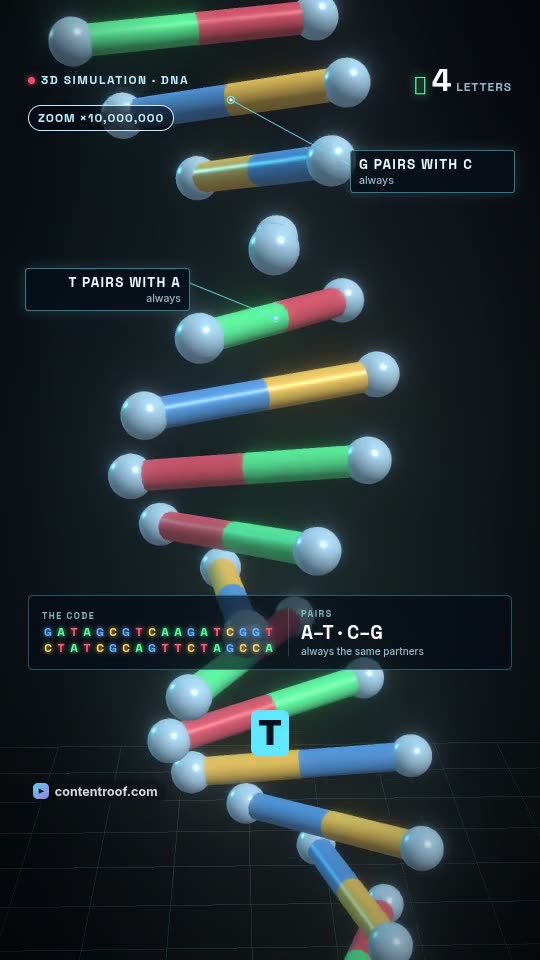 DNA
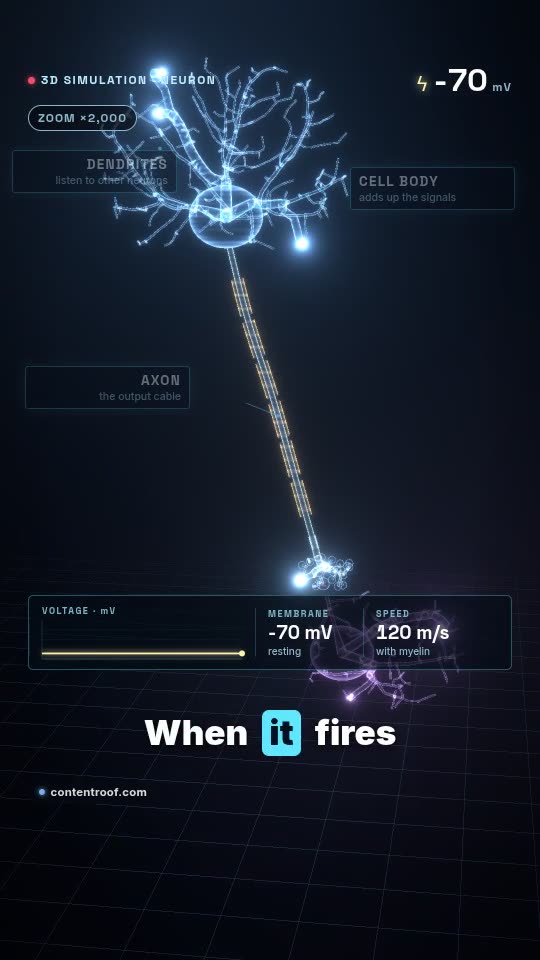 How a neuron sends a signal