3D simulation · Electricity and magnets
How electricity works, in 3D
Electrons in a wire, why the light comes on instantly even though they crawl, and how magnets and current go together. Not a drawing and not an AI guess: a simulation that runs the real numbers, narrated, with every moment landing on its word.
What the simulation shows
- A circuit labelled: battery, wire, switch, bulb.
- The switch closes: electrons everywhere in the wire move at once and the bulb lights.
- Zooms into the wire: electrons creeping along, bumping into the metal's atoms (which heat up); a callout: slower than a snail.
- Close on the battery: voltage is how hard it pushes.
- Close on the bulb's thin filament glowing white-hot (resistance turns electrical energy into heat and light).
- A bar magnet: field lines loop from north to south, iron filings line up, a compass needle swings round.
- A wire carrying current: circular magnetic field rings appear around it (electricity makes magnetism).
- A coil between two magnets spins when current flows: an electric motor.
- Spinning the coil between the magnets makes a current and lights a bulb: a generator.
The real numbers it runs on
The simulation is built on these facts, so the narration and the picture always agree:
- An electric current is electrons moving through a wire; a battery pushes them (that push is the voltage) round a closed loop.
- When you flip a switch, electrons all along the wire start moving at once, so the light comes on instantly; but each electron only creeps along, about a tenth of a millimetre a second.
- Electrons bump into the metal's atoms as they go; that's resistance, and it turns electrical energy into heat. A bulb's thin filament gets so hot it glows (about 2,500 °C).
- Every magnet has a north and a south pole; its field lines run from north to south and never cross. Like poles repel, opposite poles attract.
- The Earth is a giant magnet (about 50 microtesla at the surface); a compass needle lines up with its field.
- A current makes a magnetic field around its wire (Ørsted, 1820): electricity and magnetism are two sides of one force.
- A motor uses that to turn current into spinning; a generator does the reverse, turning spinning into current. Almost all the world's electricity comes from generators.
The script this video was made from
“Why the light comes on instantly”: the narration of the video above. Each highlighted moment in the simulation happens on the word that names it.
Flip a switch and the light comes on instantly. But the electrons that light it are slower than a snail.
The loop
A battery pushes electrons round a loop of wire. Close the switch, and they all move at once.
The crawl
Each electron creeps, bumping into the metal's atoms. Those bumps are heat.
The glow
In a bulb's thin filament, the bumping is so fierce it glows white-hot.
The twist
And moving electrons make magnetism. Spin a coil past a magnet, and you get electricity back.
Make your own
- Type a question, like “Why the light comes on instantly”, or your own angle on it.
- ContentRoof picks this simulation, researches the facts and writes a short script, with every moment cued to a word.
- A natural voice reads it in your language and the simulation plays in time with it. Change any line and it follows.
- Download a vertical video for Shorts, TikTok and Reels, or use it in class.
Questions
Is this a real simulation or an AI-generated video?
A real simulation. How electricity works runs on the numbers listed above, so what you see is what actually happens, frame by frame. AI video generators guess what a scene should look like; they often get the science wrong.
Can I change what the narrator says?
Yes. Type your own question or idea and the AI writes a new script for this simulation, or edit any line yourself. Every moment of the simulation lands on the word that names it.
Which languages can it narrate in?
Eleven: English, Urdu, Hindi, Arabic, Spanish, French, Portuguese, German, Italian, Russian and Polish, with captions written properly (Urdu in Nastaliq, Arabic right to left).
Can I use it in class or post it on YouTube?
Yes. The video is yours to use in lessons, on YouTube Shorts, TikTok and Instagram Reels. The free plan makes 2 3D simulations a month; paid plans make more, in 1080p without the small mark.
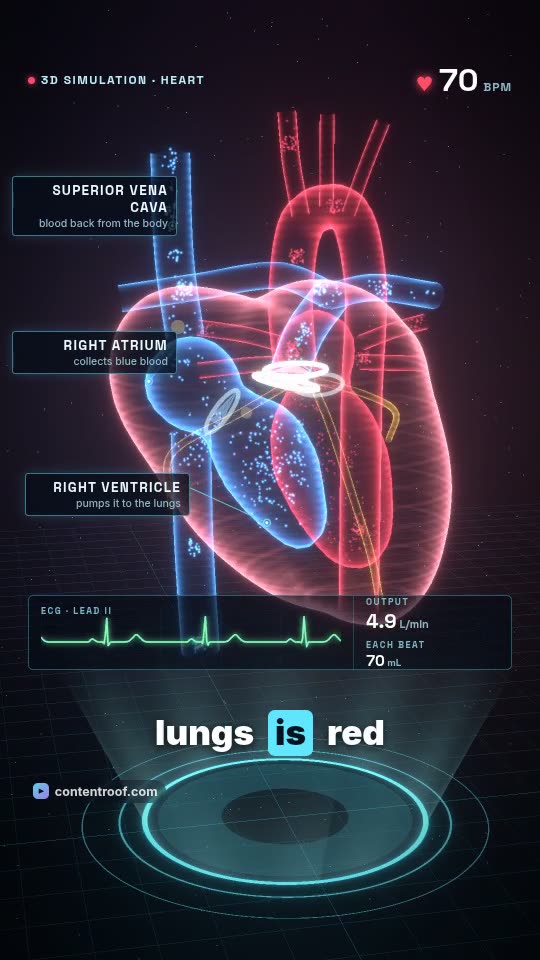 How the heart pumps blood
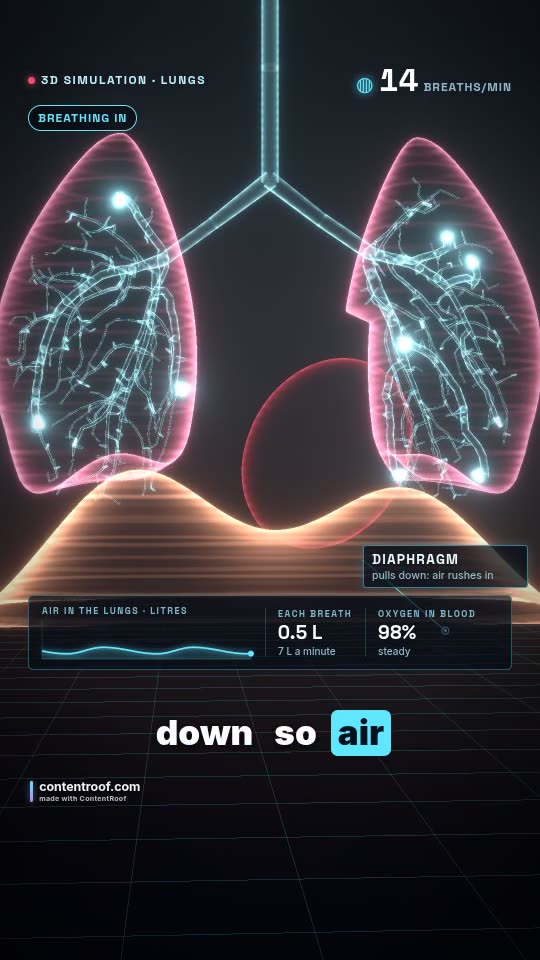 How the lungs work
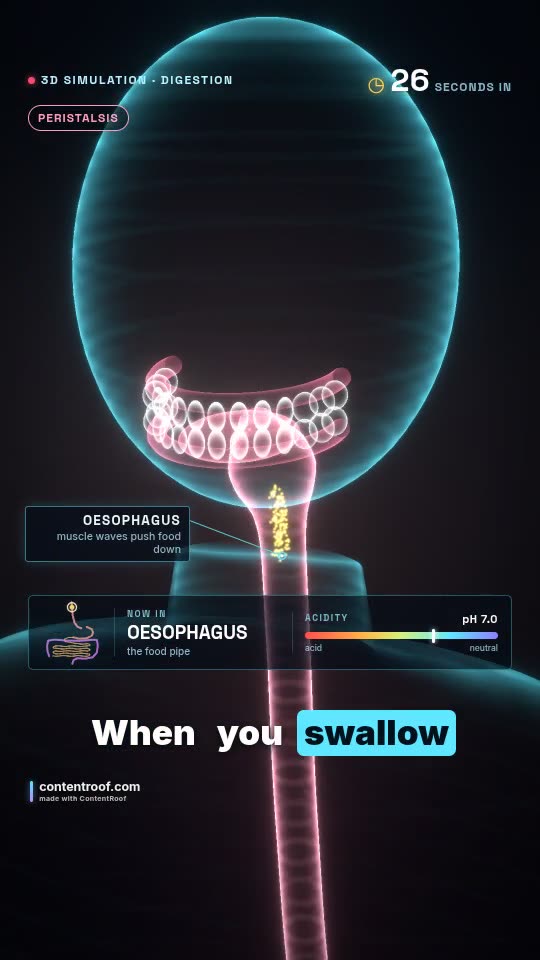 The digestive system
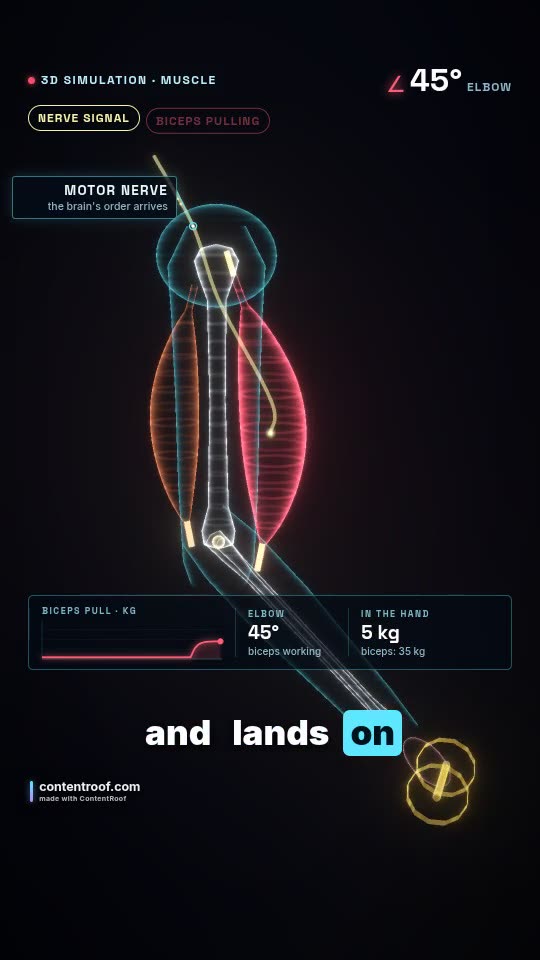 How a muscle moves a bone
 How the eye works
 How a vaccine trains your immune system
 DNA
 How a neuron sends a signal