3D simulation · Particles and heat
Solids, liquids and gases, in 3D
Real molecules jiggling in a solid, sliding in a liquid and flying apart in a gas: what heat really is. Not a drawing and not an AI guess: a simulation that runs the real numbers, narrated, with every moment landing on its word.
What the simulation shows
- Heating: the crystal of molecules shakes loose and becomes a liquid that pools at the bottom.
- More heat: the molecules break free and fly around, filling the whole box as a gas.
- Cooling: the gas slows down and condenses back into a liquid.
- Cooling further: the molecules lock into a crystal again (a solid).
- Heat added steadily: the molecules speed up (colours go from blue to red).
- A piston pushes down to half the space: the molecules hit the walls more often, the pressure rises.
- The two halves are coloured differently and mix by themselves, with no stirring.
- A callout: air molecules move at about 500 metres a second.
- Cooled to absolute zero (−273.15 °C): the molecules almost stop moving.
The real numbers it runs on
The simulation is built on these facts, so the narration and the picture always agree:
- Everything is made of molecules that never stop moving; temperature is how fast they move.
- In a solid they're locked in place and only vibrate; in a liquid they slide past each other; in a gas they fly freely.
- Heating gives them more energy until they break free of each other: melting, then boiling. Cooling does the reverse: condensing, then freezing.
- Water melts at 0 °C and boils at 100 °C at sea level.
- Air molecules at room temperature move at about 500 metres a second, and each hits another billions of times a second.
- Gas pressure is molecules hitting the walls; squeeze a gas into half the space and the pressure doubles.
- Molecules spread out and mix on their own (diffusion); that's how a smell crosses a room.
- Absolute zero, −273.15 °C, is the coldest possible temperature: the point where molecules would almost stop.
The script this video was made from
“What heat really is”: the narration of the video above. Each highlighted moment in the simulation happens on the word that names it.
Heat isn't a thing you can hold. It's movement: trillions of molecules shaking, faster than a jet.
Ice
In ice they're locked in a crystal, just trembling. Add heat and they shake loose. Now it's water.
Steam
Keep heating and they break free and fly. That's steam.
Pressure
Squeeze them into half the space, and they hit the walls twice as often.
The bottom
And at absolute zero, they would almost stop.
Make your own
- Type a question, like “What heat really is”, or your own angle on it.
- ContentRoof picks this simulation, researches the facts and writes a short script, with every moment cued to a word.
- A natural voice reads it in your language and the simulation plays in time with it. Change any line and it follows.
- Download a vertical video for Shorts, TikTok and Reels, or use it in class.
Questions
Is this a real simulation or an AI-generated video?
A real simulation. Solids, liquids and gases runs on the numbers listed above, so what you see is what actually happens, frame by frame. AI video generators guess what a scene should look like; they often get the science wrong.
Can I change what the narrator says?
Yes. Type your own question or idea and the AI writes a new script for this simulation, or edit any line yourself. Every moment of the simulation lands on the word that names it.
Which languages can it narrate in?
Eleven: English, Urdu, Hindi, Arabic, Spanish, French, Portuguese, German, Italian, Russian and Polish, with captions written properly (Urdu in Nastaliq, Arabic right to left).
Can I use it in class or post it on YouTube?
Yes. The video is yours to use in lessons, on YouTube Shorts, TikTok and Instagram Reels. The free plan makes 2 3D simulations a month; paid plans make more, in 1080p without the small mark.
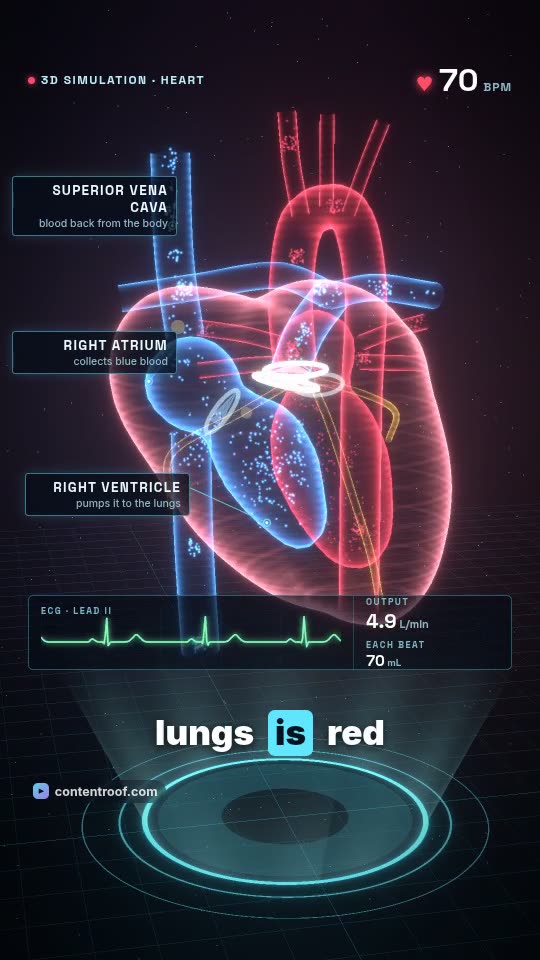 How the heart pumps blood
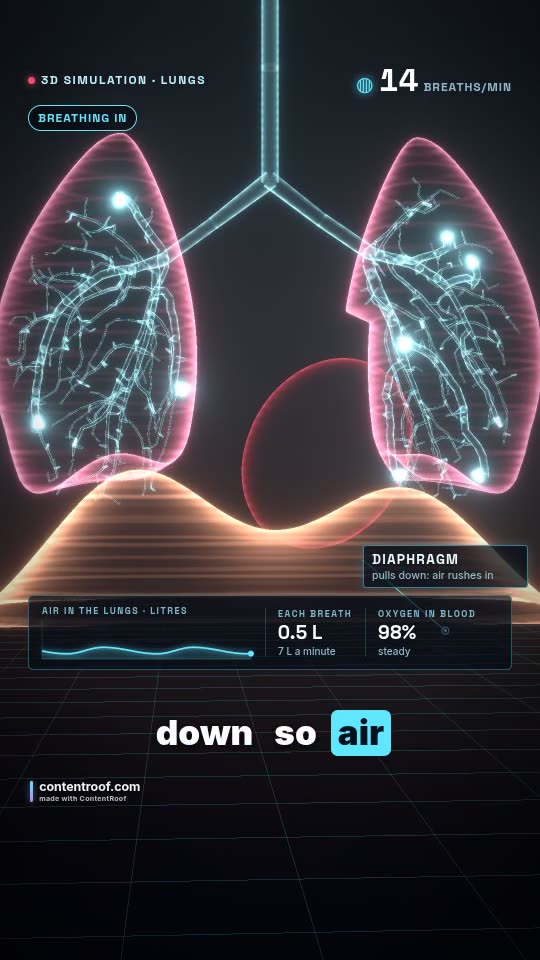 How the lungs work
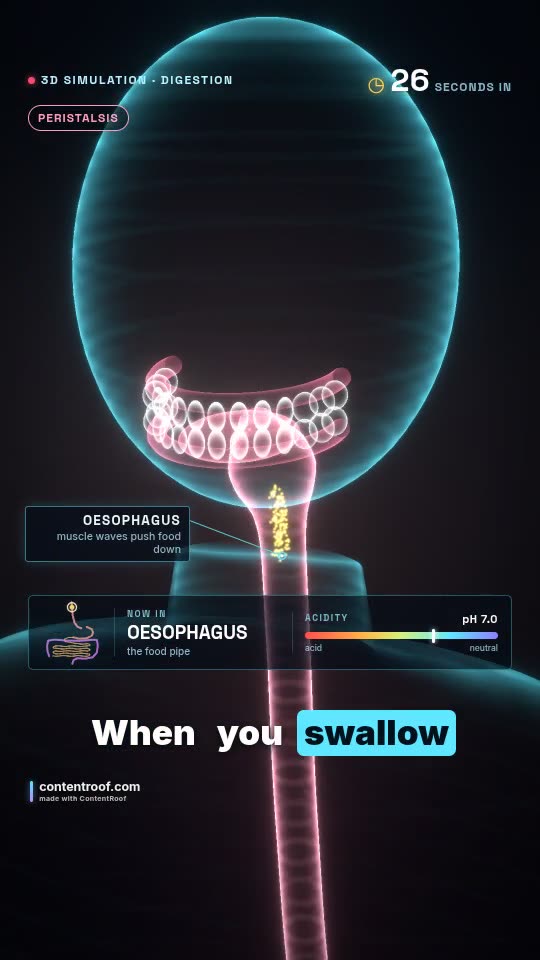 The digestive system
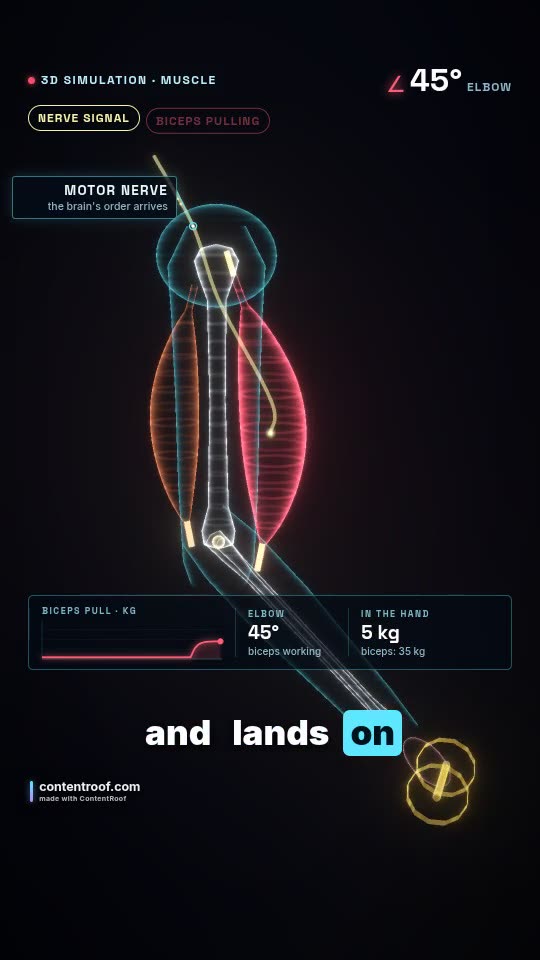 How a muscle moves a bone
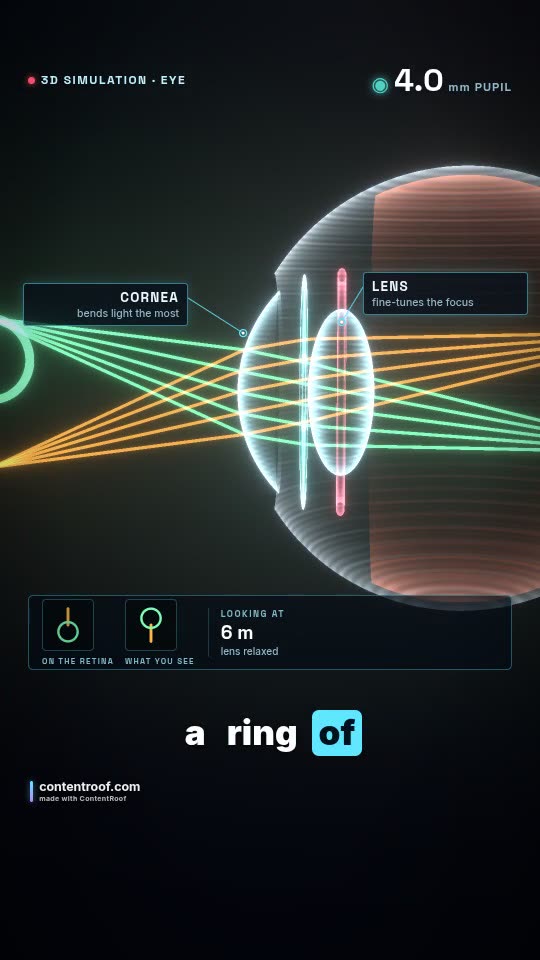 How the eye works
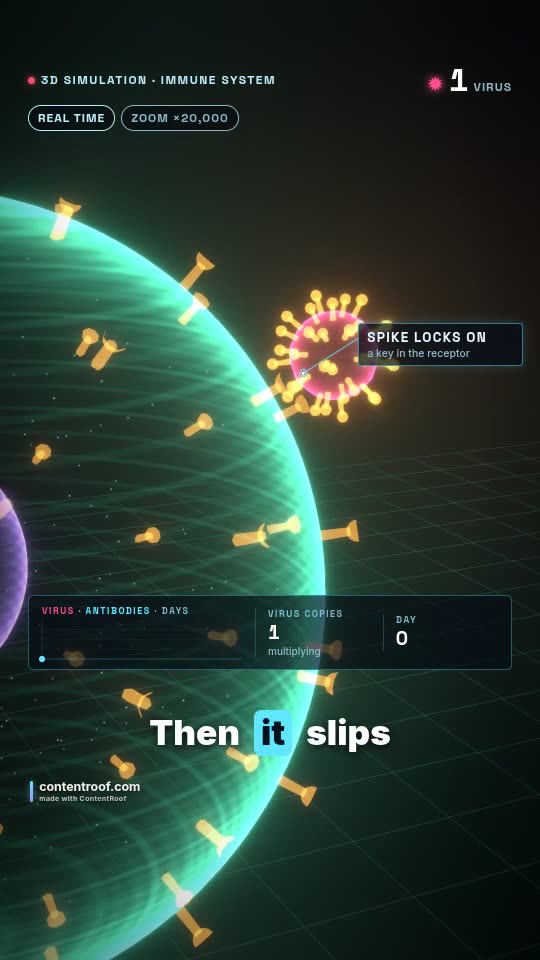 How a vaccine trains your immune system
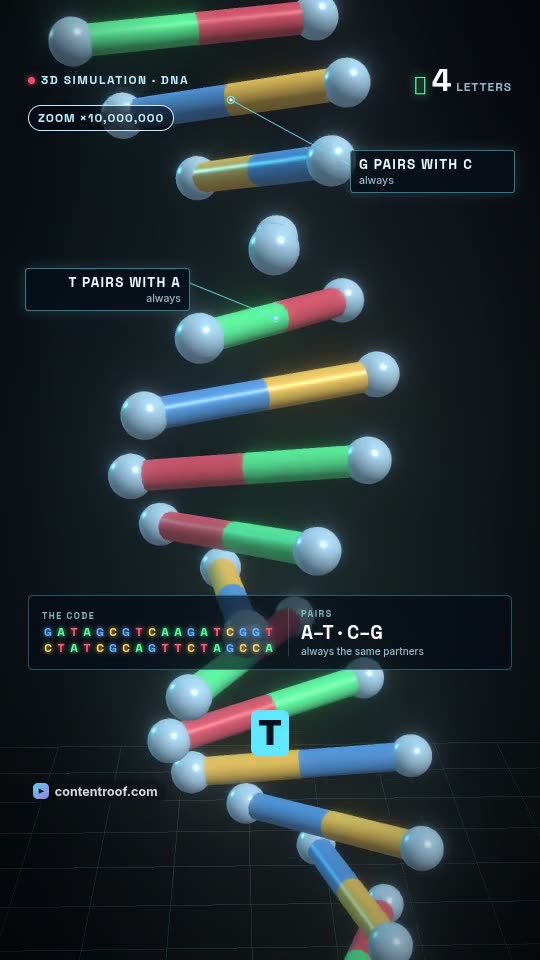 DNA
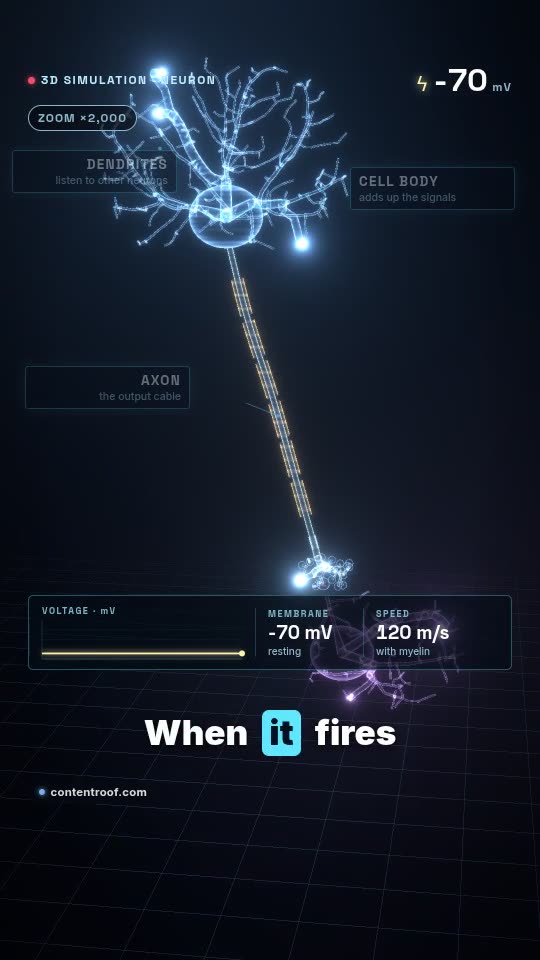 How a neuron sends a signal