3D simulation · Earth's cycles
The water cycle and the greenhouse effect, in 3D
Water evaporating, raining and flowing back to the sea, and how the air keeps the Earth from freezing. Not a drawing and not an AI guess: a simulation that runs the real numbers, narrated, with every moment landing on its word.
What the simulation shows
- The Sun warms the sea and water rises off it as invisible vapour.
- The vapour cools high up and gathers into a cloud.
- The wind carries the cloud inland over the mountains.
- The cloud rains on the mountain.
- The rainwater runs down a river back to the sea.
- A side view of the air: sunlight streams down through it to the ground.
- The warmed ground glows heat (infrared) back up towards space.
- Greenhouse gas molecules appear and catch some of the heat, sending part of it back down; the temperature rises from −18 °C to about 15 °C.
- More CO₂ molecules: more heat is caught and the temperature climbs further.
The real numbers it runs on
The simulation is built on these facts, so the narration and the picture always agree:
- 97% of Earth's water is in the oceans. The Sun evaporates about 505,000 cubic kilometres of it a year; a water molecule stays in the air about 9 days before it falls as rain or snow.
- Vapour cools as it rises and condenses into tiny droplets: clouds. When droplets merge and grow heavy, they fall as rain, which flows back to the sea in rivers and underground.
- Sunlight passes through the air and warms the ground; the warm ground gives off heat as infrared light.
- Greenhouse gases (water vapour, carbon dioxide, methane) absorb infrared and send part of it back down. Without them Earth would average about −18 °C; with them, about 15 °C.
- Burning coal, oil and gas has raised CO₂ from about 280 to over 420 parts per million since 1850, trapping more heat: the world has warmed about 1.2 °C.
The script this video was made from
“Why Earth isn't frozen”: the narration of the video above. Each highlighted moment in the simulation happens on the word that names it.
Earth should be a ball of ice, about 18 degrees below zero. So why isn't it?
The light
Sunlight passes through the air and warms the ground.
The glow
The warm ground glows heat back up, as infrared light, heading for space.
The blanket
But some gases in the air catch that heat and send part of it back down. That's the greenhouse effect, and it keeps us at about 15 degrees.
The dial
Add more carbon dioxide, and more heat is caught. The planet warms.
Make your own
- Type a question, like “Why Earth isn't frozen”, or your own angle on it.
- ContentRoof picks this simulation, researches the facts and writes a short script, with every moment cued to a word.
- A natural voice reads it in your language and the simulation plays in time with it. Change any line and it follows.
- Download a vertical video for Shorts, TikTok and Reels, or use it in class.
Questions
Is this a real simulation or an AI-generated video?
A real simulation. The water cycle and the greenhouse effect runs on the numbers listed above, so what you see is what actually happens, frame by frame. AI video generators guess what a scene should look like; they often get the science wrong.
Can I change what the narrator says?
Yes. Type your own question or idea and the AI writes a new script for this simulation, or edit any line yourself. Every moment of the simulation lands on the word that names it.
Which languages can it narrate in?
Eleven: English, Urdu, Hindi, Arabic, Spanish, French, Portuguese, German, Italian, Russian and Polish, with captions written properly (Urdu in Nastaliq, Arabic right to left).
Can I use it in class or post it on YouTube?
Yes. The video is yours to use in lessons, on YouTube Shorts, TikTok and Instagram Reels. The free plan makes 2 3D simulations a month; paid plans make more, in 1080p without the small mark.
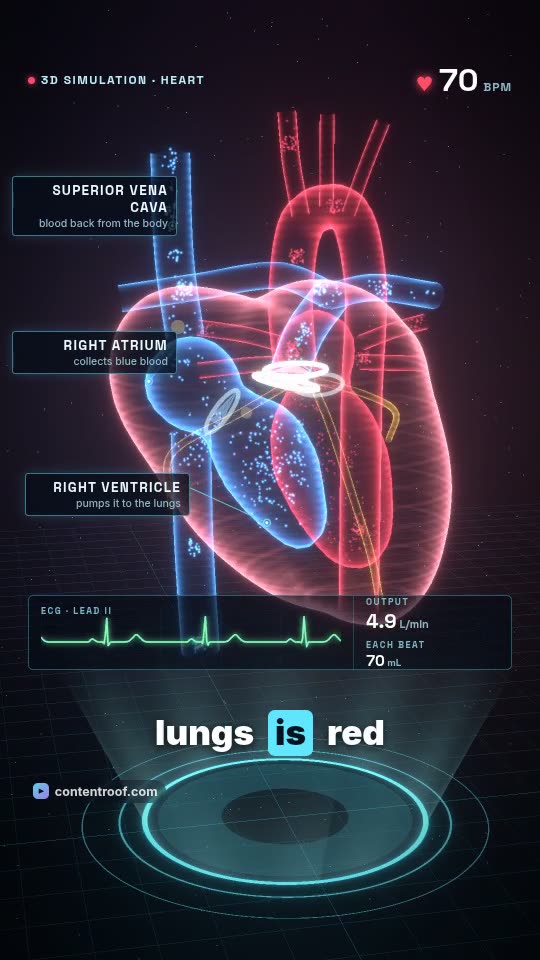 How the heart pumps blood
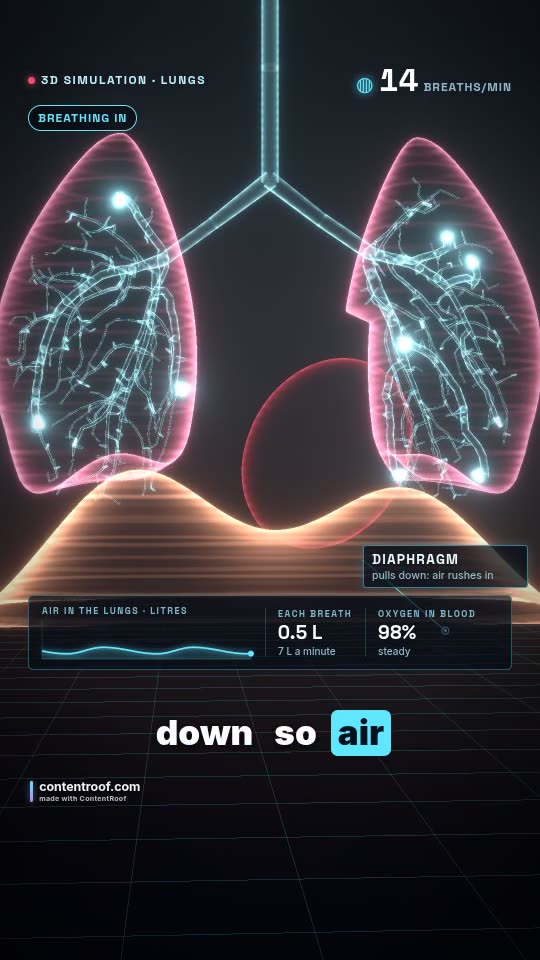 How the lungs work
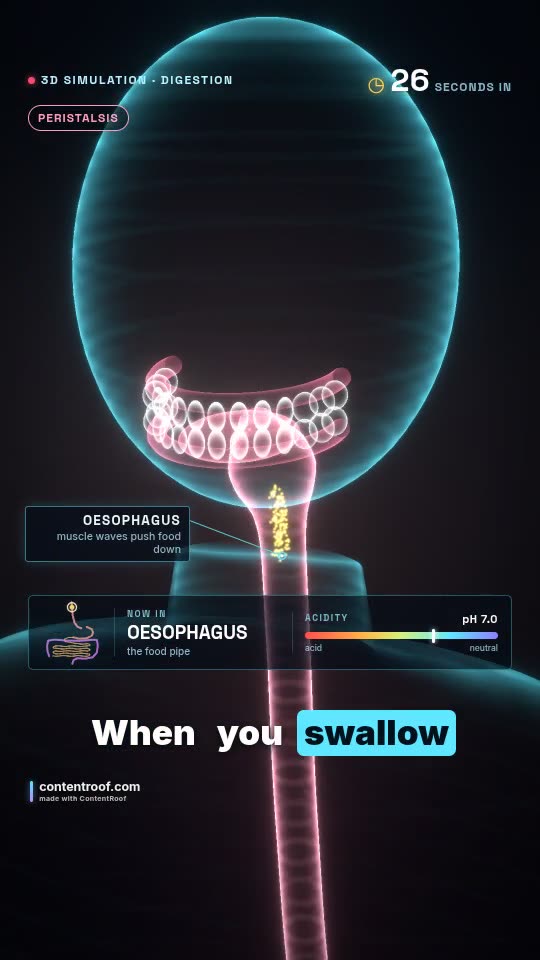 The digestive system
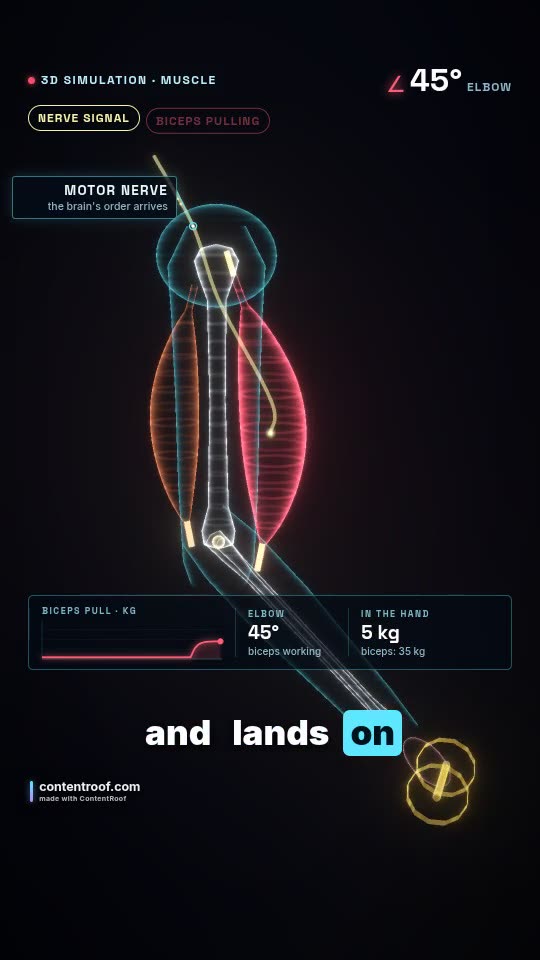 How a muscle moves a bone
 How the eye works
 How a vaccine trains your immune system
 DNA
 How a neuron sends a signal